NC Senate approves stricter election rules and a plan to restructure election boards
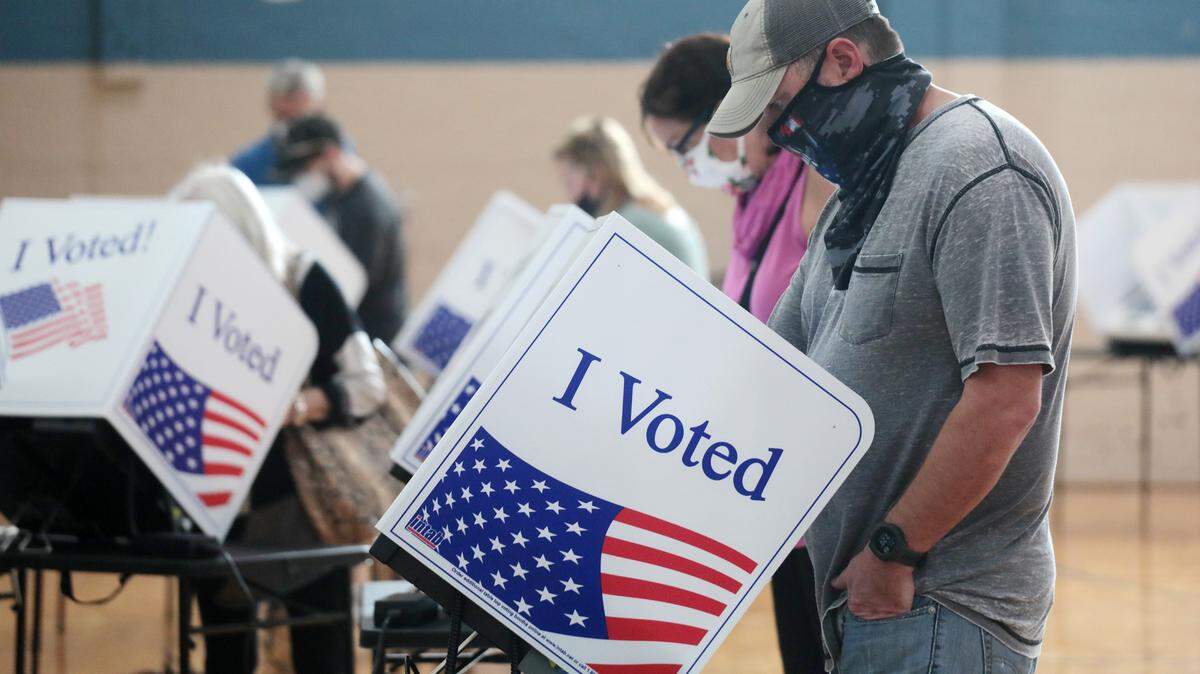
The Senate passed two major elections bills Wednesday, furthering a set of goals advocated for by conservative election integrity groups and advancing a plan to strip the governor of more power.
Senate Bill 747 and Senate Bill 749 would bring significant changes to how elections are conducted in North Carolina with just three months until the first municipal elections begin.
Elections omnibus implements stricter election procedures
Among a host of other provisions, SB 747 would eliminate the three-day grace period for receiving absentee ballots, ban private money for election administration and make most voters using same-day registration cast a provisional ballot.
The bill was proposed after top Senate leaders met with Cleta Mitchell, a former Trump lawyer, who has pushed the lie that Donald Trump won the 2020 election. Mitchell now leads the Election Integrity Network, which aims to reform election law across the country.
Republicans adopted two amendments from Democrats making substantive changes to the bill.
The bill calls for signature verification technology to begin being used to check votes. Lawmakers approved an amendment from Sen. Mujtaba Mohammed, a Charlotte Democrat, which would institute a pilot program for signature verification in the 2024 primaries that would only affect 10 counties. Unless the General Assembly were to legislate otherwise, signature verification would then go into effect statewide for the 2024 general election.
The Senate also approved an amendment from Sen. Julie Mayfield, an Asheville Democrat, that allows voters to solve problems with their absentee ballot via phone or email.
Democrats proposed many more amendments to the bill that would have made more sweeping changes, but all were rejected by the chamber’s Republican majority.
Despite making some progress with amendments, Democrats opposed the bill.
Sen. Natasha Marcus, of Davidson, claimed provisions in the legislation would “dissuade people from voting, throw out ballots and suppress the votes of certain voters in a way that is discriminatory and anti-democratic.”
The bill passed 28-19 along party lines.
Plan to restructure election boards with an even partisan split
SB 749 would restructure the state and local boards of election, making them evenly split between Republicans and Democrats and removing the governor’s ability to appoint board members. Currently, election boards consist of five members, the majority of whom come from whichever party the current governor represents.
Republicans said the plan would restore faith in elections by ensuring that no party has majority control over election boards.
“This bill aims to restore voter confidence and get us to a place where everyone can believe in our election outcomes,” said Sen. Paul Newton, a Mount Pleasant Republican.
Democrats, however, argued that the bill gave the legislature too much power.
Senate Minority Leader Dan Blue said SB 749 was “this General Assembly’s attempt — I think — to control the elections.”
“... The administration of elections is an executive function, not a legislative function,” Blue said.
The legislature had previously attempted to enact similar changes in 2016, but the state Supreme Court’s former-Democratic majority struck the plan down, saying it violated the state Constitution’s separation of powers clause.
A similar plan to restructure election boards was rejected by more than 61% percent of voters in 2018 when it was proposed as a constitutional amendment.
The Senate passed SB 749 28-19.
Now that the Senate has passed them, the new elections bills head to the House for consideration.
Further election changes underway
The Senate’s two bills are only part of the changes coming to North Carolina elections. The state is preparing to implement photo ID requirements for voters following a landmark ruling from the state Supreme Court. In April, the court’s new Republican majority reversed a prior decision that had struck down voter ID requirements.
On Wednesday, Republicans also revived a bill dealing with poll observers that had been lying inactive in committee for several months. House Bill 772 would loosen restrictions on poll observers, people appointed by local political parties to watch election procedures for wrongdoing.
Before the 2022 elections, rules regarding how frequently poll observers could be swapped out were challenged in court. A Wake County judge ruled against the state board, giving observers more freedom.
Now, lawmakers want to build on that ruling with further protections for poll observers.
HB 772 would give observers greater freedom to roam around voting enclosures and hear conversations between poll workers and voters. It would also allow observers to take photos and video, as long as voters aren’t in the picture. Observers would not be allowed to campaign or speak with voters inside the voting enclosure.
It passed a House judiciary committee Wednesday and next heads to the rules committee, likely its final step before a floor vote.
This story was originally published June 21, 2023 at 6:48 PM.