
The Inflation Reduction Act is clean energy’s ‘Super Bowl.’ How can NC benefit?
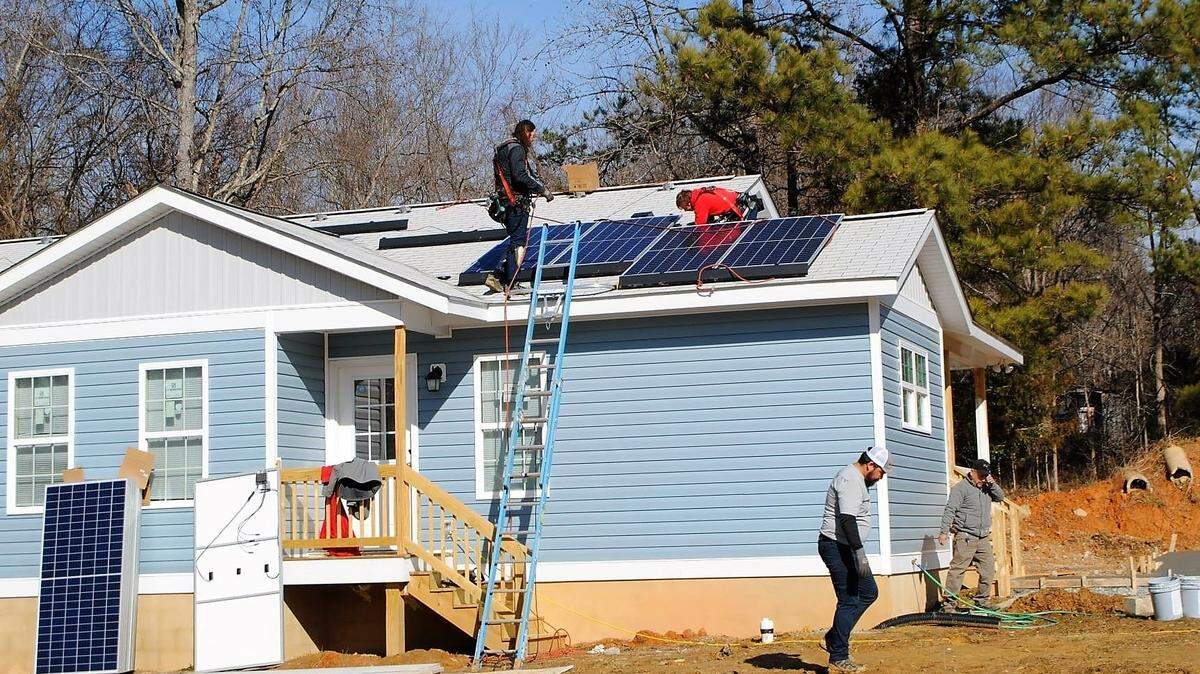
The Biden administration’s signature climate-change law could bring more than $21 billion to North Carolina governments and residents by 2032, analysts say.
Now, governments across the state and individual residents transitioning their cars or appliances to emission-free devices need to figure out what funds are available for them and how to get them.
If North Carolina adopts policies that see it hit national climate goals over the next decade, it could reap as much as $21.12 billion in grants and tax credits from the Inflation Reduction Act, according to an analysis from RMI, a nonpartisan policy group focused on reducing the heat-trapping greenhouse gases that are warming the planet.
North Carolina’s largest benefits could come in the transportation sector, closely followed by the power sector, Ashna Aggarwal, an RMI senior associate, told The News & Observer.
Helping businesses, governments and people know what funds are available and how to apply for them was the focus of an event in Charlotte last week hosted by America Is All In, a broad coalition of climate-oriented nonprofits and interest groups aiming to slash emissions via a “whole-of-society mobilization.”
Charlotte Mayor Vi Lyles is among the coalition’s leaders.
“The Inflation Reduction Act is really the Super Bowl for clean energy, and we’re trying to make sure businesses and communities know how to win,” Jesse Prentice-Dunn, a principal on RMI’s team that works on America Is All In, told The N&O.
‘Huge potential’ for electric vehicles
The RMI analysis of how states stand to benefit from certain parts of the sprawling 2022 legislation found that nearly a third of North Carolina’s projected financial benefit over the next decade could come from people and businesses swapping out vehicles powered by fossil fuels for electric cars and trucks.
Key to that is a tax credit of up to $7,500 the Inflation Reduction Act offers for certain electric vehicles.
If North Carolina residents take full advantage of that credit, Aggarwal said, its residents could see a benefit of about $4 billion over the next decade.
“The fact that North Carolina’s seeing such a huge potential in the transportation sector is actually unique,” Aggarwal told The N&O.
Other states typically see more potential in their utility sectors, Aggarwal said. That’s second in potential benefits for North Carolina, with slightly less potential than transportation, the RMI analysis found.
The law also provides a tax credit to install at-home electric vehicle charging systems of either $1,000 or 30% of the cost of the system.
While transportation is where North Carolina stands to benefit the most from the Inflation Reduction Act, it is also the sector that causes the most climate-warming emissions in the state.
A January 2022 update of where greenhouse gases come from in North Carolina found that the transportation sector causes the most emissions. Cars and trucks in North Carolina emit 35.9% of the state’s greenhouse gases, according to the report, more than the power generation sector’s 32.8%.
“It’s cool to put these pieces together and see that the most opportunity (lies in) where states are the most behind,” Aggarwal said.
Transitioning to green energy
One daunting piece of the law is just how many aspects there are to it. A guidebook to the programs funded by the legislation is 184 pages long and provides brief descriptions of 114 programs spanning not only transportation and utilities, but also manufacturing, hydrogen and resilience programs.
“We still continue to be amazed at how little some groups know about just how many resources have been made available. You can almost go so far as to say that there’s no home or business in America that can’t find at least one thing to take advantage of in the legislation,” Leia Guccione, the managing director of RMI’s Americas program, told The N&O.
North Carolina, for example, has already received $196 million from the legislation for a pair of rebate and tax credit programs that will help homeowners make upgrades like adding insulation, installing heat pumps or buying an electric stove. The N.C. Department of Environmental Quality is managing the funds, which are expected to be available later this year or in early 2024.
Jen Weiss plans to look at that money and all of the other pots in the Inflation Reduction Act when her team at the N.C. Clean Energy Fund works to finance a project. The Clean Energy Fund is a nonprofit that helps finance clean energy projects when banks and credit unions aren’t willing to do so, often due to a lack of familiarity.
Weiss founded the group in 2020 and has since become its executive director. Its work accelerated, Weiss told The N&O, because of federal funding like the Inflation Reduction Act and Bipartisan Infrastructure Bill.
“If someone needs to get a loan for solar panels, we are also looking at whatever rebates or tax credits are available to take that off the top,” Weiss said. She added that the fund’s “green bank” model could benefit individual homeowners, nonprofits, community centers, small business and farmers, among others.
Capacity among local governments is a key concern, Weiss said, with staffs frequently unaware of what funds they can apply for or how to win an award. Partnering offers one potential workaround.
The Clean Energy Fund plans to work with DEQ’s State Energy Office, for example, to apply for a share of the legislation’s $7 billion Solar for All program, which will help disadvantaged communities build solar panels. The State Energy Office will lead North Carolina’s application, planning to then disburse the funds to interested communities.
“We’re all partnering together to launch a very large program across the state that benefits all of the communities, all of the local governments,” Weiss said.
NC’s clean energy economy
North Carolina has seen a series of announcements boosting the state’s clean energy economy since early 2022. Those include headliners like Toyota’s now-$5.9 billion investment at its planned battery production plant near Greensboro and VinFast’s investment of as much as $4 billion at its planned Chatham County plant.
But it also includes smaller announcements that are creating a clean tech economy in the state, like Sunlight Batteries’’ $40 million lithium ion battery assembly plant in Mebane and Kempower’s $41 million fast charger production facility in Durham.
Kempower, in particular, has pointed to the Inflation Reduction Act as likely increasing demand for electric vehicles and thus for the charging infrastructure it builds.
RMI’s analysis found that the Inflation Reduction Act could bring nearly 2,000 new jobs to North Carolina.
Gina McCarthy, a former U.S. Environmental Protection Agency administrator who is consulting with America Is All In, told The N&O that adding clean jobs represents an economic opportunity while also offering a chance for air to become cleaner in communities burdened by fossil fuel pollution.
“This transition to clean energy really has to happen, and the exciting thing to realize is that it is happening. So the private sector is seeing this as an opportunity to actually regrow manufacturing in the United States in a way that it used to be and in a way that produces steady jobs,” McCarthy said.
This story was produced with financial support from the Hartfield Foundation and 1Earth Fund, in partnership with Journalism Funding Partners, as part of an independent journalism fellowship program. The N&O maintains full editorial control of the work.
This story was originally published July 19, 2023 at 12:27 PM.