NC Republicans pass charter school expansion over Cooper’s vetoes. Here’s what’s changing.
Charter schools could see a major expansion in North Carolina after Republican legislators approved two new laws on Wednesday over the objections of Democratic Gov. Roy Cooper.
One new law would allow more students into charter schools and let counties pay for charter school construction projects. Another new law transfers approvals and renewals of charter schools to a board whose members are mainly selected by the Republican-controlled General Assembly.
Cooper had vetoed both bills in July, calling them a legislative power grab and a diversion of local resources.
But on Wednesday, Republicans in the state House and Senate used their veto-proof majorities to override Cooper. Two Democrats— Rep. Cecil Brockman of Guilford County and Rep. Shelly Willingham of Edgecombe County — joined Republicans in passing the new laws.
“By overriding the Governor’s veto, these two bills help further our efforts to promote school choice, expand educational opportunities and put kids first,” Rep. Tricia Cotham, a Mecklenburg County Republican, said in a statement Wednesday.
But most Democrats said the laws will come at the expense of students in traditional public schools.
“This demonstrates a complete lack of respect for North Carolina taxpayers, their money and an additional level of recklessness with North Carolina’s children and their education,” said Rep. Laura Budd, a Mecklenburg County Democrat.
Impact on traditional public schools
Republican lawmakers are also expected this year to sharply expand funding for the Opportunity Scholarship program and to allow any family to receive a voucher to attend a private school.
The expansion of the voucher program, coupled with the new charter school laws, could further reduce the number of students attending traditional public schools.
Charter schools are taxpayer-funded schools that are exempt from some of the rules traditional public schools must follow. For instance, charter schools don’t have to provide transportation or participate in the federal school lunch program. Only half their teachers need to be licensed.
There will be 211 charter schools statewide this school year. More than 140,000 students attend charter schools — a 19% increase since 2019.
Charter schools have continued to grow even as enrollment has fallen in traditional public schools.
The two new laws will remove some of the limits that have kept charter schools from growing even more.
GOP-appointed board to decide on charter schools
Until now, the Charter Schools Advisory Board has only made recommendations on charter school applications, renewals and closures. The final decision had rested with the State Board of Education, which now has a majority made up of appointees of Gov. Cooper.
The state board has accepted most of the advisory board’s recommendations.
But the state board has rejected some schools supported by the advisory board, including a new charter school that wanted to open in Union County. State board members had raised concerns about giving funding to for-profit charter school operators.
Earlier this month, the state board rejected a request by a new charter school to relocate from Cabarrus County to Iredell County after the Mooresville Graded School District opposed the move. The decision effectively kills the school, whose relocation request to Iredell County had been supported by the advisory board.
House Bill 618 transfers the power over approvals and renewals to the advisory board, which would be renamed the Charter Schools Review Board. The state board would be relegated to hearing appeals of decisions made by the Review Board.
Eight of the 11 members of the Review Board are appointed by the General Assembly.
“The most important thing that this bill does is it puts kids first,” Cotham said during the floor debate. “It ensures that the outdated concept of one-size-fits-all in education is not the case in North Carolina. Parents want options for their children and taxpayers deserve accountability and a thorough vetting.”
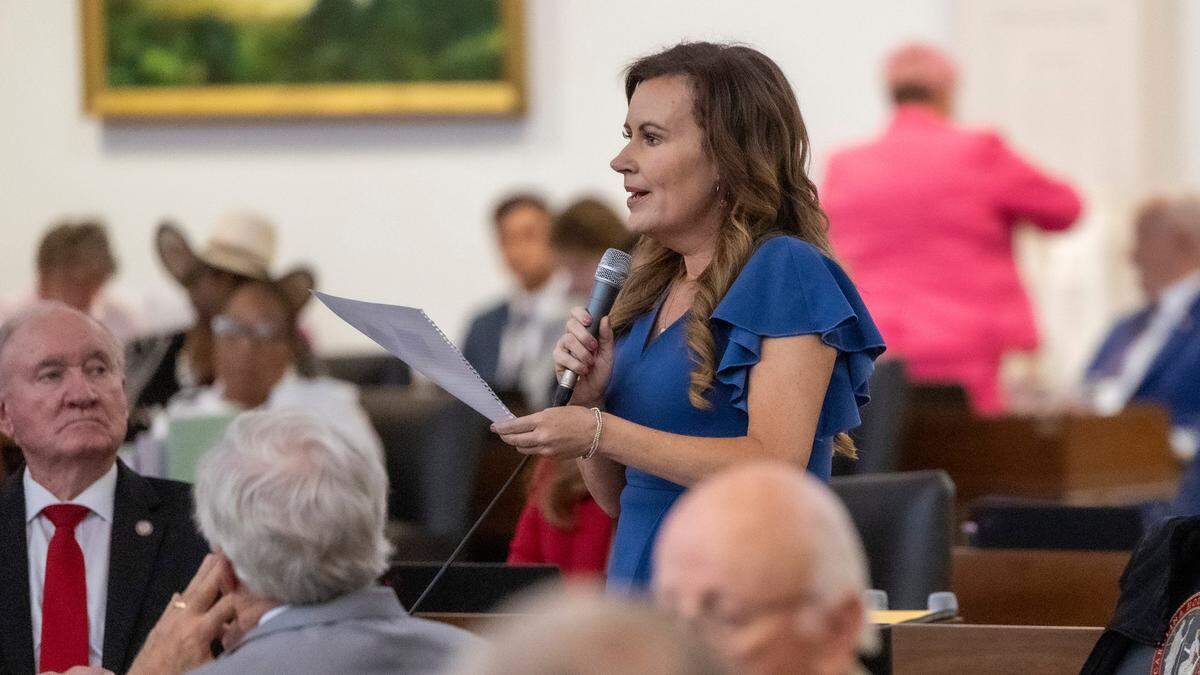
But Rep. Lindsey Prather, a Buncombe County Democrat, said the law will make charter schools less accountable by removing the state board from the approval process.
“This bill attempts to fix something that is not broken when instead we could be addressing urgent issues in our public school system,” Prather said.
Charter schools can accept more students
House Bill 219 makes multiple changes to state law, including easing limits on the number of students that charter schools can have.
Until now, low-performing charter schools could not grow by more than 20% a year. Other charter schools needed state permission to grow by more than 30% a year.
But the new law says low-performing charter schools can request state permission to grow by more than 20%. Other charter schools can add as many students as they want without seeking state approval.
“North Carolina should continue to cap the enrollment growth of low-performing charter schools until they can show that they improve student achievement,” said Sen. Natalie Murdock, a Durham Democrat. “Parents should have options in regards to how their children are educated, but we can’t do that at the expense of our public schools that are already in dire straits and in need of additional funding.”
Among other changes, the law:
▪ Allows counties to use property taxes to fund charter schools.
▪ Prevents the impact a potential charter school may have on school districts from being considered in charter approvals and renewals.
▪ Prohibits local school boards from discriminating against charter school students who apply for admission to schools or special programs in their districts.
▪ Allows admission of out-of-state and foreign-exchange students to charter schools.
▪ Allows admissions priority to children coming from preschools which have agreements with charter schools.
Rep. John Torbett, a Gaston County Republican, said the bill reflects a compromise. It removed earlier wording about charter schools receiving funds that traditional public schools currently don’t share with them.
“The parties that were involved ended up equally unhappy, as we often say, to make a good bill,” Torbett said.
This story was originally published August 17, 2023 at 9:30 AM.