‘Silencing dissenters.’ NC Supreme Court justice sues commission investigating her
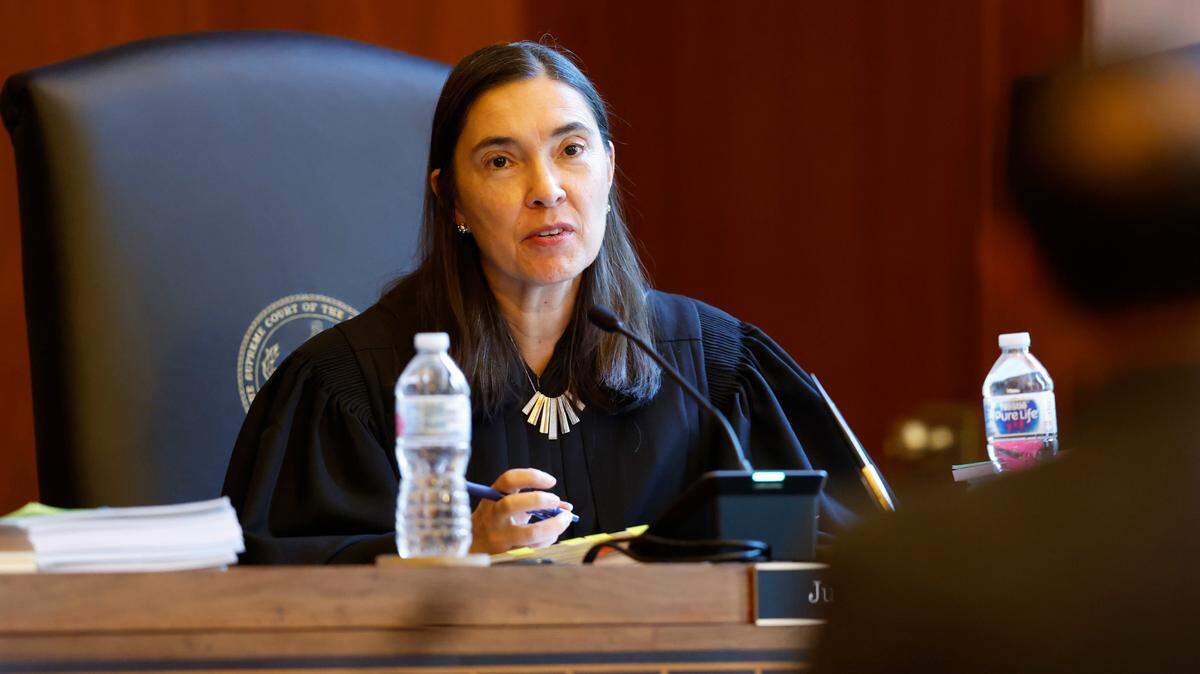
North Carolina Supreme Court Justice Anita Earls is suing a state oversight commission in federal court, arguing that the board is restricting her First Amendment rights.
Earls, one of only two Democrats left on the state’s highest court, said in her lawsuit that the Judicial Standards Commission has investigated her for months.
She said the commission, which considers complaints against judges, threatened disciplinary action for critical comments she’s made about the state’s judicial system.
In court filings released on Tuesday, Earls said: “The First Amendment provides me and every American the right to free speech and to bring to light imperfections and unfairness in our political and judicial systems. I believe that public confidence in the judiciary is best promoted by honestly looking at the facts, not by sweeping the truth under the rug or silencing dissenters.”
The commission’s executive director, Brittany Pinkham, said in a statement provided to The News & Observer that it can’t comment on any ongoing investigation.
“The North Carolina Judicial Standards Commission is a non-partisan investigative body comprised of members appointed by the Chief Justice, Governor, General Assembly, and State Bar Council,” she said. “The Commission is statutorily obligated to investigate all instances of alleged judicial misconduct and cannot comment on pending investigations.”
Comments on diversity
The commission’s most recent investigation stems from an interview Earls gave to Law 360, an online legal publication. In the article, Earls commented on the lack of diversity among the Supreme Court’s judicial clerks as well as the elimination of implicit bias training in the courts system. She also mentioned members of the court interrupting female lawyers and herself during proceedings.
The article referenced a study from state Solicitor General Ryan Park which found that 90% of lawyers who argue before the state Supreme Court are white and 70% are male.
“When the culture is that male advocates and advocates who reflect the majority of the court, white advocates, when they get more respect, when they are treated better — I think it filters into people’s calculations about who should argue and who’s likely to get the best reception and who can be the most persuasive,” Earls said in the interview.
“I’m not suggesting that any of this is conscious, intentional, racial animus,” she continued. “But I do think that our court system, like any other court system, is made up of human beings and I believe the research that shows that we all have implicit biases.”
The commission informed Earls on Aug. 15 that her comments may have violated part of the Code of Judicial Conduct, which says judges must conduct themselves “in a manner that promotes public confidence in the integrity and impartiality of the judiciary.”
The commission ordered a separate investigation into Earls in March over allegations that she “disclosed confidential information concerning matters currently being deliberated in conference by the Supreme Court.”
This may refer to comments Earls made in January at a North Carolina Courts Commission meeting. In response to a question from Democratic Rep. Marcia Morey, Earls mentioned the Supreme Court was considering changes that could weaken the Court of Appeals, The News & Observer reported.
The commission ultimately voted to dismiss the March complaint and provide Earls “with a verbal reminder to be mindful of your public comments,” according to the most recent letter provided in the lawsuit.
The commission has the authority to recommend censure, suspension and even removal from office to the state Supreme Court, following an investigation and hearing.
Earls’ lawsuit asks the court to issue an injunction “to stop the Commission from continuing to chill her right to speak on matters of public concern.”
This story was originally published August 29, 2023 at 1:39 PM.