Proposal limiting public access to autopsy records set aside by NC lawmakers. Here’s why.
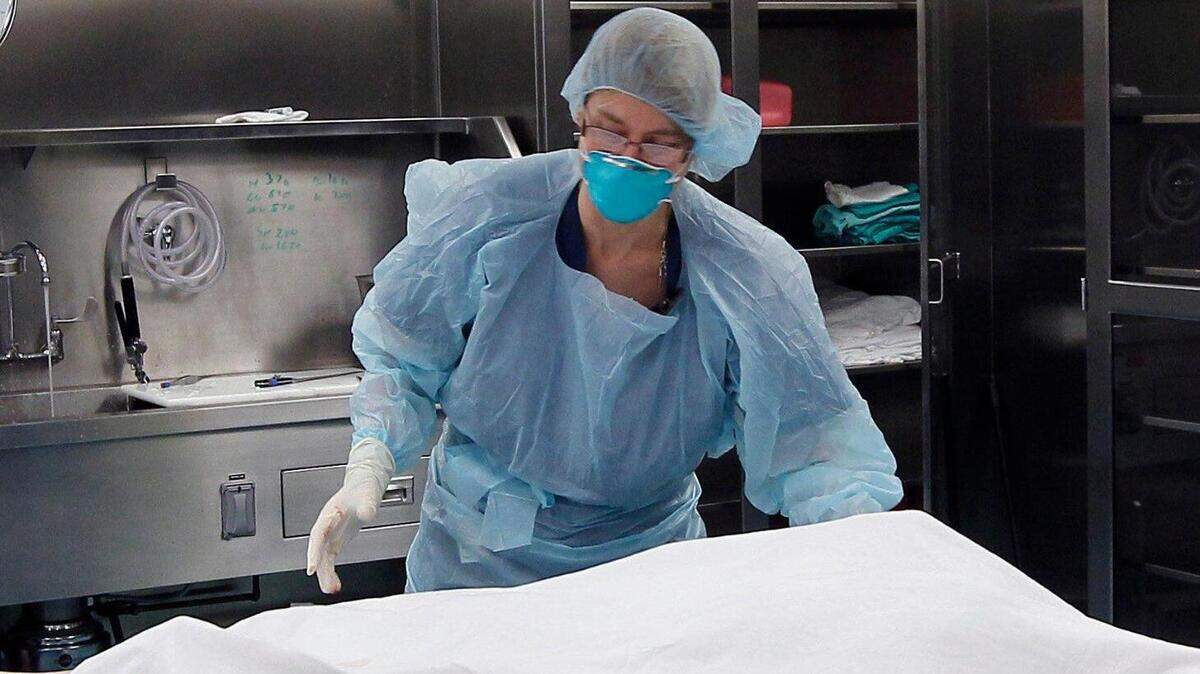
A proposal that would have limited access to autopsy records by the public has been carved out of the bill housing it. It may resurface in the future, according to one of its sponsors.
In late May, lawmakers unveiled new provisions tucked into House Bill 250 that would prevent the public from accessing photographs, video or audio recordings in autopsy reports. Currently, people can generally inspect these under supervision. Only certain public officials are allowed to obtain copies.
The provisions also would have exempted written autopsy reports from being released to the public if they deal with criminal investigation records.
On Tuesday, the bill cropped back up in a Senate judiciary hearing. But this time, it lacked the public records provisions.
Asked why this language was cut, Sen. Danny Britt, a Robeson County Republican, told reporters that “we just weren’t sure where the House was going to be on it,” and other portions of the bill need to pass.
“We just want to make sure we got that across the finish line,” said Britt.
As for whether these autopsy provisions may appear again later, Britt said, “it’s always possible; maybe not this session.”
He said that he had not heard conversations in the House pushing against these provisions and that he “did not speak with anyone in the public who had a problem with us restricting access to the news media or their being able to gain access to the autopsy report and the information in those autopsy reports.”
“I heard no concerns from any constituents,” Britt said, and “the only thing that constituents would be concerned with is victims having access to that information,” which he said was being fixed.
“As far as the media having access to it, the only people who I heard concerns with were from the media,” he said.
Autopsy reports from shootings and other violent incidents are often requested by the news media to glean details that otherwise may not be released.
New charges for Xylazine distribution and other drugs
Beyond the autopsy records section, the bill would rework the offenses for distributing drugs. It also adds xylazine to a list of drugs that would fall under death by distribution, a criminal charge for delivering or selling drugs that cause a death.
According to the National Institute of Drug Abuse, xylazine is a non-opioid veterinary tranquilizer not approved for human use that has been linked to an increasing number of overdose deaths nationwide.
The Food and Drug Administration says xylazine is increasingly being found mixed with other drugs like fentanyl and heroin. It issued an alert to health professionals that Naloxone, used to treat opioid overdoses, may not be able to reverse xylazine’s effects.
There has been discussion of adding other emerging drugs, said Sen. Michael Lazzara, a Republican from Jacksonville.
Work is being done on a separate bill “that will address a lot of the hemp products and other products, or what we’re gonna call gas station heroin,” he said.
Britt told reporters that bill would come forward this year.
Also added to the bill on Tuesday was a provision allowing people with no more than one prior driving while impaired (DWI) conviction within the preceding seven years to get a limited driving privilege.
To get back their driving privileges, they would need an ignition interlock device — which requires a person to breathe into the equipment — placed on their car.
Currently, someone with a prior DWI cannot “drive at all legally, so essentially a lot of these folks, especially in rural areas where there’s no public transit, are driving anyways,” Britt said.
The bill passed the committee and now moves to the Senate Rules Committee.