Raleigh’s ‘missing middle’ policy successful, city says. Now council wants to tweak it
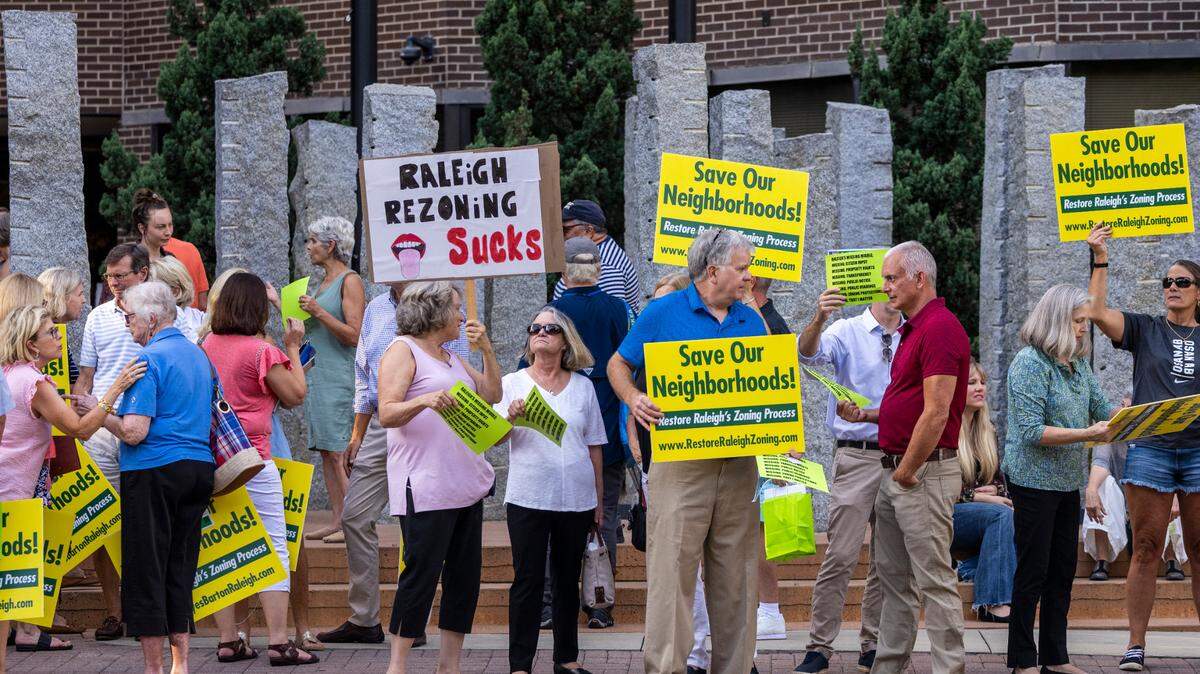
When Raleigh made it easier to build duplexes, townhomes and small apartment complexes across the city, there was outcry from some residents, demonstrations and a lawsuit.
But city staff say Raleigh’s “missing middle” policy has been successful.
Since the Raleigh City Council enabled denser and different types of homes without an often lengthy and expensive rezoning process, about 30% of the residential units approved by the city since late 2021 are considered “missing middle” housing. That comes out to 2,862 total new housing units.
“That makes Raleigh’s program one of the most productive programs in the country,” Planning Director Patrick Young said, adding Raleigh has approved or permitted more units than any other city that made similar zoning reforms.
Missing middle refers to the range of housing types between single-family detached homes and larger apartment complexes.
Still, on Tuesday, city leaders began the slow process of revising the policy to address critics’ concerns.
“I don’t want to do anything that is going to significantly restrict or limit what you’ve shown us to be one of the most successful missing-middle policies in the country,” said Raleigh Mayor Pro tem Jonathan Melton. “But I am in favor of trying to find some middle ground on some of these tension points, because I think that allows these policies to remain in effect for a very long time and not to be the constant ire of political pressure.”
‘Neighborhood character’
The two tweaks the council wants to consider involve tree preservation and “character impact of some missing middle types on existing neighborhoods.”
The City Council voted unanimously to look at tree preservation but Mayor Mary-Ann Baldwin said she couldn’t vote in favor of potential changes involving “neighborhood character.”
“The term ‘character’ really disturbs me,” she said. “It seems so judgmental.”
Young said the language reflects many of the comments from residents concerned about the program.
“I certainly agree with you and share the concern,” Young said. “And it’s extremely subjective. Unfortunately, it’s often been used to characterize residents rather than architecture and buildings. And so we try to avoid that term. But we did use it here, because it’s what was reflected in the comments from the community.”
Council member Megan Patton, who made the two motions, said there are some standards for single-family homes to match their surroundings, and potential changes wouldn’t be more restrictive than what’s allowed for single-family homes.
The changes should be modest and “thread the needle” between neighbor concerns and still allow affordable housing to be built.
City staff will bring potential changes to the city code back to the council. Then the changes will go to the city’s Planning Commission, a public hearing and eventually back to city leaders for a final vote.
Affordable housing
Wake County has a deficit of 66,000 affordable homes, and only 8% of homes in Raleigh are committed or have legally binding affordability, according to Young.
“Therefore, it’s crucial that we encourage and allow the market to produce more homes in more locations, so that there will be opportunities for housing folks at all incomes and all ages that want to live here in Raleigh,” he said.
Critics and city staff members have repeatedly said “missing middle” housing doesn’t mean affordable. A plan to build $2 million townhomes in the historic Hayes Barton neighborhood particularly galvanized some community members and kicked off a lawsuit that is still underway.
But about 10% of the homes approved or permitted under Raleigh’s “missing middle” policy are considered affordable at 60% of the area median income. That’s $51,420 for a single person and $73,380 for a family of four.
This story was originally published June 19, 2024 at 7:30 AM with the headline "Raleigh’s ‘missing middle’ policy successful, city says. Now council wants to tweak it."