
How much was Lt. Gov. Robinson a factor in NC Gov. Cooper passing on Harris veepstakes?
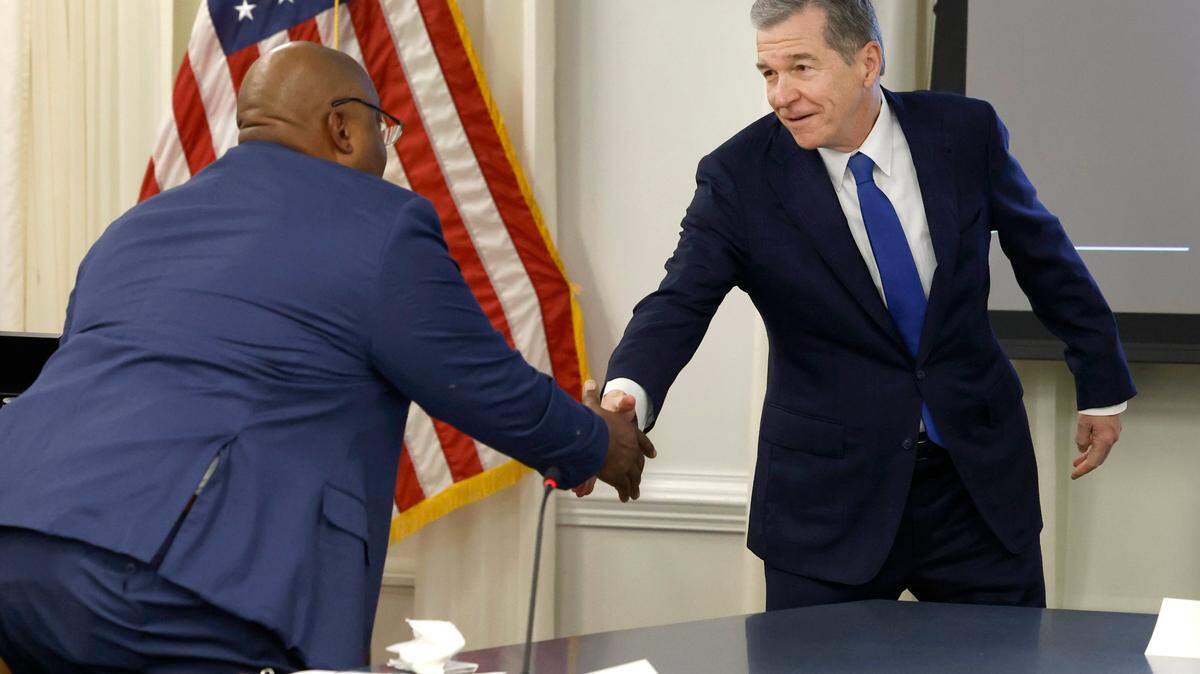
One of the reasons given for Democratic Gov. Roy Cooper deciding to take himself out of the veepstakes was that he worried what could happen if Republican Lt. Gov. Mark Robinson became acting governor.
We’ve already seen examples of what happens in such a situation, because Cooper has traveled out of state many times over the past three-and-a-half years.
If history is any guide, the result would be less about policy and more about getting attention.
The North Carolina Constitution designates the lieutenant governor to serve as acting governor if the governor is out of the state, The News & Observer has previously reported. The state’s governor and lieutenant governor do not run as a ticket, so are often from different political parties.
Cooper’s top adviser, Democratic strategist Morgan Jackson, told The N&O on Tuesday that the biggest factor in Cooper not wanting to be the running mate for likely Democratic presidential nominee Kamala Harris was that it isn’t the right time for Cooper and his family. Robinson as acting governor was “one of many reasons, not a deciding reason,” he said.
“Robinson is more of a distraction than anything else,” Jackson said, saying he “has a penchant for pulling stunts.”
“I don’t think it’s helpful for the administration of government or in the middle of a political campaign, either one,” Jackson said.
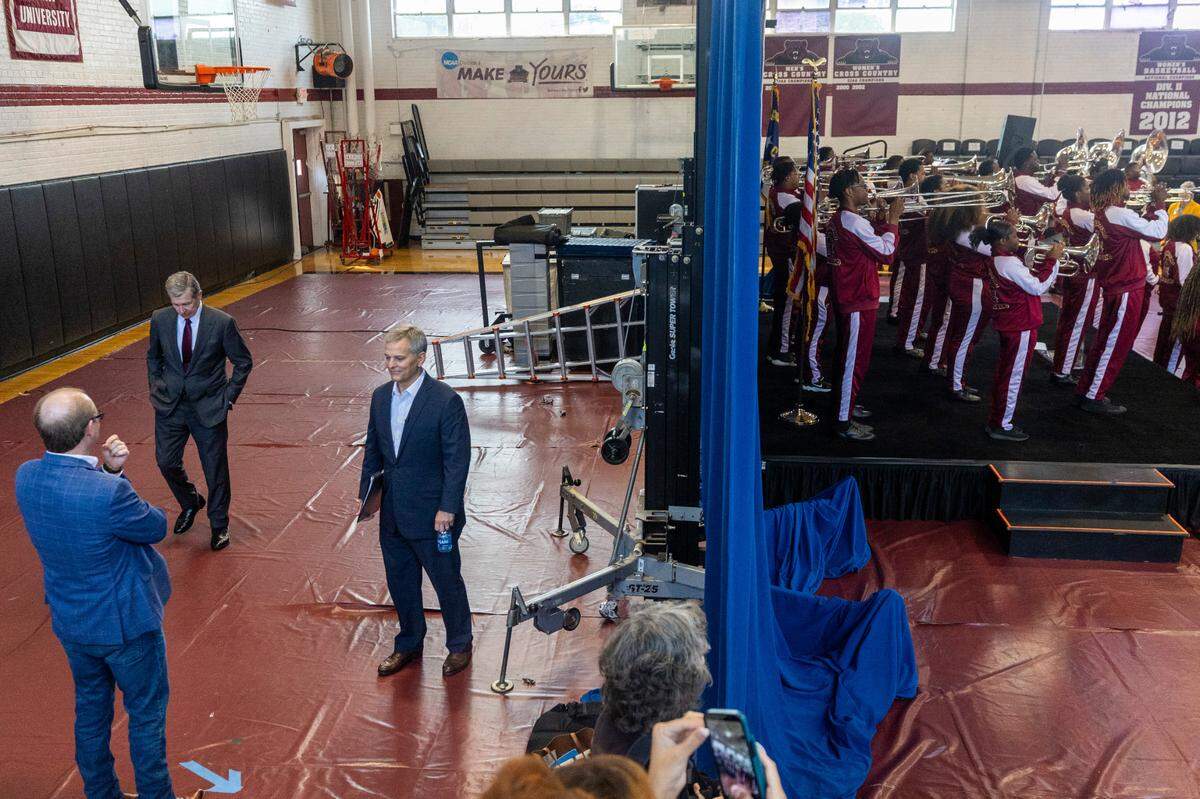
Of the many times Cooper has left the state or country, just once did Robinson decide to pull rank. Cooper was on a trip to Japan in October.
Cooper’s spokesperson at the time, Sam Chan, told The N&O then that it was “a stunt” after Robinson announced a “special event” would be happening the next day.
“Courts across the country in states with similar constitutional provisions have held that executive succession clauses do not apply where the Governor is able to communicate and direct state business and there is no need for action by the Lieutenant Governor. This stunt by the Lieutenant Governor and attempt to undermine our state’s democracy is harmful to North Carolina’s reputation and a reason he should never be trusted with real responsibility,” she said.
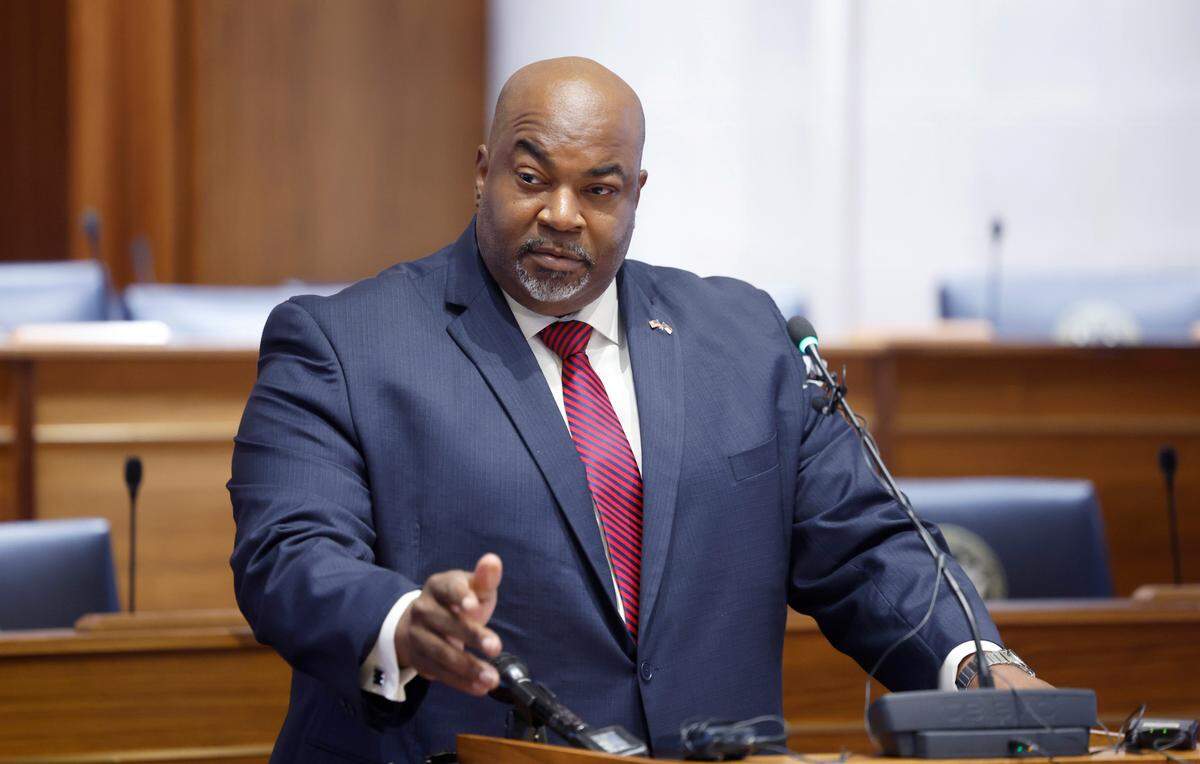
Robinson’s event was a news conference announcing that he had issued a proclamation in solidarity with Israel, along with a day of prayer, soon after the Israel-Hamas war began. Robinson also downplayed past antisemitic comments he had made on social media.
Cooper told The N&O in December that Robinson acted for “purely political purposes.”
Robinson, who is the Republican nominee for governor, has not taken any other action when Cooper has been out of the state. Robinson’s campaign declined to comment for this story.
The rest of Cooper’s term
Cooper was never asked to provide documents for Harris to use to vet him, said Jackson, Cooper’s adviser.
But Cooper never said publicly he was out of the running. He dodged reporters’ questions as recently as Thursday, while campaigning for Harris at a news conference in Raleigh, answering questions by saying “there a lot of good people that she can choose as her vice presidential nominee.”
Cooper decided after being mentioned as a possible contender that “’I’m just not going to talk about this at all,’” Jackson said. “So he wasn’t saying he was in, wasn’t saying he was out. It was just, we’re not going to engage in this conversation, and frankly, not intended to engage in it. And then clearly, some, some information came out of the Harris campaign to The New York Times, they wrote it, and you go from there.”
Jackson said a VP pick was Harris’ news to announce, not Cooper’s.
He also said that Cooper’s age, at 67, wasn’t a factor in not seeking the VP spot.
Jackson said that “a lot of people have been talking to the governor for over a year now, urging him to run” for the U.S. Senate in 2026.
“I think his plans are to finish serving as governor, get Josh Stein elected, hopefully get North Carolina turning blue for Kamala Harris. Then he’ll sit down and think about what he wants to do,” Jackson said. He said that Cooper has “made no decisions.”
Cooper told The N&O in an interview in December that he wanted to focus in his final year in office on infrastructure and teacher pay. The General Assembly adjourned for most of the summer without a new budget bill, but did OK the teacher raises already planned from the 2023 budget.
Power of the legislature
Unlike in other states, the governor in North Carolina doesn’t have sweeping power — it’s the General Assembly that calls the shots most of the time.
And that’s especially true when one party has a supermajority in the legislature, as Republicans do now.
Republicans can override Cooper’s vetoes and pass policy they want if they stick together — regardless of whether Robinson is in charge.
The legislature has removed more and more power from the governor over the years, most recently taking away appointments to governing boards and commissions.
Cooper and Robinson’s relationship
Cooper and Robinson see each other occasionally at public events. They sit next to each other at monthly Council of State meetings, with Cooper at the head of the table and Robinson always seated to his right. They interact only briefly, usually in greeting and then during the meeting.
The duties of a governor are outlined in the state constitution and include residing in the Executive Mansion, presenting a budget proposal, sharing information in what has become the State of the State speech, appointing people to various boards and commissions, convening General Assembly sessions in certain circumstances and granting pardons.
The lieutenant governor’s duties include presiding over the Senate but only voting to break a tie, and serving on the Council of State, State Board of Education and State Board of Community Colleges. Robinson rarely presides over the Senate, but regularly attends Council of State meetings. Those meetings usually last less than an hour, and end with the 10 statewide elected officials taking turns going around their conference table to share updates and events. Robinson generally highlights information about firefighters and law enforcement.
Robinson has office space in the Legislative Building, but the primary office for the lieutenant governor is in the Hawkins-Hartness House on Blount Street, less than a block from the Executive Mansion.
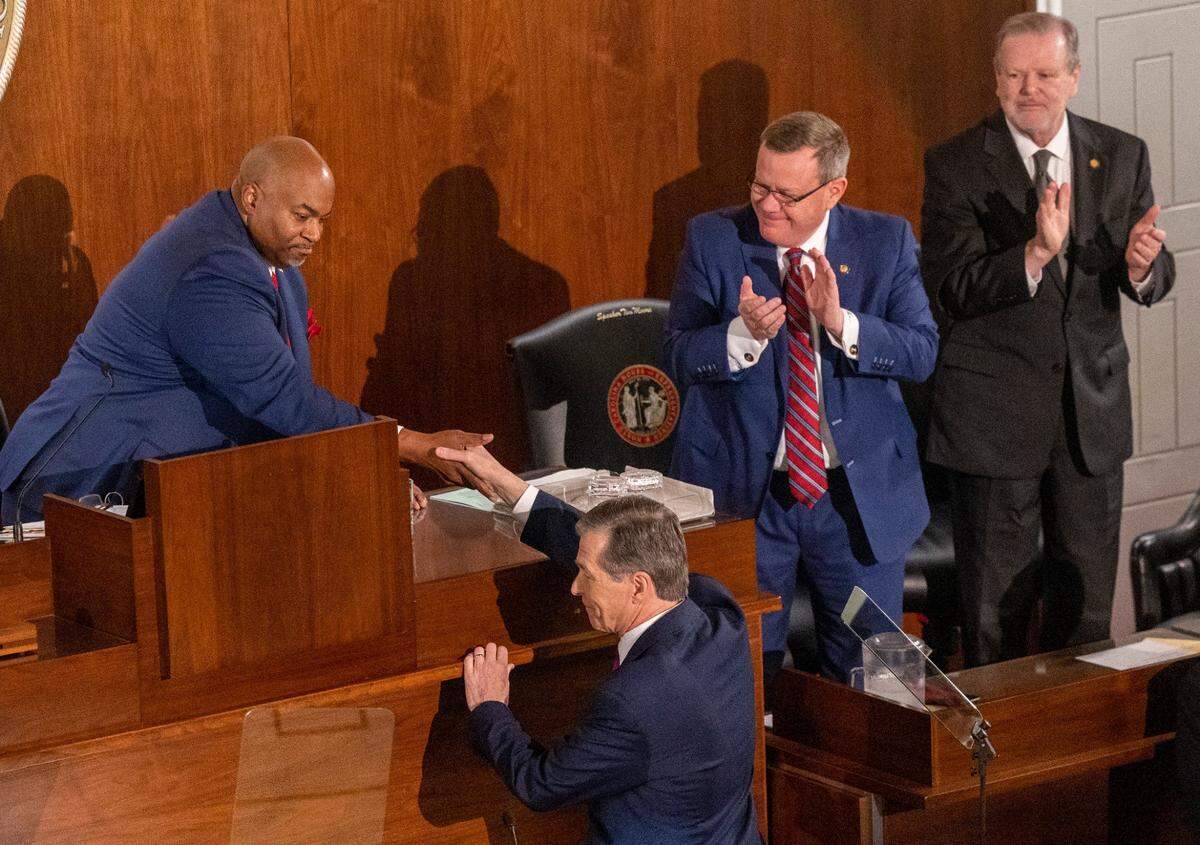
Cooper and Robinson also interact in the State of the State address, given every two years in the House chambers in front of the full House, Senate, Council of State and N.C. Supreme Court. Robinson presides at the House speaker’s podium.
Who is in charge with the governor away?
The state Constitution says: “During the absence of the Governor from the State, or during the physical or mental incapacity of the Governor to perform the duties of his office, the Lieutenant Governor shall be Acting Governor,” and state law lays out the order of who is in charge next.
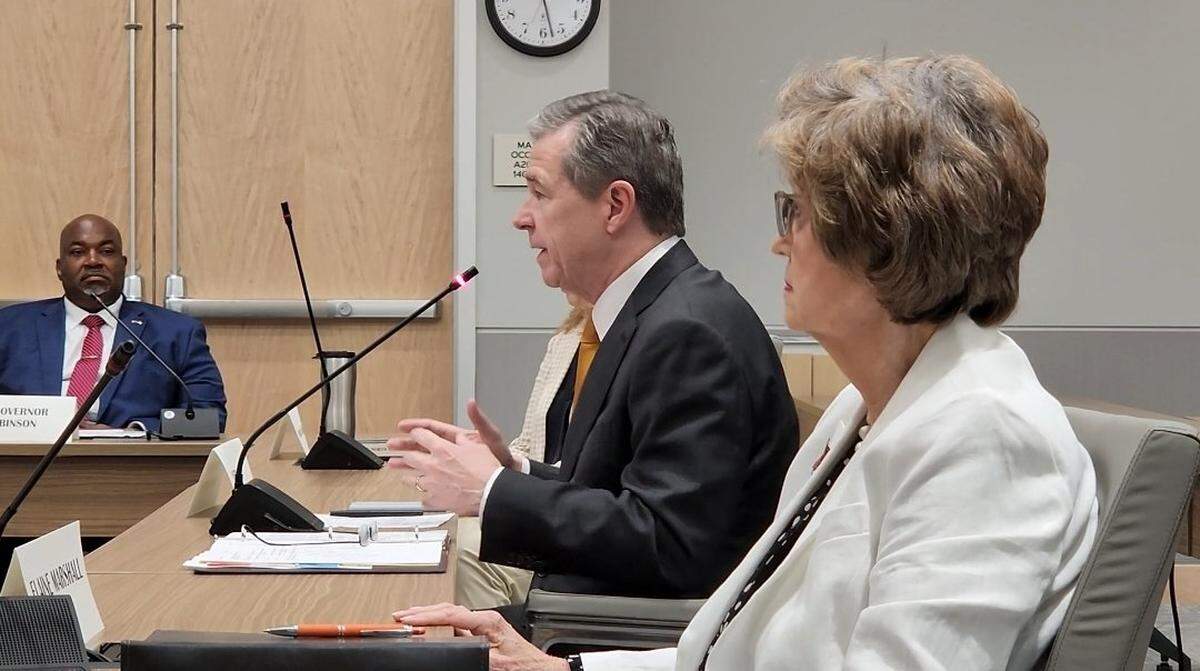
After the governor and lieutenant governor, the next person is the president of the Senate, but the lieutenant governor is the president of the Senate. The Senate president pro tempore, currently Phil Berger, leads the Senate but is not mentioned in the succession provision.
The law then outlines that if there isn’t a president of the Senate, the next person would be the House speaker, who is currently Tim Moore. After that is the secretary of state. That scenario actually played out in May, when Cooper, Robinson, Moore and Berger were all in Washington, D.C., for the unveiling of a Billy Graham statue at the U.S. Capitol. Democratic Secretary of State Elaine Marshall did not take any action that day as acting governor.
This story was originally published July 30, 2024 at 7:01 PM.
.jpg)