
Here’s how Kamala Harris is trying to win back Hispanic voters. Will it work?
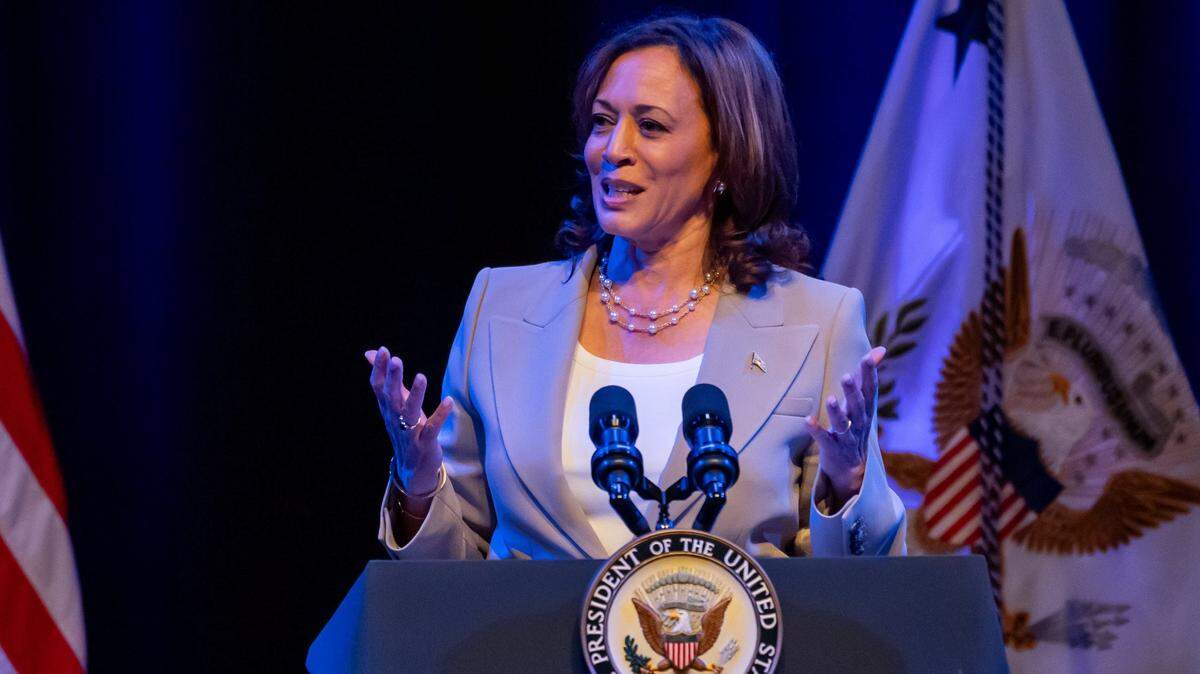
Vice President Kamala Harris is hustling to win back the crucial support Democrats have historically enjoyed with Hispanic voters amid signs that a growing proportion of an increasingly consequential electorate is warming to former President Donald Trump and the GOP.
In the days since she emerged as the de facto Democratic nominee following President Joe Biden’s abrupt exit from the presidential race, Harris and the campaign operation she suddenly inherited have raced to lock down the backing of influential Latino groups, while high-profile surrogates have hosted calls with supporters.
On Wednesday night, comedian George Lopez and U.S. Sen. Alex Padilla of California led an organizing call for Latino men for Harris where they sought to reassure voters of the vice president’s candidacy.
“Harris has been looking out for us and our shot at the American dream,” said Padilla, who filled Harris’ Senate seat after she was sworn in as vice president. “She’s got our back. She always will.”
The aggressive outreach suggests that Harris and her campaign are getting serious about reversing a political problem that dogged Biden and the broader Democratic Party in recent years. Hispanic voters, who make up one of the fastest-growing electorates in the country, have begun to drift towards the GOP, undermining a long-held assumption among some party operatives that robust Latino support would help power Democratic victories for decades to come.
Recent polls have shown Trump gaining ground among Hispanic voters. One survey released last month by Miami-based polling firm Bendixen & Amandi International found Trump capturing 41% support among Hispanic voters nationally — a level not seen for a Republican presidential candidate in 20 years.
The poll, which was conducted before Biden exited the presidential race, showed both Biden and Harris receiving 42% support each among Hispanic voters, a remarkable decline from 2020 when they captured 65% of the Hispanic vote.
A July survey from Florida International University and the marketing firm Adsmovil surveying over 1,000 Hispanic registered voters in ten states found that 14.5% had recently switched political affiliations. Over half of that group had become either Republicans or independents.
But Harris’ allies say that things may be different now without Biden at the top of the ticket. An internal poll of seven battleground states conducted for Biden’s campaign before he bowed out of the presidential race found Harris’ favorability among Latinos far outpacing Biden’s favorability. Matt Barreto, who led Latino polling for Biden’s campaign and is now doing the same for Harris’ team, said it’s a sign that the vice president isn’t weighed down by the same negative views voters have of the president.
“What I think Harris has changed — and I think it’s already in the data — is you immediately removed the negative views that Latinos had toward the candidate,” Barreto, who conducted the internal poll, said. He said that having Harris at the top of the ticket has the potential to energize Hispanic voters who were unenthusiastic about choosing between Biden and Trump.
“Because of what Trump and Biden were doing, the entire campaign became about ‘nobody likes these candidates, they’re both old white guys and they’re just not what we need,’ ” Barreto said. “The enthusiasm has returned and it gives the opportunity to get back to that 65-to-67% range [among Hispanic voters].”
‘A new bloc’
Mike Madrid, a longtime Republican consultant who recently wrote a book on Latino voters, told the Miami Herald that Democrats’ waning support among Hispanic voters goes far deeper than just Biden’s candidacy. He argued that Republicans have been gaining momentum among those voters for years, especially younger Hispanics and more-recent immigrants who don’t have the kind of ancestral ties to the Democratic Party that older Latinos have.
“Broadly, the Democrats are suffering from a decade-long trend, and no one candidate is going to turn that around immediately,” Madrid said. “These voters are not realigning. They’re emerging as a new bloc. They don’t have a vote history, they don’t have a partisan tie to the Democratic Party, they don’t have a history of voting for the Democrats. They’re emerging differently.”
Maca Casado, the Hispanic media director for Harris’ presidential campaign, said that the vice president isn’t taking Hispanic voters “for granted,” and was already seeing a wave of support in the days since she kicked off her White House bid.
“The enthusiasm that we’re seeing for Vice President Harris in every corner of the country is unprecedented and Latinos are showing up in high numbers to support our campaign,” Casado said in a statement. “Latinos are looking for a leader who will fight for them and the issues their families care about, and that leader is Vice President Harris.”
Harris has already notched endorsements from key Latino organizations, like Mi Familia Vota, Voto Latino and UnidosUS Action Fund. Prominent Latino leaders have also come to support her, including Dolores Huerta, the longtime labor activist who co-founded the United Farm Workers alongside Cesar Chavez in the 1960s.
One recent organizing calls for Hispanic women featured high-profile Latinas such as Honduran-American actress America Ferrera, political strategist Ana Navarro and U.S. Rep. Nydia Velazquez. The vice president also hosted Hispanic leaders in her official residence, a summer celebration that involved folk dances and colorful papel picado decorations.
Challenges
Harris isn’t beginning her presidential campaign with an entirely clean slate among Hispanic voters. She drew fierce backlash from many Latino groups and leaders in 2021 when she delivered a stern message to would-be migrants to the U.S. during a diplomatic visit to Guatemala: “Do not come.”
Trump and Republicans, on the other hand, have begun to go after Harris from the other side of the issue, seizing on her work on the Biden administration’s immigration and border policy and dubbing her the “border czar.” Shortly after he took office, Biden tasked Harris with working with Central American countries to address the underlying causes of migration. It’s a label that her campaign and supporters have vehemently pushed back against.
Polls have repeatedly placed immigration and border security near the top of Americans’ list of concerns after economic issues like inflation and the cost of living.
An Axios/Ipsos released in April found growing support for Trump’s hardline immigration policies among Hispanic voters. More than four in 10 respondents said they support building a barrier along the entirety of the U.S.-Mexico border, while 38% said they support sending all undocumented immigrants living in the U.S. back to their countries of origin.
Santiago Mayer, the executive director of the Gen Z-led voter engagement group Voters of Tomorrow, said that Harris’ campaign shouldn’t be reduced to a single issue, adding that Democrats have for too long relied on immigration-focused messaging to appeal to Latino voters.
Harris, Mayer said, is approaching her campaign differently.
“I think what we’ve seen in previous Democratic campaigns is the only outreach to Latinos is done through the lens of immigration,” Mayer said. “Kamala Harris and her team aren’t just talking about immigration. When they talk to Latino communities, they’re giving a holistic message. They’re talking about abortion rights, they’re talking about the economy, they’re talking about gun violence.”
This story was originally published August 1, 2024 at 4:30 PM with the headline "Here’s how Kamala Harris is trying to win back Hispanic voters. Will it work?."