NC’s Folwell, Sen. Bernie Sanders scrutinize costs of blockbuster weight-loss drugs
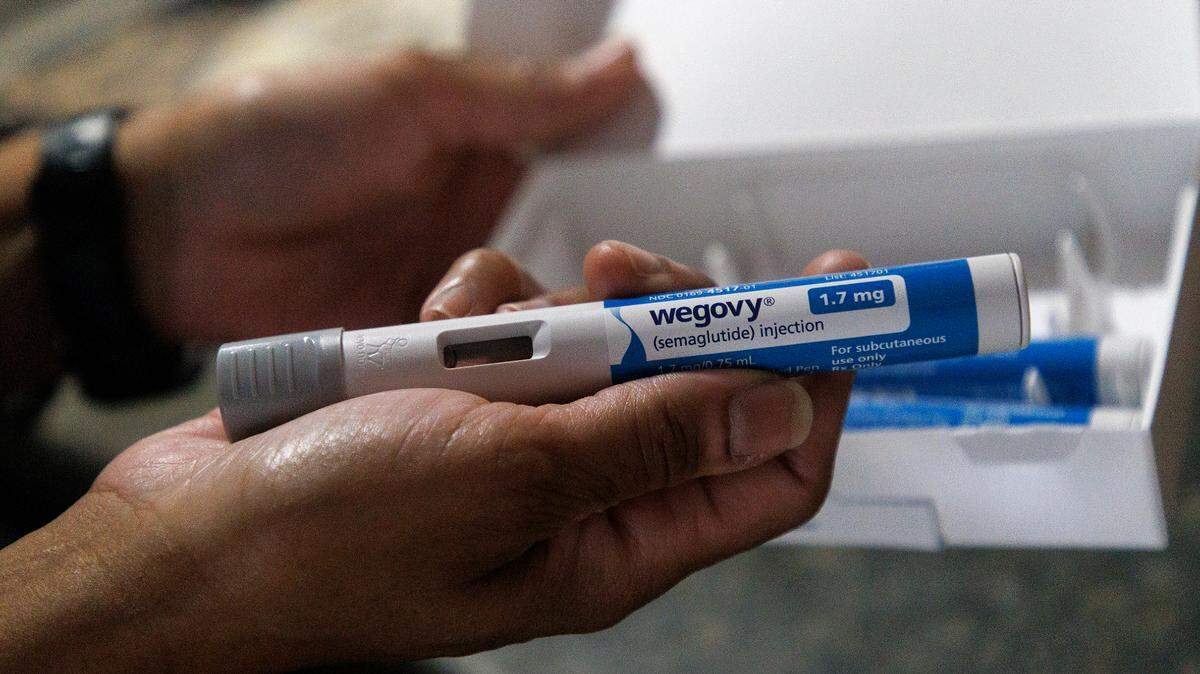
In an unconventional alliance, Republican North Carolina State Treasurer Dale Folwell spoke at a discussion forum Tuesday held by progressive U.S. Sen. Bernie Sanders of Vermont on the high cost in the United States of popular weight-loss drugs such as Wegovy and Saxenda.
The State Health Plan voted in January to no longer cover Glucagon-like peptide 1 (GLP-1) agonist medications for weight loss starting in April.
This left thousands of state employees without access to these popular and effective medications. The SHP has cited unsustainable costs as the reason for the cut.
Sanders said Novo Nordisk — the Danish manufacturer of GLP-1 drugs Wegovy, Saxenda and Ozempic — charges Americans with Type 2 diabetes $969 a month for Ozempic.
In contrast, the same drug can be purchased for $59 in Germany, $71 in France, $122 in Denmark and $155 in Canada, Sanders said during an expert roundtable event on Capitol Hill, which was live-streamed on his social media.
GLP-1 drugs approved for weight loss by the Food and Drug Administration include Wegovy, Saxenda and Zepbound. Ozempic and Mounjaro are also GLP-1s, but these are prescribed for diabetes and remain covered under North Carolina’s health plan.
As for people who use GLP-1s for weight loss, Novo charges $1,349 a month in the United States for Wegovy, while it charges far less in other countries, Sanders said.
Eli Lilly and Co., a U.S. company also known as Lilly, manufactures Zepbound and Mounjaro. The list price of Zepbound is $1,059.87 per fill and for Mounjaro it’s $1,069.08 per fill, according to the Lilly website.
Sanders was speaking about the list price and not the net price, or the final price of a product after discounts, all taxes and other costs have been taken into consideration. The federal government can also negotiate with drug companies the prices that Medicare will pay for certain high-expenditure drugs.
Pharmacy benefit managers (PBMs) and insurance companies negotiate with drug manufacturers for discounts on drugs.
The state’s health plan contracts with a PBM, CVS Caremark, to negotiate discounts. The state pays out the full price of drugs and later gets back a percentage of these costs based on rebates negotiated by the PBM.
“As important and groundbreaking as these drugs may be, they will not do any good for the millions of people who cannot afford a drug,” Sanders said.
Speaking on the financial implications, Sanders said that if half of the adults with obesity in the U.S. took these weight-loss drugs at the current price point, estimates suggest that it would cost the country $411 billion per year, or $5 billion more than what Americans spent on all retail prescription drugs in 2022.
“In other words, the outrageously high cost of these drugs could bankrupt Medicare, while gradually increasing insurance premiums to absolutely unaffordable rates,” he said.
Novo Nordisk spokesperson Stacy Beard said in an email that “the net price of Ozempic has declined by 40% since launch in the US and Wegovy is following a similar trajectory.”
“Moreover, 99 percent of commercial plans cover Ozempic, and over 80 percent of Americans with insurance only pay $25 or less per month. Unfortunately, even when we lower our prices, too often patients in the United States don’t receive the savings - this is a problem,” said Beard.
“We appreciate that it is frustrating that each country has its own healthcare system but making isolated and limited comparisons ignores this fundamental fact. What remains constant is the indisputable value and cost savings Novo Nordisk medicines bring to patients, healthcare systems and society,” she wrote in an email.
“We have and will continue to cooperate with policymakers on real solutions and are proud of the benefit our discoveries have brought to treat and defeat chronic diseases like diabetes and obesity.”
A Lilly spokesperson, Antoinette Forbes, wrote that “breakthrough medicines like Mounjaro and Zepbound don’t just happen” and required “tireless work and an investment of tremendous resources over two decades.” She said that since 2017 for these medicines the company had designed, funded, and conducted 37 studies and trials and in the last four years, invested over $18 billion in new manufacturing facilities.
She also said that “Lilly has led the way on access and affordability,” having launched “Zepbound at a list price 20% lower than our competitor, and last month we launched single-dose vials” for self-pay patients “priced at a 50% or greater discount compared to the list price of all other incretin (GLP-1) medicines for obesity.”
Generic versions
Sanders, an independent who caucuses with Democrats, also said that he had learned through a series of conversations with the CEOs of major generic pharmaceutical companies that they could sell a generic version of Ozempic for less than $100 a month. Novo Nordisk and Eli Lilly (the U.S. manufacturer of Mounjaro and Zepbound) own patents for GLP-1s.
There are off-brand versions of these weight loss drugs made by compounding pharmacies, but these are not FDA-approved.
Folwell said that “this is not a Republican, Democrat, unaffiliated, Libertarian issue” but “a moral issue when people cannot afford the drug they need to take advantage of this.” Folwell is a Republican who ran unsuccessfully for governor. He is capping off his last year as the state’s treasurer.
“We never questioned the efficacy of this drug. We’re simply questioning what we’re having to pay for it,” he said, adding that if the SHP had continued covering these drugs, it would have had to double the individual premiums on state employees.
He also cited the recent coverage by Medicaid of these drugs, saying that he’s asked “them what they’re paying for it, and no one will tell me what they’re paying for it”
NC Medicaid started covering FDA-approved obesity management medications for beneficiaries 12 and older on Aug 1.
For the added Medicaid coverage, a public notice posted July 10 on DHHS’ website says that the change will cost the state more than $21 million in 2025 and over $15 million in 2026.
Novo Nordisk CEO Lars Fruergaard Jorgensen will testify before the Senate Health, Education, Labor and Pensions Committee next week. This committee is chaired by Sanders.
This story was originally published September 17, 2024 at 3:51 PM.