
A woodpecker found in NC is no longer ‘endangered.’ But can it still survive?
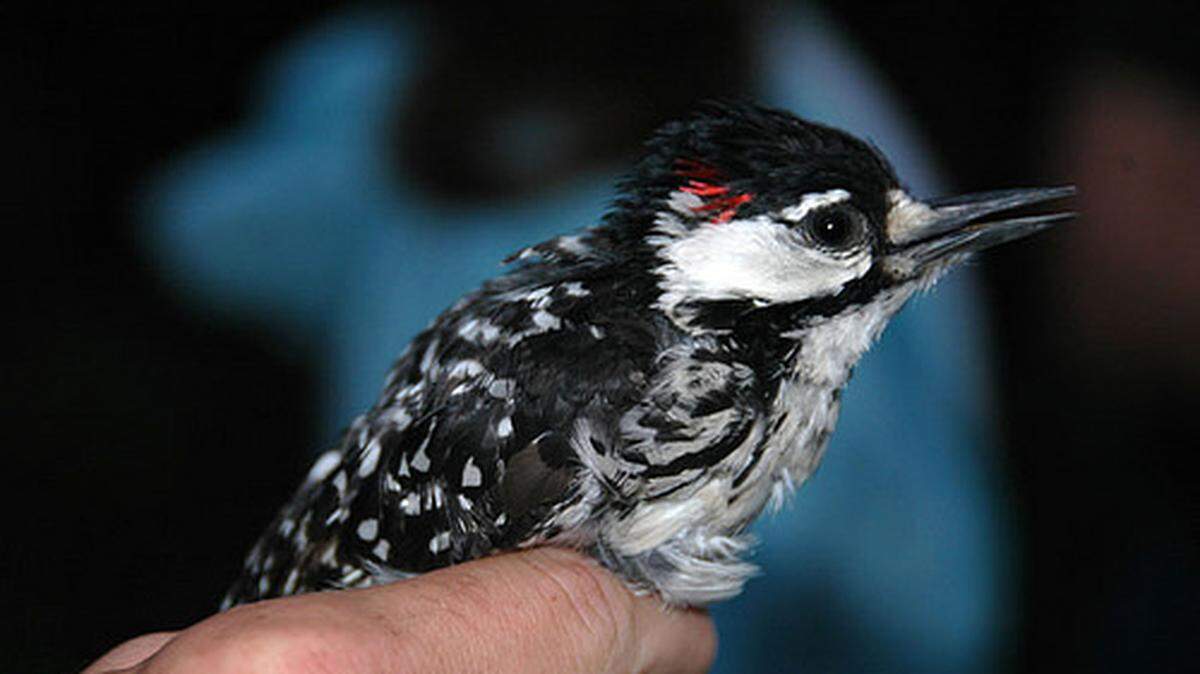
A rare woodpecker that is found in parts of Central and Eastern North Carolina has recovered to the point that the U.S. Fish and Wildlife Service has formally shifted it from endangered to threatened.
In late November, the status of the red-cockaded woodpecker officially changed.
Some biologists are celebrating the move as a sign of decades of careful conservation, including prescribed burns that preserve the birds’ favored habitat, the installation of artificial cavities in pine stands, and partnerships with private and public landowners. Others argue progress has been made but that downlisting now is premature and leaves the bird at risk of becoming endangered again.
Jeffrey Walters, a Virginia Tech biologist whose research includes long-term studies of red-cockaded woodpeckers at Camp Lejeune and in the Sandhills, said the downlisting is appropriate because the species is no longer at risk of extinction.
“They’re doing much, much better. We know how to manage them, so as long as we keep managing them correctly they should be fine,” Walters told The News & Observer.
The Fish and Wildlife Service included protections known as 4(d) rules in the downlisting, maintaining a large portion of the measures that protected red-cockaded woodpeckers when they were endangered.
For example, it is still illegal to harass, harm or kill — formally known as “take” — red-cockaded woodpeckers in most circumstances.
In a change, it will be legal to incidentally take the species as a byproduct of training on Department of Defense installations as long as the activity is approved under a management plan. The new rule also allows incidental take on private and public lands in connection with management activities like prescribed burns intended to boost red-cockaded woodpecker habitat, as long as agencies and landowners minimize the impact to birds they know about.
“We’re grateful for the 4(d) rule, but unfortunately we are disappointed at the timing. We feel like we’re still a little short of crossing the goal line, so to speak, and would like to see more effort put into the recovery before downlisting occurs,” said Ben Prater, Defenders of Wildlife’s Southeast program director.
Notably, Prater said, Defenders of the Wildlife wanted to see the red-cockaded woodpecker populations reach levels that were set out in a 2003 recovery plan. In its final rule, the Fish and Wildlife Service wrote that while some of the woodpecker’s populations are still short of their objectives, existing clusters are growing and should have “sufficient resiliency” to future shocks as long as management remains effective.
In North Carolina, there are three main populations of red-cockaded woodpeckers. Those are:
- The Coastal Carolina Primary Core, which covers an area including the Croatan National Forest, Camp Lejeune and Holly Shelter Game Lands. The recovery target was 350 birds, and there are 238.
- North Carolina Sandhills, which includes two subpopulations. One of these is primarily found at Fort Liberty and the Weymouth Woods State Nature Preserve, while the other is found at Camp Mackall and the Sandhills Game Lands. This population is considered recovered, with its 781 birds surpassing the 750 target.
- The Northeast North Carolina/Southeast Virginia Primary Support, which covers an area including the Alligator River National Wildlife Refuge, Dare County Bombing Range and Pocosin Lakes Nation Wildlife Refuge. This is considered recovered, with 151 birds surpassing the 150-bird target.
History of endangerment
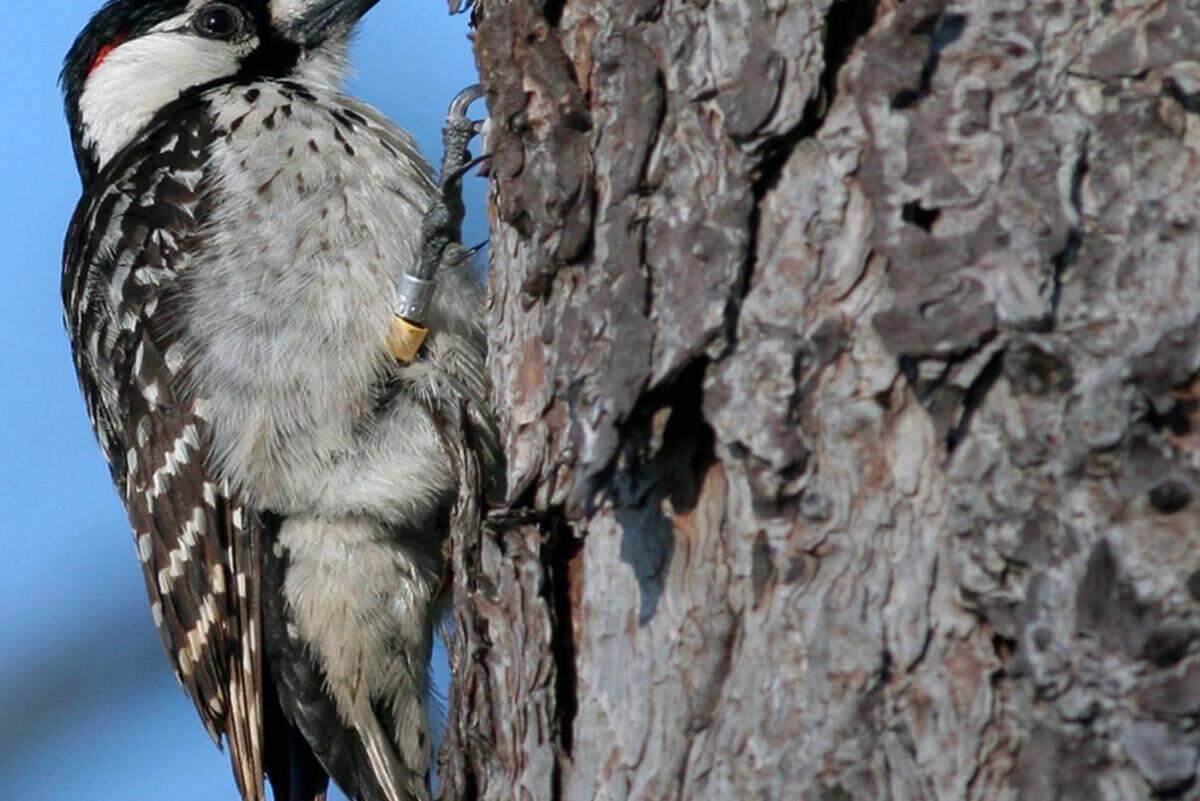
Red-cockaded woodpeckers are small black-and-white birds with white patches on their cheeks. Their name comes from small red streak on the upper cheek of the species’ males.
The species was first classified as endangered in 1970, with the first protections enacted in 1973.
Red-cockaded woodpeckers live in very old pine trees, ideally longleaf pines. They need trees that are at least 80 years old, often suffering from a fungus called red heart disease that softens the inner wood. As the birds excavate the trees, they hit resin wells that spill sap down the trunks, keeping predators like rat snakes away, according to the U.S. Fish and Wildlife Service.
The pine savannahs the woodpeckers depend on were frequently cleared in the late 1800s and early 1900s, used for timber or shifted to agriculture usage. Around the time of colonization, there may have been 200 million acres of red-cockaded woodpecker habitat in the Southeast. Today, that’s around 3 million acres, according to the U.S. Department of Agriculture’s Natural Resources Conservation Service.
Threats to red-cockaded woodpeckers
The problem is that many of the clusters of red-cockaded woodpeckers are far apart, and the birds do not fly long distances, said Liz Rasheed, a Southern Environmental Law Center attorney who is concerned about the downlisting.
In the event of a hurricane or disease outbreak, a cluster could be lost entirely, Rasheed warned. And, she added, climate change is also threatening populations with sea level rise turning key pine stands into ghost forests in some places while winds from storms like Hurricane Helene fell inland trees that the species depends on.
“That’s really what we’re seeing across a lot of the range is tiny, isolated populations that can’t survive on their own and can’t support dispersal,” Rasheed said.
Per the Fish and Wildlife Service, adult male red-cockaded woodpeckers will fly about eight-tenths of a mile from their homes to nearby territories, while juvenile males can fly about six miles to establish new territory. If gaps between territories are too large, the woodpeckers become increasingly unlikely to bridge them.
“You’re literally putting your eggs in a single basket and if that basket turns over or gets interrupted it can have a significant impact on the population and therefore on the recovery of the species,” Prater said.
Rasheed is also worried about the impact loosening protection will have on military installations like Fort Liberty, which has reached its recovery goals but is planning to build a training range that will require the destruction of a 1,300-acre swath of pine forest. The project would result in the loss of as many as 40 woodpeckers, with as many as 20 more threatened as birds whose habitat is lost move around.
“We’re really concerned about backsliding on the bases in the recovery gains in particular because those are some of the strongest populations and biggest sources of genetic diversity for the species that remain,” Rasheed said.
Walters, the Virginia Tech biologist, often doesn’t even need to look at a habitat to tell if the red-cockaded woodpecker population there is going to recover.
Instead, he just needs to talk to the person in charge of managing it. If that person is serious about management efforts like prescribed burning around pine stands and installing artificial cavities into younger pine trees, Walters said, the species stands a very good chance of recovering there.
Maintaining those same activities, Walters said, will be key to whether the species continues its recovery now that it is no longer formally endangered.
“You can’t just stop doing the management you’ve been doing now that they’re downlisted. ... If they keep doing those things, they’ll be fine. If they stop doing them, they won’t be fine,” Walters said.
This story was produced with financial support from the Hartfield Foundation and Green South Foundation, in partnership with Journalism Funding Partners, as part of an independent journalism fellowship program. The N&O maintains full editorial control of the work. If you would like to help support local journalism, please consider signing up for a digital subscription, which you can do here.