Incoming NC auditor Dave Boliek says he didn’t seek new powers over state elections board
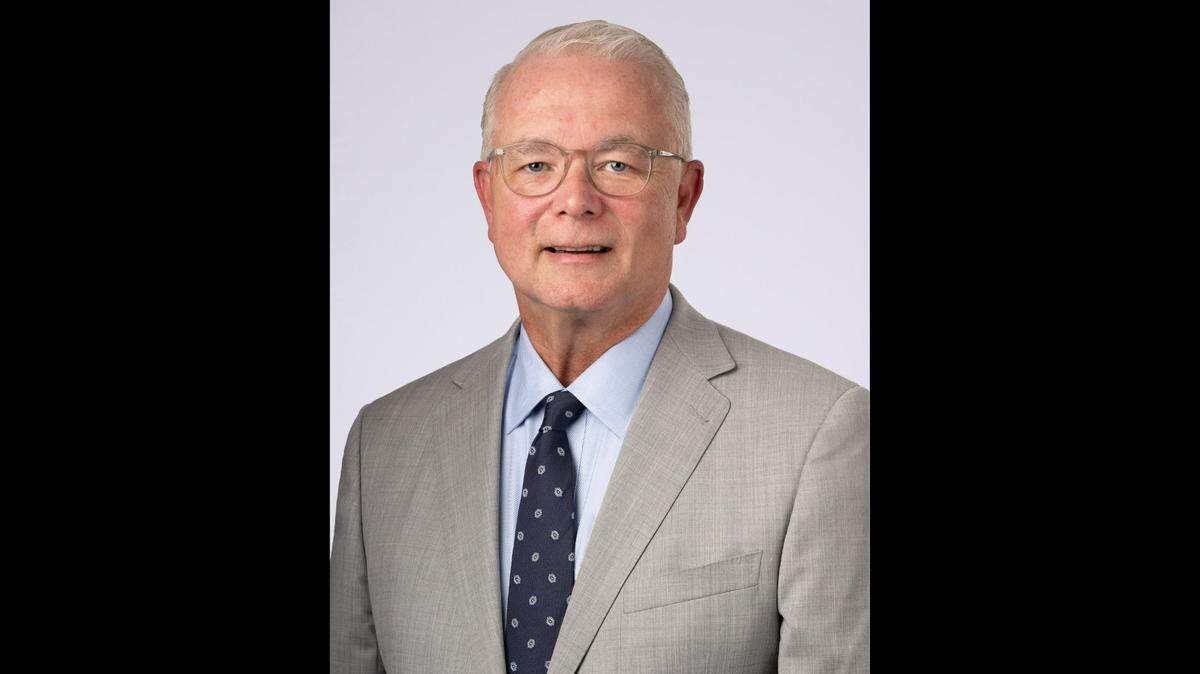
North Carolina Auditor-elect Dave Boliek says he did not seek the new powers over the State Board of Elections that legislators voted to give him this week.
In a bill originally expected to primarily handle disaster relief matters related to the devastation Hurricane Helene caused in Western North Carolina two months ago, Republican legislators included several additional policy changes and power shifts — including a move that would strip the governor of the authority to appoint the members of the State Board of Elections and reassign that power to the state auditor.
Both chambers of the General Assembly passed the bill. It now goes to the desk of Gov. Roy Cooper, who criticized the sweeping bill as “legislators prioritizing power grabs over Western North Carolina recovery.”
The current law allows the governor to appoint all five members of the state elections board, with the ability to appoint a 3-2 majority of members from their own party. The board has been controlled by Democrats since 2017, when Gov. Roy Cooper took office. Attorney General Josh Stein, also a Democrat, was elected to be the next governor in the Nov. 5 election.
Those powers, if the bill becomes law, will now rest with the state auditor — an office, once Boliek assumes the role in January, that will be led by a Republican for the first time in 16 years.
Republican Senate leader Phil Berger told reporters on Thursday, after his chamber approved the bill, that lawmakers decided to shift the powers to the auditor because of their longstanding issues with how the board operated under Cooper’s appointees. Berger said the decision to task the auditor with the appointments was not due to Boliek being a Republican, but instead “because we felt the auditor’s office was a place that would work.”
Among the critics of the move is former Gov. Pat McCrory, a Charlotte Republican.
“The majority of North Carolinians, including me, voted for the state auditor-elect to investigate waste, fraud, and abuse in state government— not appoint the Board of Elections,” McCrory said Wednesday in a news release from RightCount North Carolina, a nonprofit focused on election integrity. “Both political parties should stop playing games with the administration of elections, which shakes the confidence of voters in our voting system.”
The State Board of Elections is responsible for approving voting plans, overseeing county election workers and certifying election results.
Typically, the Office of the State Auditor conducts audits of state agencies and their use of public funds. The state auditor is the state’s top watchdog of government and state spending.
Reached by phone Thursday, Boliek told The News & Observer he would provide a statement on the new powers he is likely to gain, but said he did not want to answer additional questions about the issue.
The statement read: “Our office has not sought any additional executive authority, but we will be prepared to manage any responsibilities delegated to the office by the General Assembly in a professional, efficient and non-partisan fashion as the citizens of our state expect from their State Auditor.”
Previous pledge to audit state board
In his bid to secure the auditor role, Boliek often said his top priority if elected would be to audit the Division of Motor Vehicles.
Lawmakers have criticized the DMV in recent years, calling it “broken” and questioning the long wait times customers experience at driver’s license offices and the agency’s outdated technology, among other issues.
“Clearly, there is a breakdown in the way that agency is managed. Individual DMV offices are lacking the resources and support to accomplish the mission of issuing licenses, issuing IDs, registering vehicles and other regulatory functions,” Boliek wrote in an N&O candidate questionnaire for the Nov. 5 election. “A full audit with well thought out recommendations for reform is vital to all North Carolinians.”
In an N&O questionnaire he completed before the March primary election, Boliek also pledged to audit “agencies that have not been audited for years” — pointing specifically to the State Board of Elections as one example. According to the Office of the State Auditor’s website, the state board was last audited in 2011.
Now, Boliek will be tasked with appointing the members of that same board.
It is unclear whether Boliek or his staff would be ethically able to audit the elections boards if he’s given the new powers over them.
According to the bill, the state board will continue to “exercise all its prescribed statutory powers independently of the State Auditor,” but the auditor will direct and supervise the board’s budgeting functions. The auditor will also gain the power to appoint the chairs of county-level boards of elections, a power that is also currently assigned to the governor.
In an interview with The N&O prior to a May runoff election for the Republican nomination in his race, Boliek outlined several other actions he might take as auditor to ensure election integrity. That included ensuring the accuracy of voter rolls and performing audits of voting machines, technology and tabulation, in addition to an audit of the state board.
The auditor’s office is “uniquely situated to effectively give the voting public confidence in the way elections are run in our state,” Boliek said at the time.
In the same bill that shifted the authority over the State Board of Elections, lawmakers also included several additional provisions related to elections and voting. The new rules would significantly shorten the time voters have to fix issues with their provisional ballots and require counties to finish counting all provisional ballots on the third day after Election Day, a process that took nearly two weeks this year.
Time on the UNC trustees, vote to redirect DEI funding
Boliek will gain these new responsibilities in a job that is new to him, having never held elected office prior to becoming auditor.
Now an attorney with a Fayetteville-based personal injury and criminal defense law firm, Boliek has previously worked as a journalist, political consultant and prosecutor, among other roles. He is the son of former longtime WTVD reporter David Boliek, who died in 2018.
Since 2019, Boliek has served on the UNC-Chapel Hill Board of Trustees, the governing board of his alma mater.
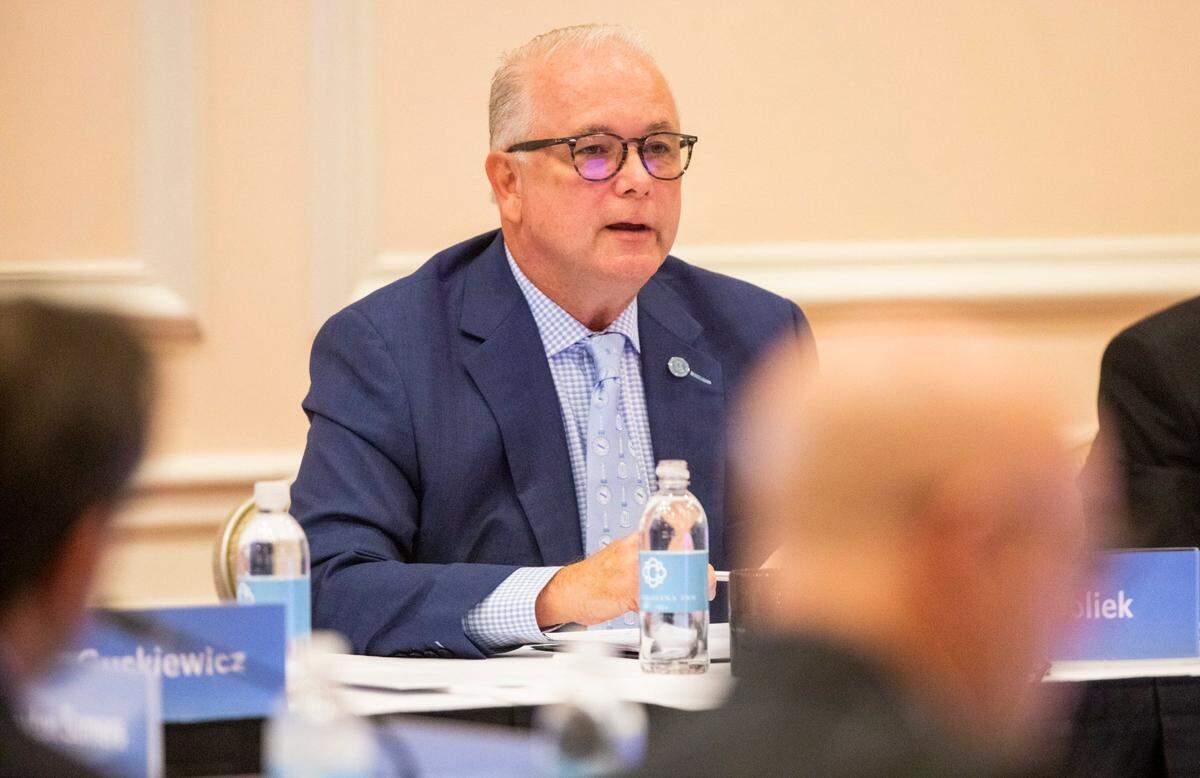
Boliek became chair of the board in 2021, shortly after the board concluded its months-long battle over whether journalist Nikole Hannah-Jones would be granted tenure to teach at the university. The board eventually voted to grant Hannah-Jones tenure, but Boliek voted against the measure. His term as chair ended in 2023, but Boliek remained on the board.
In his time as a trustee, Boliek supported the controversial and fast-paced development of the university’s School of Civic Life and Leadership, the overhaul of its budgeting process and the UNC System’s repeal of diversity, equity and inclusion mandates, among other measures.
Many members of the UNC-Chapel Hill board, including Boliek, were vocally against DEI measures before the UNC System largely banned the efforts this spring.
At a March meeting, Boliek said he believed DEI had caused “distrust” in higher education, and urged the board to evaluate how it could redirect funds UNC was spending on the measures to other areas of the university. Two months later, the board voted to redirect the funds toward police and public safety — a move the UNC System president later said the trustees did not have the authority to make.
Boliek, who will become a state employee once he enters the auditor’s office, will be required to resign from the Board of Trustees as a result of his new role. The UNC System Board of Governors will be tasked with appointing his replacement.
Boliek previously told The N&O it would be “bittersweet” to leave the board.
“I’ve always said that I thought it was an honor to be on the Board of Trustees at my alma mater, and I believe, in my heart of hearts, that our board has made a positive impact in Chapel Hill,” Boliek said. “Clearly, not everybody agrees with everything we do, but I think the trajectory of the university is really moving in the right direction in a lot of areas.”
Previously a lifelong Democrat, Boliek switched his party registration to Republican last year. He vowed in an N&O candidate questionnaire to “leave the political party affiliation at the door.”
“Accountability is the most important issue and that requires courage and backbone,” Boliek wrote. “The auditor’s job is to protect taxpayer dollars and no individual will receive special treatment.”
This story was originally published November 21, 2024 at 5:56 PM.