
NC’s environmental justice board has made strides. Now it eyes another Trump era.
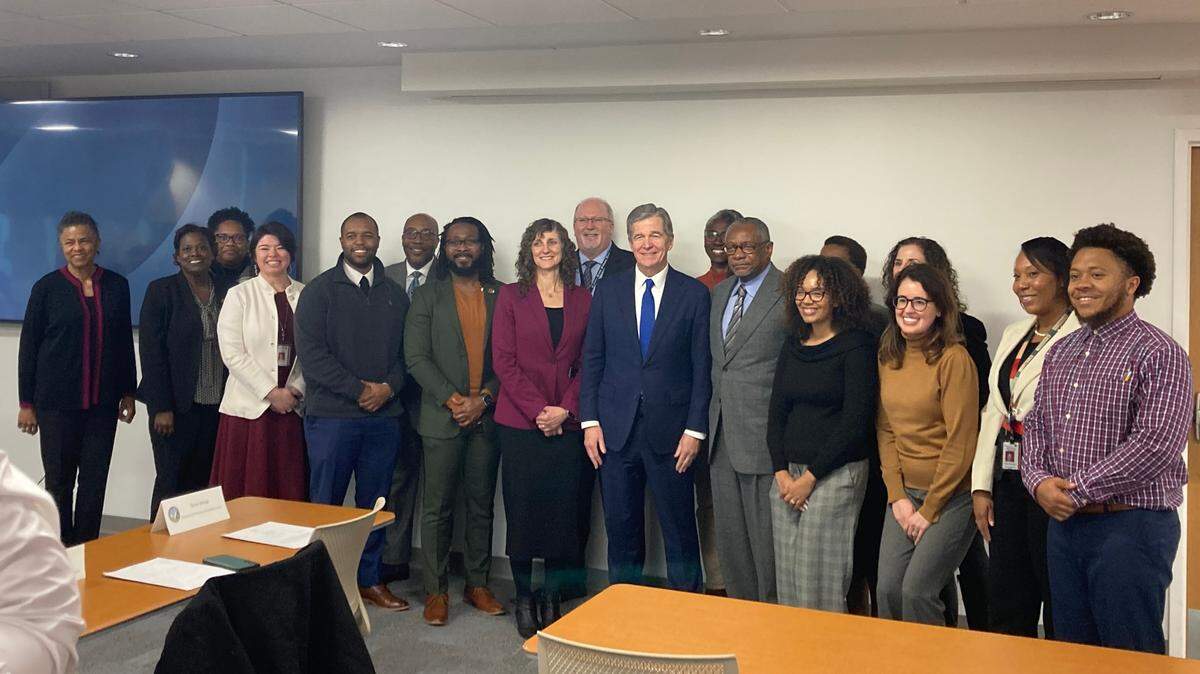
Under Gov. Roy Cooper, North Carolina’s government has started to pay attention to environmental justice for the first time in state history, with a pair of executive orders and a state advisory group focused on protecting communities that have been overburdened with pollution.
The Governor’s Environmental Justice Advisory Council celebrated its progress at a meeting Tuesday while acknowledging that progress may become more difficult once President-elect Donald Trump returns to the White House.
James Johnson Jr., a UNC-Chapel Hill business professor who serves as the committee’s co-chairman, sounded a note of wariness about the Trump administration while calling for the group’s members to hold steady.
“I still think that we need to assume we’re moving forward in a positive direction. Our work will be a little bit more difficult, but if it were easy everyone would be doing it,” Johnson said.
It was not immediately clear if Gov.-elect Josh Stein intends to keep the Environmental Justice Advisory Council in place and, if so, how Stein sees it shaping administration policy. A spokeswoman for Stein’s transition team did not respond to an email requesting comment on the advisory council.
Unless repealed, the portion of Cooper’s Executive Order 292 that shifted the environmental justice board from advising the N.C. Department of Environmental Quality’s secretary to advising the governor will remain in place until Oct. 31, 2027.
Members of the council also discussed the likelihood that should the council stay intact, it will be working in an era where Trump’s government views the term “environmental justice” with suspicion where the Biden administration took steps to promote the idea.
Project 2025, a conservative blueprint for the Trump administration, describes a retreat from Biden-era policies. Those include eliminating the U.S. Environmental Protection Agency’s Office of Environmental Justice and External Civil Rights, an office whose founding EPA Administrator Michael Regan announced in Warrenton in 2022. The plan also describes a desire to stop awarding Inflation Reduction Act grants to nonprofits and environmental science.
Making progress could require recasting environmental justice, including working with groups that may not have traditionally considered it, said Marilynn Marsh-Robinson, a council member and the Environmental Defense Fund’s director of partnerships and outreach.
The phrase “environmental justice” could carry a stigma, Marsh-Robinson said, adding, “I think that will impact the funding because if you put something in the budget that may be seen to kind of help these efforts it may become a target and may not get funded.”
Environmental justice in North Carolina
The environmental justice board started in 2018 as an advisory board to then-DEQ Secretary Regan. Now, the council includes representatives from each cabinet agency plus 11 appointments from Cooper.
In October, the 22-member council issued a report that made 14 recommendations including calling for North Carolina’s government to:
- Create a formal Office of Environmental Justice as part of the Governor’s Office of Public Engagement.
- Create an environmental justice index for North Carolina that incorporates health data and permitting data, but also information about the locations of farms that raise large numbers of animals, other agriculture-related exposures and private wells.
- Require that all state and local government employees undergo environmental justice training, focusing on how the concept of environmental justice fits within the specific agency’s mission.
Visiting the council this week, Cooper praised members for the report and expressed optimism that Stein and his cabinet secretaries will pay attention to it.
“It’s going to be something that I believe the next administration and cabinet agencies in the future will look at and want to make sure that they are making a part of the work that they are doing,” Cooper said.
Cooper also discussed a mapping tool championed by the council that incorporates environmental permitting data, health data, climate change stressors and demographics, among other information. The tool has “extraordinary potential,” Cooper said, while it will also “cause some complex issues for us to face.”
Additionally, Cooper said that environmental justice is part of the reason he has developed a keen interest in the transition away from fossil fuels to carbon-free energy sources.
“We know that this is going to be a process in order to move completely to clean energy, but the fact that we’ve been able to do that and make North Carolina an epicenter for clean energy is not only going to help clean up our environment and help address the environmental justice movement, but also provide money in people’s pockets,” Cooper said.
A commitment to Justice40
Under President Joe Biden, the Environmental Protection Agency implemented Justice40, an initiative intended to send at least 40% of energy and infrastructure investments from packages like the Inflation Reduction Act and Bipartisan Infrastructure Law to communities that are either overburdened by pollution or in which the federal government has underinvested.
Those areas are scattered throughout North Carolina, covering large swaths of the Coastal Plain and Sandhills regions, according to the federal government’s Climate and Economic Justice Screening Tool.
Even if the incoming Trump administration scraps the Justice40 initiative, North Carolina officials intend to keep following its guidelines for at least one grant they received under the program, Bailey Recktenwald, a Cooper climate change policy adviser, told the environmental justice group this week.
In July, North Carolina led a four-state coalition that won a $421 million grant from the EPA’s Climate Pollution Reduction Grant Program. Along with Maryland, South Carolina and Virginia, North Carolina officials intend to work over the next five years to use those funds to restore and preserve natural lands like forests and salt marshes that can store carbon.
North Carolina will receive $50 million to enact its projects, while $68 million of The Nature Conservancy’s allocation is tabbed for projects in the state.
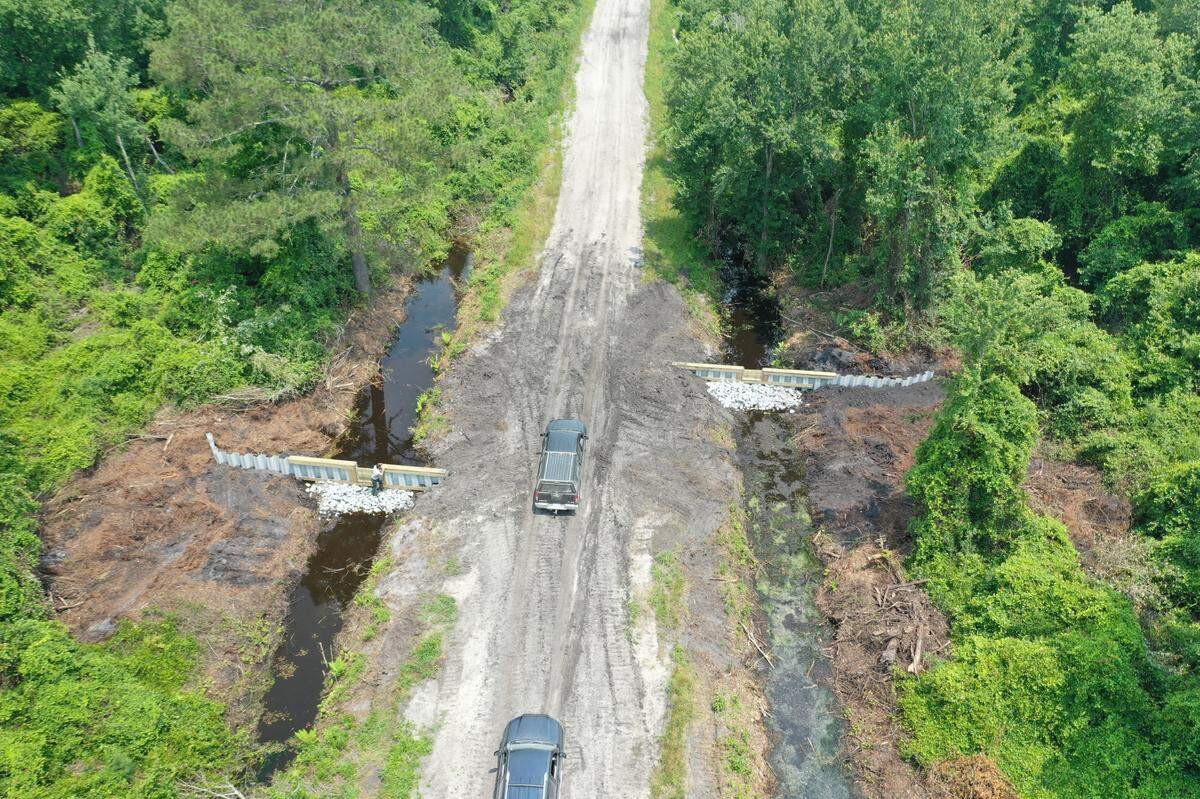
In North Carolina, that means the planned addition of 3,300 acres for state parks, the restoration of 33,000 acres of peatland in partnership with The Nature Conservancy, and an urban tree planting grant program for small-to-medium municipalities.
“We have this grant secured, we do not feel as if this funding is at risk and North Carolina is committed to making sure that Justice40 is still being followed, even if the federal government doesn’t care,” Recktenwald said.
Order of the Long Leaf Pine
During Tuesday’s meeting, Cooper also presented Naaema Muhammad, a longtime North Carolina environmental justice advocate, with the Order of the Long Leaf Pine. Muhammad, who has been ailing, was calling into the meeting virtually.
Shortly after Cooper walked into the conference room and started speaking, Muhammad couldn’t hear his voice over WebEx. Characteristically frank, Muhammad asked the governor to speak up.
Saying he would, Cooper added, “I might be talking about you in a minute.”
“Come on with it,” Muhammad said.
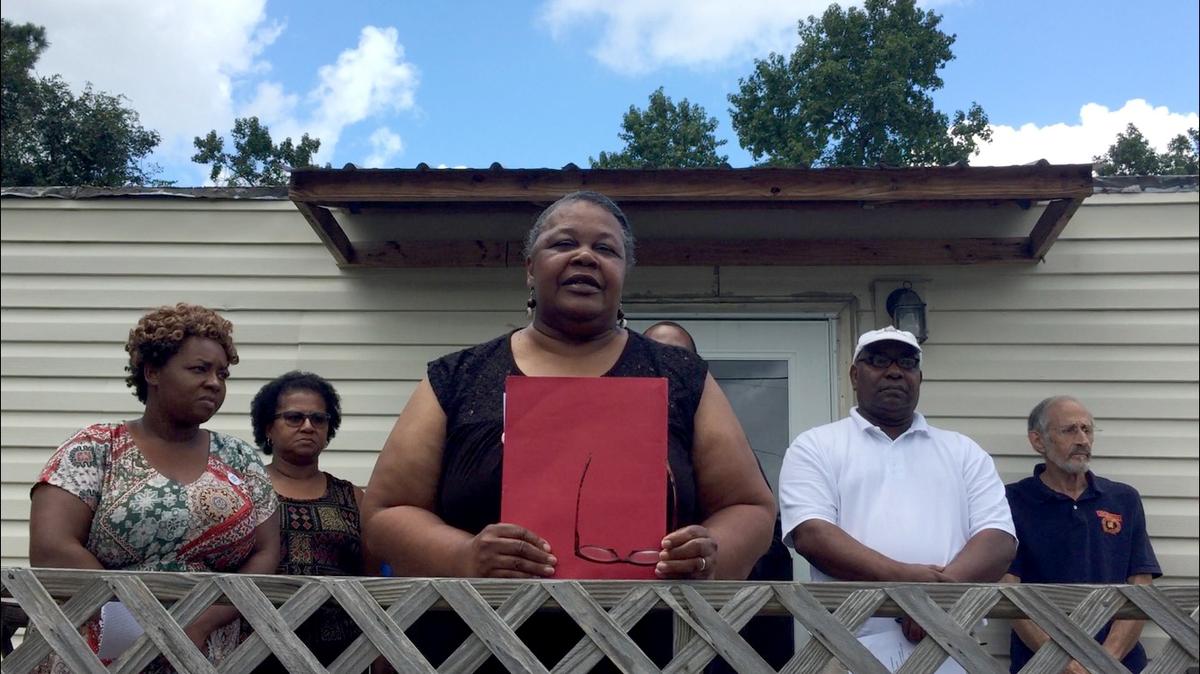
A resident of Rocky Mount, Muhammad is a former co-director and longtime employee of the N.C. Environmental Justice Network. Before that, Muhammad founded Black Workers for Justice and worked as an activist and organizer in her native Philadelphia.
In Eastern North Carolina, Muhammad has spent years focused on the effects large-scale agriculture such as hog farms and the associated waste have on neighboring communities. That work has included traditional advocacy, but also partnering with researchers who studied how the industry impacted nearby residents.
After receiving the award, Muhammad said, “Thank you so much, Governor Cooper, for pulling a fast one.”
This story was produced with financial support from the Hartfield Foundation and Green South Foundation, in partnership with Journalism Funding Partners, as part of an independent journalism fellowship program. The N&O maintains full editorial control of the work. If you would like to help support local journalism, please consider signing up for a digital subscription, which you can do here.
This story was originally published December 6, 2024 at 12:26 PM.