
EPA just made the largest-ever environmental justice grant. Here’s what it means in NC.
From overhauling a community college building in High Point to replacing lead pipes in Brunswick County, the U.S. Environmental Protection Agency is funding three North Carolina projects with a program it is calling the largest-ever investment in climate and environmental justice.
The agency’s Community Change Grants Program is awarding a total of $1.6 billion to 105 projects nationwide, funding through the Inflation Reduction Act, Democrats’ hallmark climate legislation under President Joe Biden.
The grants are coming at a moment when organizations and activists who work on environmental justice are concerned about their efforts losing traction — and funding. EPA Administrator Michael Regan told The News & Observer the three North Carolina projects offer “a flavor” of different ways to think about climate and environmental justice.
“We’re looking at pollution protection but we’re looking at the anticipation of and sustainable ways to endure the climate impacts that we’re facing. But we’re also wanting to ensure that every community has the opportunity to be educated and prepared and trained to participate in the clean energy economy,” Regan said.
In North Carolina, those projects include:
- $18.5 million to a coalition led by the Southwest Renewal Foundation for a project called “Grey to Green” in High Point. The funds will help pay for sewer rehabilitation in Southwest High Point; help Guilford Technical Community College renovate a building for training in HVAC, electric vehicle batteries and other trades; and help install a new HVAC system at Fairview Elementary School, among other projects. The grant will also help plant 1,000 native trees and shrubs.
- $20 million to The Working Lands Trust and Democracy Green for a project in the Ash, Longwood and Supply areas of Brunswick County. The groups will test water quality at homes and public buildings built before 1986, with plans to identify and replace lead pipes in 425 buildings. It will also restore wetlands in the Lockwood Folly River Watershed.
- Nearly $3 million to MDC Inc. and Hispanic Federation to train community leaders from six rural Eastern North Carolina community organizations on the government process. The grant will also compile data about Eastern North Carolina infrastructure and impacts from floods such as Hurricanes Matthew and Florence.
As in North Carolina, Regan added, most of the projects that are funded through the grants are geared toward cleaning up air, land or water.
Regan also expressed hope that the incoming Trump administration will not try to claw back Community Change Fund grants that have already been obligated. Trump, Regan noted, has said publicly that he believes in clean air and clean water for everyone.
“I am confident that when the new administration takes a look at what is actually happening on the ground in districts where people voted for the new administration, or maybe they didn’t, they will see that this money is being used to provide more access to clean air and clean water and empower communities to pursue this in a self-determining way,” Regan said.
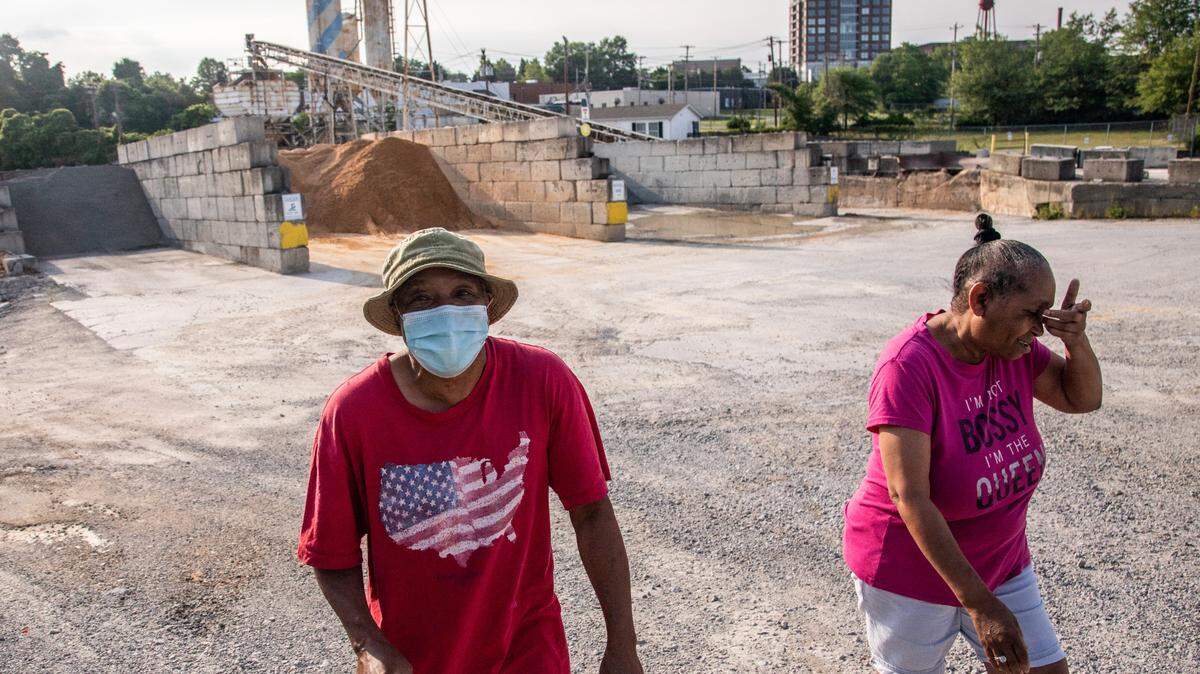
The News & Observer and Charlotte Observer featured the Southwest High Point area that is receiving funds in a 2023 article titled “Exposed & Overlooked.” The article focused on the areas of the state that have the highest concentration of toxic permits and how North Carolina’s laws prevent regulators from considering existing contamination when deciding whether to grant a new permit.
Facilities in Southwest High Point hold a total of 13 air quality permits, with seven toxic release permits being the highest of any neighborhood in the state, the McClatchy analysis found.
Dorothy Darr, the Southwest Renewal Foundation’s executive director, said the area has long been overlooked and disadvantaged. The grant, Darr said, offers a chance for the area to not only address existing exposure to pollutants but also create opportunities for the people who live there.
Darr said she believes the High Point project offers an example for addressing environmental injustice at the local level.
“As federal projects go up and down in relation to climate and in relation to public health and environmental health, I think the real leader now is going to be municipalities — the lowest level — with land-use policies and these types of partnerships with nonprofits, because we are the most agile. We know the area the best,” Darr said.
In High Point, Guilford Technical Community College will receive $4.4 million to renovate a 13,200-square-foot warehouse on its South Main Street Campus. Those renovations will create four bays, with one focused on HVAC training, another on construction trades and a third on apartment and facility maintenance.
Anthony Clarke, the community college’s president, said the fourth bay will either train masonry or battery manufacturing. The college will also be able to adopt the training bays to meet demand from local industry.
Training at the center would be focused, Clarke said, on bringing technical training in sustainable materials and technology to a campus that hasn’t yet offered such programs.
“The idea is to incorporate what’s happening in industry around energy efficiency and sustainable technologies into our curriculum and to teach our students to work in that environment,” Clarke said.
This story was produced with financial support from the Hartfield Foundation and Green South Foundation, in partnership with Journalism Funding Partners, as part of an independent journalism fellowship program. The N&O maintains full editorial control of the work. If you would like to help support local journalism, please consider signing up for a digital subscription, which you can do here.
This story was originally published December 12, 2024 at 12:59 PM.