Federal lawsuit accusing NC Senate districts of diluting Black votes set to go to trial
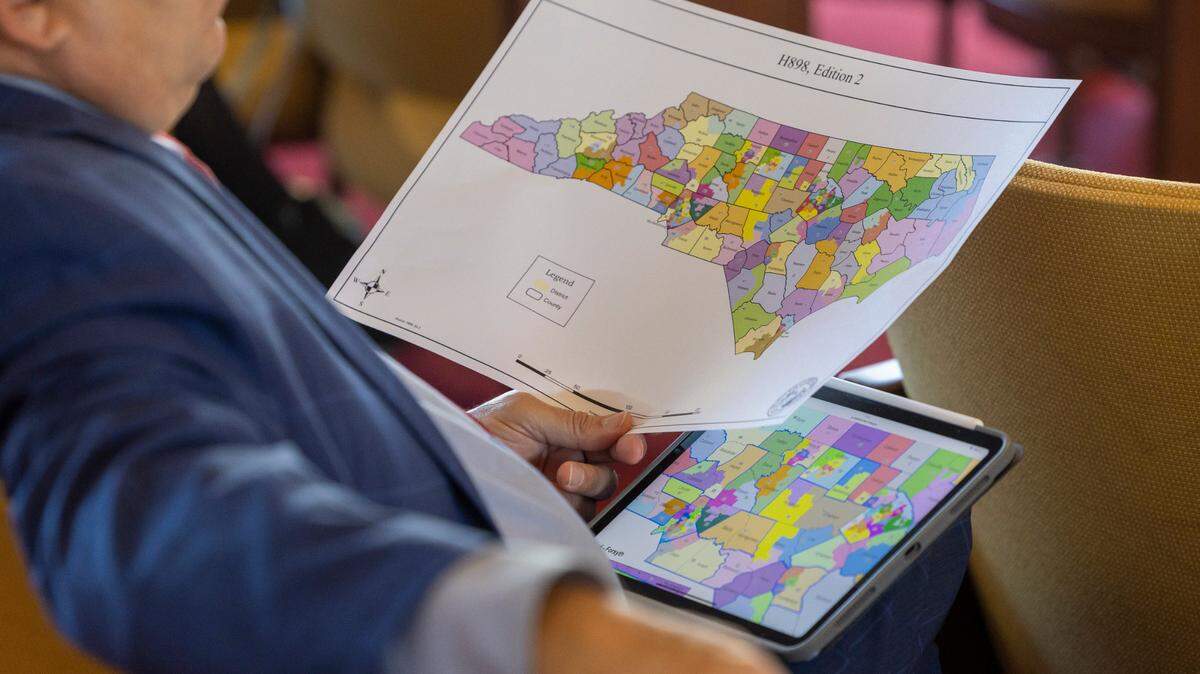
A federal lawsuit accusing North Carolina lawmakers of racial gerrymandering is heading to trial this week.
Two Black voters will make their case that the Republican-crafted state Senate map illegally splits Black voters in Eastern North Carolina among several electoral districts — diluting their voting power.
They seek an order from the court forcing lawmakers to enact a new map that creates a majority-minority district along the state’s “Black Belt.”
One of those voters is Rep. Rodney Pierce, a Democrat who just began serving his first term in the state House.
Republican leaders have said no racial data was used in crafting the map and argue that the people bringing the lawsuit haven’t met their burden of proof that the maps amount to gerrymandering.
Dever initially ruled in Republicans’ favor last year, declining to issue a preliminary injunction to block the map from taking effect before the 2024 elections. He wrote that granting an injunction so close to an election could “come with extraordinary cost, confusion, and hardship.”
Now, the voters will have a chance to make their argument at a full trial before Dever, where they will call witnesses and provide evidence that they say will show the Senate map violates the Voting Rights Act.
The court’s decision could have major impacts on the partisan makeup of the state legislature.
In the November election, Republicans lost their ability to overturn the governor’s veto without help from Democrats when they came up one seat short of a supermajority in the House. But they maintained their supermajority in the state Senate — also by just one seat.
If a court had ruled in the voters’ favor before the election and ordered the creation of a majority-minority district, it’s likely that Democrats would have ended the GOP’s supermajority in the Senate, too.
However, any decision Dever issues is likely to be appealed to the 4th Circuit U.S. Court of Appeals.
The trial begins on Monday morning in Raleigh.