NC schools chief says ‘avoid overreacting’ to Trump deadline to end DEI programs
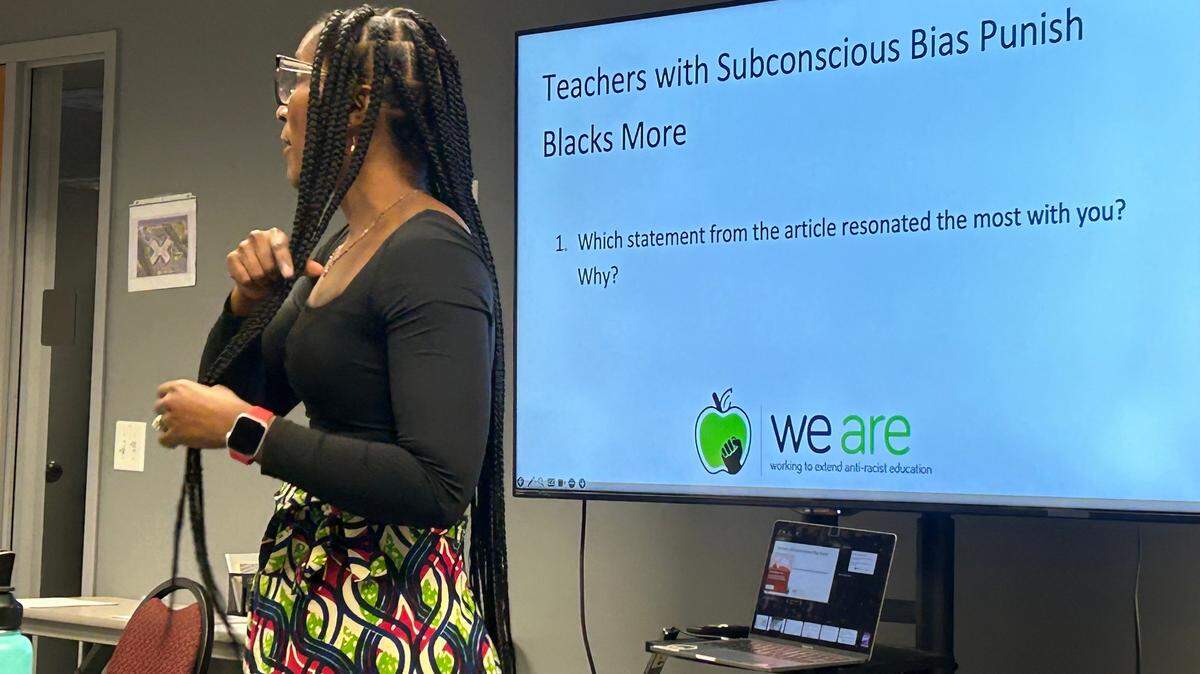
State Superintendent Mo Green is advising North Carolina schools to “avoid overreacting” to the Trump administration’s threat to cut off federal funding unless they end DEI programs.
Friday, Feb. 28, is the deadline given by the U.S. Department of Education for K-12 schools and universities to end their diversity programs or risk loss of federal funding. In a Feb. 21 bulletin, Green urged school leaders to review their policies while also saying the Education Department’s guidance doesn’t have the force of law.
“While it’s important to stay informed about legal updates, avoid overreacting to new guidance,” said Green, a Democrat. “Your core responsibility remains the same: treat all students and staff fairly.”
Few schools and colleges across the nation are rushing to make changes to comply with the Republican president’s deadline, the Associated Press reported.
State officials in Washington and California urged schools not to make changes, saying it doesn’t change federal law and doesn’t require any action, according to the AP. New York City schools have taken the same approach and said district policies and curriculum have not changed, the AP reported.
On Tuesday, the American Federation of Teachers and the American Sociological Association filed a federal lawsuit challenging the new guidance from the Department of Education. The groups contend the threat to cut off federal funding violates free speech rights.
Trump administration out to ‘end DEI’
On Feb. 14, the Department of Education’s Office for Civil Rights sent a “Dear Colleague” letter to schools based on the new administration’s interpretation of civil rights law.
The Office for Civil Rights is now broadly applying a 2023 U.S. Supreme Court decision against race-conscious admissions policies at UNC-Chapel Hill and Harvard University to cover all aspects of education from preschools to universities.
The Office for Civil Rights says an educational institution is in violation of federal law if it treats a person of one race differently from another because of that person’s race. OCR says diversity, equity and inclusion programs “discriminate in less direct, but equally insidious, ways.”
“DEI programs, for example, frequently preference certain racial groups and teach students that certain racial groups bear unique moral burdens that others do not,” Craig Trainor, acting assistant secretary for civil rights, said in the Dear Colleague letter. “Such programs stigmatize students who belong to particular racial groups based on crude racial stereotypes. Consequently, they deny students the ability to participate fully in the life of a school.”
Trainor gave schools 14 days’ notice that OCR “intends to take appropriate measures,” including cutting federal funding if they don’t comply.
On Thursday, the Department of Education launched an “End DEI” portal where the public can file complaints for the agency to investigate.
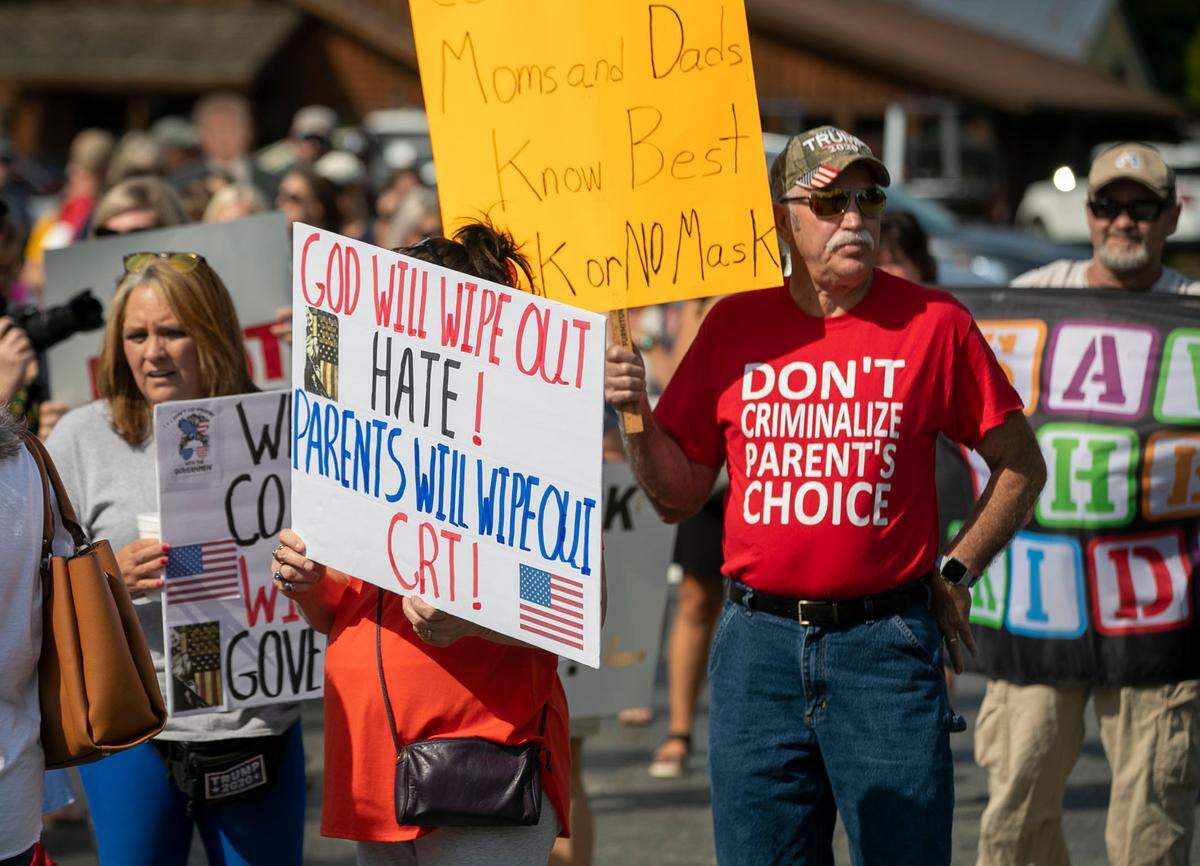
Guidance ‘does not have the force and effect of law’
The guidance and Feb. 28 deadline have raised questions among schools.
This week, the N.C. School Boards Association suggested policies that school boards should review in light of the OCR letter. The NCSBA declined to provide a copy of its recommendations to The News & Observer.
A week ahead of the deadline, Superintendent Green provided his advice on the Dear Colleague letter to the state’s school districts and charter schools.
“While the letter offers guidance on legal expectations, it cannot change existing laws, court rulings, or federal regulations (the letter itself acknowledges in a footnote that it ‘does not have the force and effect of law and does not bind the public or create new legal standards’),” Green wrote.
“The key takeaway? Make sure our schools do not discriminate against students or staff based on race, color, or national origin. In other words, we must stay focused on what is legally sound: ensuring fairness, removing barriers to opportunity, and making decisions based on merit and need.”
Green suggested a list of action items: review policies, consult your legal team, stay focused on fairness. be thoughtful in decision-making, create fair and inclusive opportunities and lead with integrity.
“While all diversity, equity and inclusion (DEI) related policies and programs are not inherently illegal, you should work closely with your legal team to understand what policies and programs are consistent with the law and identify and remedy any areas of concern, especially in light of the ‘Dear Colleague’ letter and other pronouncements by President Donald Trump’s administration related to DEI,” Green said.
Wake is ‘following the law’
Wake County Superintendent Robert Taylor said administrators and attorneys have been examining every single program “that may be related to what they call DEI efforts.” Taylor said they’ve been making sure they don’t have anything in a program that’s going to violate federal law.
Like Green, Taylor pointed back to how the footnotes in the Dear Colleague letter say it doesn’t have the force of law and doesn’t create new legal standards.
“This is just what the administration is looking at,” Taylor said in an interview with The N&O. “This is what that Dear Colleague letter issues. And so we feel confident that we are following the law. But at any point they say we are not then we want to be in compliance.”
DEI ‘not necessarily illegal’
Wake has already been accused of promoting DEI through a canceled federal grant that would have provided $11.8 million to help recruit and retain teachers in high-needs schools. It was among more than $600 million in grants that the Department of Education says were canceled due to promoting “divisive ideologies.”
Wake plans to appeal the loss of the grant.
“One of the things we continue to say is that DEI is not necessarily illegal,” Taylor said. “It becomes illegal if you have any kind of effort that only focuses on a specific group, meaning we only use this funding to hire Hispanic teachers, we only use this funding to support African American students.
“That has been illegal for a very long time, and it continues to be, but that is what the efforts are not about.”
How likely is funding to be cut from Wake schools?
In Wake County, some school board members and community members have urged the district to make changes such as eliminating the Office of Equity Affairs. But the district says it plans to keep the office and to fill the vacant position of assistant superintendent for equity affairs.
“Today’s the deadline for @POTUS to end the funding of this radical indoctrination!” the Pavement Education Project posted Friday on X, previously called Twitter. “@ncpublicschools and @WCPSS must remove this and hundreds of other age-inappropriate materials or lose their federal funding!”
The social media post included pictures from the book “Who Are You?: The Kid’s Guide to Gender Identity.”
The last time the Department of Education got permission to revoke federal funding from a school district was in 1992, according to the AP.
Civil rights investigations by the Department of Education usually take at least six months to complete, the AP said. Schools can appeal the decision to revoke funding.
This story was originally published February 28, 2025 at 4:01 PM.