
NC Gov. Josh Stein’s budget would freeze some tax cuts, add others and give raises
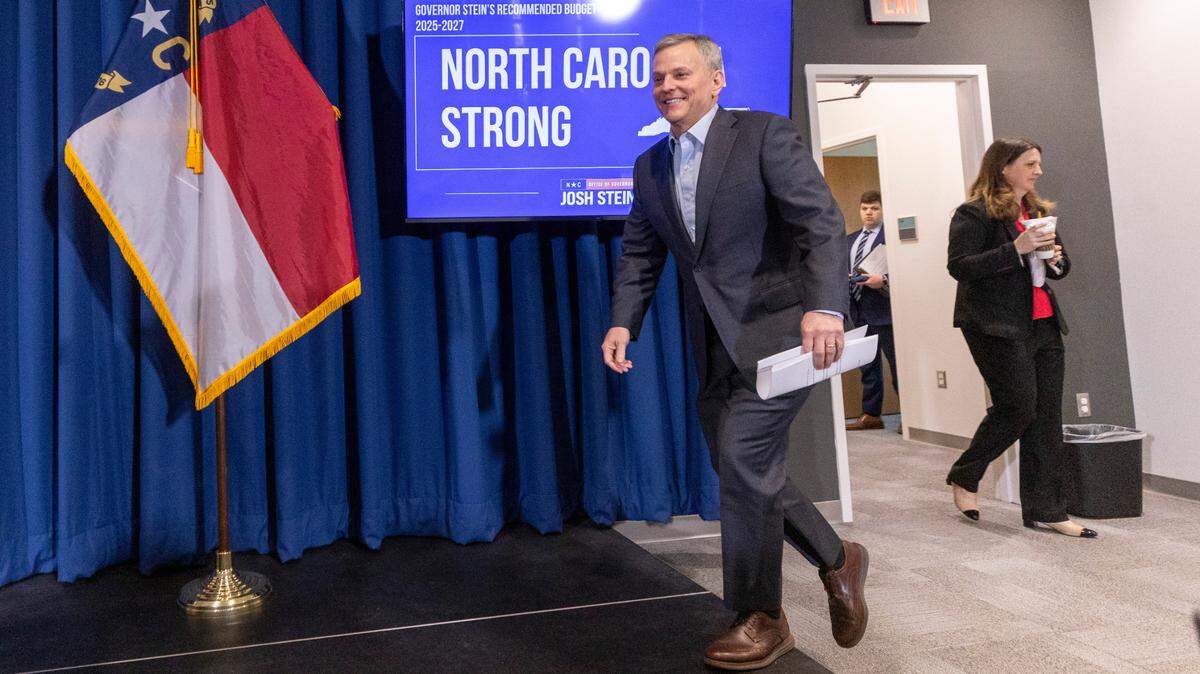
Warning of tight spending, new Gov. Josh Stein on Wednesday asked for modest state employee raises but higher starting teacher pay, and called for freezing some tax cuts while adding new ones for workers and families.
Stein’s first budget proposal would spend $33.6 billion in the first year of the two-year plan and $34.3 billion in the second.
Here’s what the Democratic governor wants for raises, taxes and more.
Tax credits
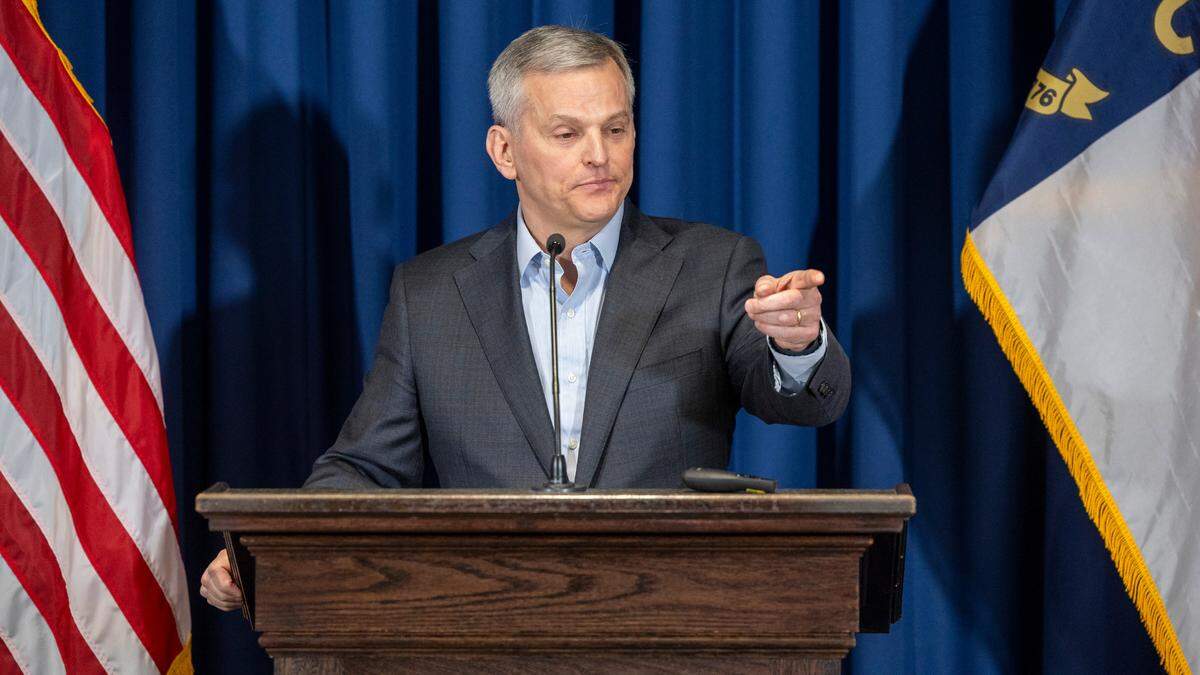
Stein told reporters on Wednesday morning that he wants tax cuts to offset the cost of child care, along with a child tax credit, and a “working families tax cut available to all low-to-moderate income workers, which could mean up to $1,600 a year for certain families. These investments and these tax cuts are what it means to truly be pro-family.”
The proposal shows that he’s proposing $530 million a year in tax cuts, including several tax credits that would be refundable — meaning that people can get them in a refund even if they don’t owe income tax. He proposed:
▪ a new version of the refundable tax credit for workers that Republicans ended in 2013.
▪ a refundable credit for child care.
▪ converting the current child deduction to a refundable tax credit.
Stein said that the working families tax cuts can also go to individuals if they meet the income qualifications.
At the same time, he repeated what he said earlier this year about freezing other planned tax cuts, criticizing corporate tax cuts in particular.
“When you look at the beneficiaries of who gets the most value out of their cuts that are programmed, and reducing personal income tax, it’s mainly folks who are making over $200,000. And so I want to make sure that as we cut taxes, we are doing it to help the people who are struggling the most with living expenses,” Stein said, answering a question about why he wants to freeze some tax cuts while adding new ones.
Raises for teachers, free school breakfast
The biggest budget requests, and sticking points, have in recent years been the amount of raises for state employees and teachers.
Stein wants to raise starting teachers’ base pay to $44,500 a year starting in July, and to $51,200 for the following fiscal year, 2026-27. The current base pay set by the state for a starting teacher is $41,000.
The state provides supplements to rural school districts, and metro counties have their own supplements. Including supplements, starting teacher pay for 2025 in North Carolina is $42,804, and Stein’s proposal would raise that to $53,000 in 2027.
He called for an average of 10.6% in raises for teachers over the next two years, and a 6% raise for principals.
Stein said he wants the weight of raise amounts higher for starting teachers because “we’ve got to address the pipeline of bringing more educators into the profession.”
He also proposed free breakfast for all public school students, and funding to hire 330 more school resource officers. Stein also wants North Carolina to reinstate the back-to-school sales tax holiday, which had been a tax-free day of school supply shopping in August.
The cost of the sales tax holiday would be $29 million the first year and $30 the second year.
Democrats are frequent critics of the Opportunity Scholarship Program created by Republicans, which provides taxpayer-funded private school vouchers. Stein proposed a moratorium on the vouchers, with no new vouchers issued and no vouchers for those households with incomes higher than $115,000.
State employee raises low
Stein is proposing a 2% raise for state employees as well as a $1,000 bonus, and a 2% cost-of-living bonus for retired state employees. He also wants to add another day of vacation time and renovate some state buildings to add child care facilities.
The 2% state employee raise is only for the first year, with no raise proposed for the second year.
Law enforcement officers would get a 3% raise in Stein’s proposal, and correctional officers and youth counselors in corrections would receive 6.5% raises. Law enforcement recruits would also receive a bonus after completing training.
Asked what he would tell state employees about the 2% raises, Stein said he wished he had more money.
“We’re already seeing budget constraints in the second year of this biennium, because of these pre-programmed tax giveaways, and so I wish that there were more money,” he said.
“I want to pay state employees more. They deserve more. I know how hard folks work. I worked with state government for a very long time, and I’m always incredibly grateful for what everyone’s doing. That’s why we’re coming up with a $1,000 bonus on top of the 2% increase,” he said.
Stein also said that some departments can also do salary adjustments with targeted raises for some employees who are in demand in the private sector.
Ardis Watkins, executive director of the State Employees Association of North Carolina, called the 2% raises “irresponsible.”
“We have a 20% vacancy rate in state government and the governor has warned of a budgetary fiscal cliff after this year,” Watkins told The News & Observer.
“If true, this is his only chance to give state workers enough raise to retain them. And his best effort is 2%? It’s illogical and irresponsible,” she said.
Up to lawmakers
The governor’s budget proposal is a key benchmark in this year’s state budget process, as the General Assembly learns how much money he wants them to spend in the budget bill they’ll send to his desk.
With a Republican-controlled legislature, the results are likely to be lower than what Stein requests. During former Democratic Gov. Roy Cooper’s two terms in office, his proposal for teacher raises were the highest of the three positions on the budget, with the Senate’s proposal the lowest and the House somewhere in the middle. Republicans generally propose the same level of raises for both state employees and teachers, whose base pay is set by the legislature.
The raises in his proposal for state employees are lower than some recent Republican proposals for raises. The state employee vacancy rate is 20%.
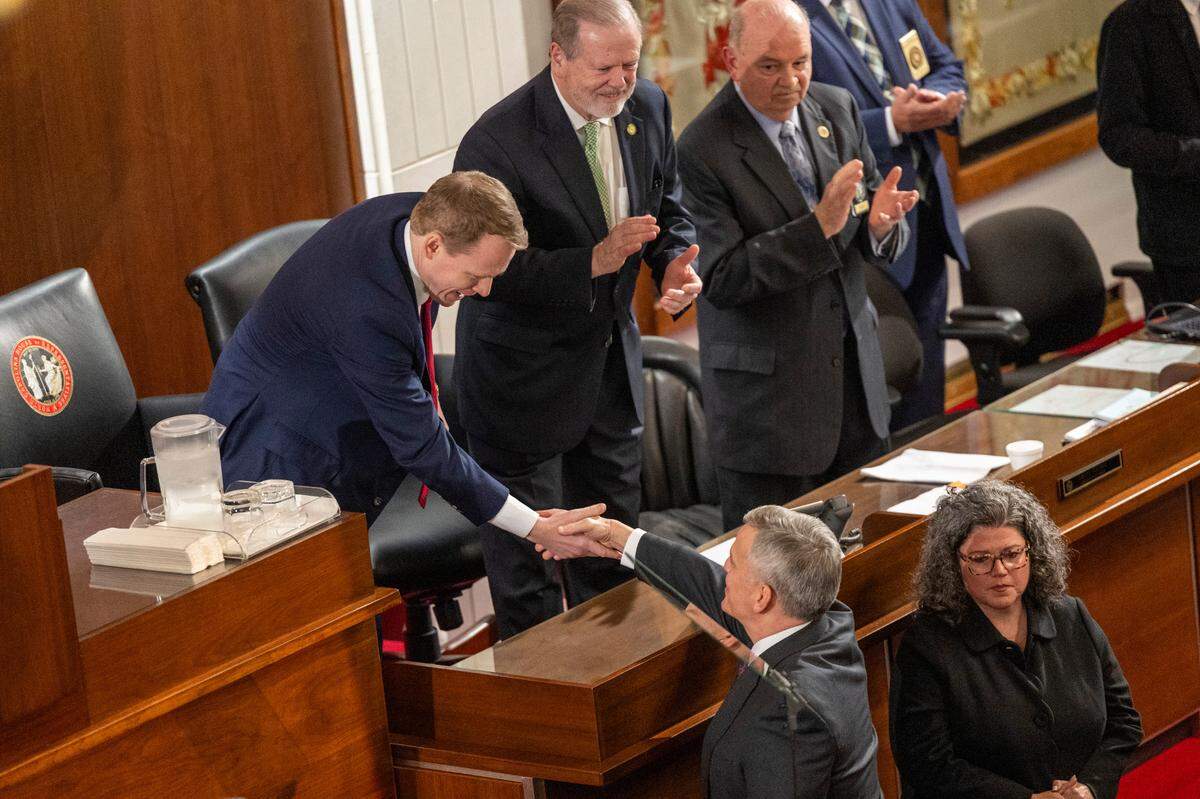
House Speaker Destin Hall said he took a quick look at the proposal before the House session on Wednesday. He said he agrees with Stein wanting more school resource officers, and that there will be some things they agree and some they don’t, like Stein wanting to limit vouchers.
On taxes, he said Republicans could make adjustments around planned tax cuts, but definitely wouldn’t raise taxes.
Hall said they could “look at the tax picture to see if we need to essentially dial the knob somewhere,” and that they might need to account for inflation.
Asked if state employee raises should be higher than Stein’s 2% proposal, Hall answered simply, “Yes.”
Hall added that while he doesn’t know what the House budget proposal amount for raises will be, he expects it to be higher than 2%.
Where the state gets its money
Stein’s proposal comes after he has warned of a “fiscal cliff” as planned cuts for the individual and corporate income tax rates continue to lower overall tax collections.
Nearly half of the state’s general fund revenue comes from individual income taxes, which are paid at a rate of 4.25% this year and will drop to 3.99% in 2026. State law triggers more tax cuts after 2026 based on total general fund tax collections.
Sales tax accounts for more than 30% of revenue, followed by corporate income taxes, franchise taxes and alcohol and tobacco taxes.
More than half of the state’s general fund, which is $31.7 billion this year, is spent on education. The next largest spending area is Medicaid, with 19%, followed by justice and public safety.
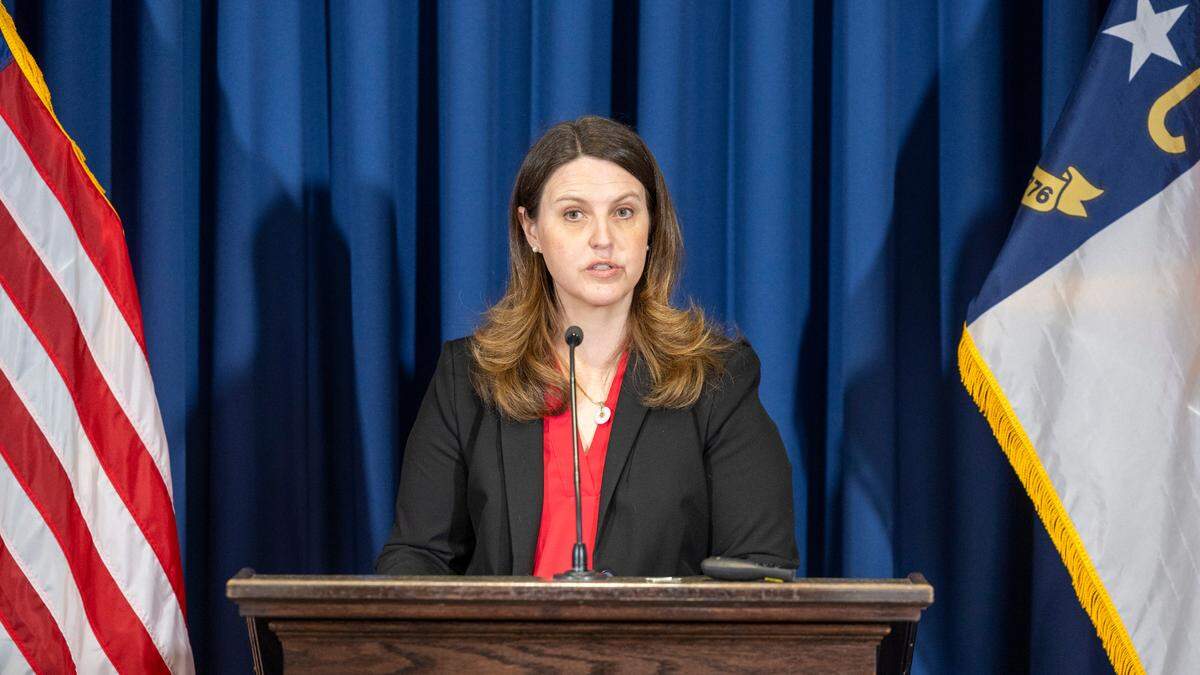
The state’s consensus revenue forecast in February, which comes from both the nonpartisan Legislative Fiscal Research Division and the Stein administration’s Office of State Budget and Management, reported that “economic factors exerting upward pressure on the forecast are outweighed by downward pressure from reductions in the individual and corporate income tax rates, resulting in negligible growth in FY 2025-26 and a decline in FY 2026-27.”
Stein previously said the answer was to freeze the tax cuts. And in his State of the State address in early March, he called for a $4 billion public schools bond, as well as an Impact Center in his budget office to look at efficiency and a fentanyl control unit, which is also included in his new proposal.
For the Impact Center, Stein said he wants to maximize the return on state investments, like property the state owns and doesn’t use that it could sell, and finding more efficient ways to deliver services.
This story was originally published March 19, 2025 at 11:53 AM.
.jpg)