NC House passes state cryptocurrency investment bill over Democrats’ objections
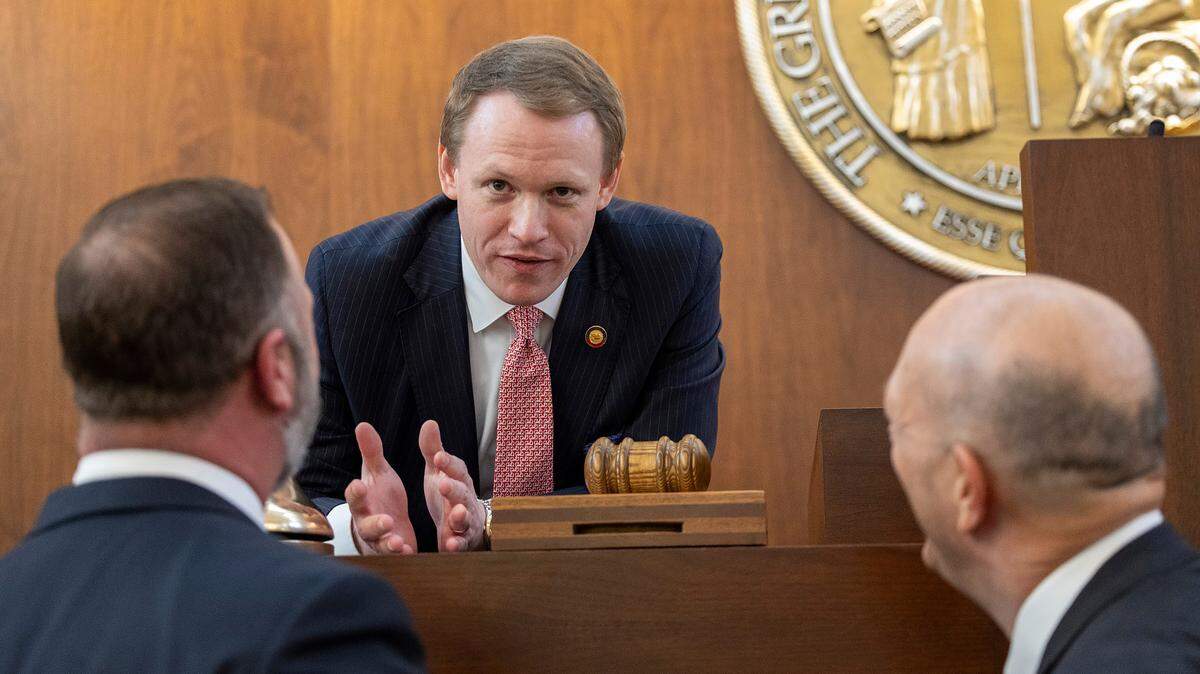
North Carolina House members approved legislation Wednesday to allow the state treasurer to invest up to 5% of public funds — for retirement, education, transportation, general spending, and more — in cryptocurrencies and other digital assets.
The NC Digital Assets Investments Act, sponsored by 27 Republicans, applies to more than two dozen funds, including the state’s $129 billion pension plan covering firefighters, teachers, police officers and state employees.
It calls for the North Carolina treasurer and the State Bureau of Investigation to study how seized digital assets could be used to establish a digital assets reserve. If enacted, the law also would permit the state treasury department to consider a retirement program through which state employees could choose to invest in cryptocurrencies.
House leaders had adjusted key aspects of the legislation since a smaller group of Republicans, including House Speaker Destin Hall, introduced it two months ago.
Under the current House bill, which passed 71 to 44, digital assets can comprise up to 5% of any fund — lowered from an original 10% cap. A third-party consultant must also now independently assess any crypto investment plans. The updated legislation opens the door to more cryptocurrencies, erasing an initial market capitalization requirement (of $750 billion) that had essentially made only Bitcoin eligible.
Wording around the state treasurer having exclusive knowledge of the “private key” that serves as a passcode to their virtual wallet has been replaced with a rule that virtual currencies be held in a “secure custody solution” platform.
The bill now goes to the state Senate, which has already backed public cryptocurrency investments. On April 19, the chamber passed a budget which allows for 5% of funds’ assets to be digital.
Democratic Gov. Josh Stein has voiced support for a state cryptocurrency investing bill, telling The News & Observer in February that he favored “giving people more authority to do their jobs.”
“That doesn’t mean that the treasurer must make those investments,” he said. “But if there are wise investments that can result in a positive, diversified return for the pension fund, then I’m comfortable with the treasurer making that investment.”
Triangle reps debate bill on House floor
At least 40 states have introduced cryptocurrency bills this year, according to the National Conference of State Legislatures, with Florida, Ohio, Iowa and North Dakota among those weighing public investments. A pair of states, Wisconsin and Michigan, already allow crypto in their retirement portfolios. And on Tuesday, Arizona legislators advanced a bill to create the country’s first state Bitcoin reserve.
Momentum for Bitcoin investing at the state level has coincided with President Donald Trump’s calls for a national digital asset reserve tethered to the world’s largest cryptocurrency. Strategic reserves are a stockpile the nation stores for crisis moments, like the U.S. Strategic Petroleum Reserve.
As of Wednesday afternoon, the world’s top cryptocurrency sold at around $95,200. The price of Bitcoin has almost doubled over the past 12 months, propelled by a huge spike in November following Trump’s election victory.
“I would just like to encourage you to stay focused on what this bill is, and what it is not,” said Rep. Mike Schietzelt, a Republican who represents northern Wake County. “It does not tell anyone to gamble with the taxpayers’ dollars. What it does is give a democratically elected member of the Council of State the authority to do their job and secure the financial fiscal health of this state long term.”
The North Carolina Blockchain Initiative worked with state lawmakers on its cryptocurrency investment legislation. In an X post in February, Hall said the bill aligns North Carolina “with President Trump’s vision for a national Bitcoin stockpile” while keeping the state at the forefront of a financial innovation.
Rep. Phil Rubin, a Wake County Democrat, argued Wednesday the bill gives current State Treasurer Brad Briner, and any future treasurers, too much power.
“I’m not utterly against the idea that our portfolio could ever contain any cryptocurrency,” he said. “I think that exploring all those options is reasonable. But I do think that saying, ‘Well, we trust the treasurer, it’ll be fine’, is not the level of diligence and supervision that this body should put into such a large investment.”
Rubin also raised concern over crypto security, noting the high-profile hack of the cryptocurrency exchange Bybit, which lost $1.5 billion after North Korea hackers attacked.
So long sole fiduciary?
It isn’t yet known who precisely will make North Carolina pension decisions — on digital or traditional assets.
Another bill changing how North Carolina handles state investments passed the House on Tuesday, moving the state closer to replacing its sole fiduciary model with a shared governance structure.
House Bill 506 would create the North Carolina Investment Authority, within the treasurer’s department. It would be overseen by a five-member board of directors responsible for managing state investments.
Currently, the treasurer’s department has an Investment Management Division with more than 20 professionals who oversee operating funds — such as highway dollars — and pension funds, including the Teachers’ and State Employees’ Retirement System and the Consolidated Judicial Retirement System. Despite the presence of that team, the state treasurer alone currently holds final authority over investment decisions.
Briner, during his campaign for state treasurer, championed this change. He has continued to do so, arguing that North Carolina is at the bottom for pension plan returns, in part because of its governance structure.
The state’s pension plan returns averaged 5.9% annually over the past decade, below the 7.5% national average, with states like Washington at about 11%, Briner said in mid-April during a committee hearing. For Briner, the state does not need to take as much risk as Washington but does need to take on more.
“I seek to relinquish some of my power to a board of qualified investment professionals to help deliver better returns for this state so that we can get to a better place, not just for our budget, but for our retirees,” he said.
The bill passed that committee with no dissenting views raised, as it did on the House floor on Tuesday. The sole question on the floor came from Rep. Pricey Harrison, a Greensboro Democrat, who wanted to confirm that crypto language had been eliminated from the bill. A previous version of the bill included language allowing cryptocurrency investments, but that provision was removed.
Under the current bill, the board would include the state treasurer as an ex officio member, plus one appointee each from the House speaker, Senate president pro tempore, governor and state treasurer. Appointees must have investment expertise and would serve staggered six-year terms.
The board would appoint a chief investment officer, who must have at least 15 years of experience managing pensions, endowments or similar funds. The CIO would be responsible for the day-to-day investing.
This story was originally published April 30, 2025 at 7:00 AM.