Griffin concedes NC Supreme Court race, ending unprecedented effort to overturn election
After spending over six months vigorously contesting his narrow loss in the 2024 North Carolina Supreme Court election, Jefferson Griffin conceded the race on Wednesday following a federal judge’s ruling against him.
Griffin, a Republican judge on the state Court of Appeals, lost the election to Democratic incumbent Allison Riggs by 734 votes. But he and the state Republican Party refused to accept the results, instead embarking on an unprecedented campaign to challenge over 65,000 votes in a legal battle that has roiled the state and drawn national rebuke.
Earlier this week, Chief U.S. District Judge Richard E. Myers, an appointee of President Donald Trump, decisively ruled against Griffin’s efforts, saying that he sought to “change the rules of the game after it had been played.”
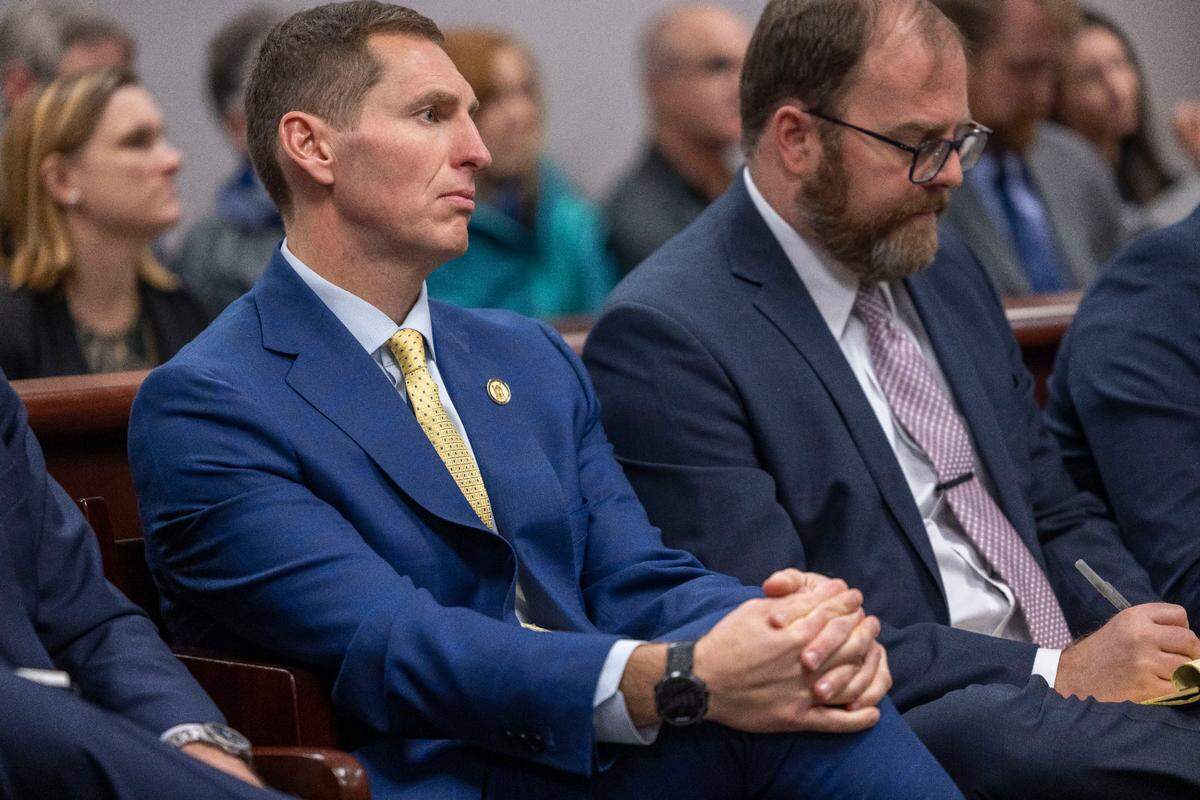
Rather than appealing that ruling, Griffin conceded the race on Wednesday.
“As a judge, I believe everybody, myself included, has a right to their day in court,” Griffin wrote in a statement provided by his campaign consultant. “This effort has always been about upholding the rule of law and making sure that every legal vote in an election is counted.”
“While I do not fully agree with the District Court’s analysis, I respect the court’s holding — just as I have respected every judicial tribunal that has heard this case,” Griffin said in the statement, first reported by The Associated Press. “I will not appeal the court’s decision.”
A spokesperson for the State Board of Elections said the board will certify Riggs’ victory on Tuesday, May 13. Myers had put a hold on his order until then to give Griffin a chance to appeal.
Riggs has remained on the Supreme Court as an incumbent while the dispute played out, but the board’s certification will solidify her eight-year term, keeping the high court’s partisan makeup at five Republicans and two Democrats.
“After millions of dollars spent, more than 68,000 voters at risk of losing their votes, thousands of volunteers mobilized, hundreds of legal documents filed, and immeasurable damage done to our democracy, I’m glad the will of the voters was finally heard, six months and two days after Election Day,” Riggs said in a statement.
“It’s been my honor to lead this fight — even though it should never have happened — and I’m in awe of the North Carolinians whose courage reminds us all that we can use our voices to hold accountable any politician who seeks to take power out of the hands of the people.”
As for Griffin, he is set to remain in his position as a judge on the state Court of Appeals until 2029.
“Judge Griffin deserves the appreciation of every North Carolinian for highlighting the appalling mismanagement, inaccurate data, and partisan behavior from the prior State Board of Elections — failures affirmed by multiple courts, including the highest court in our state,” Matt Mercer, a spokesperson for the NC GOP, said in a statement.
Griffin’s concession puts to bed a contentious and chaotic saga in North Carolina politics, one that has raised substantial questions about democracy and may impact the state’s elections for years to come.
The bipartisan elections board, at the time led by Democrats, initially rejected Griffin’s arguments in December, prompting him to take the matter to court. The ensuing litigation spent months ricocheting between state and federal courts, with each side gradually racking up wins and losses.
The Republican-dominated state Supreme Court dealt a major blow to Griffin’s case in April when it rejected his argument on the largest number of ballots he challenged — over 60,000 voters said to lack certain identification numbers in the state’s voter registration database.
However, in a 4-2 decision, the Supreme Court still left a path for the results to be overturned. The Republican justices ordered that potentially thousands of military and overseas voters who were challenged for not showing a voter ID would be given a 30-day post-election “cure period” to show identification to election officials or risk having their votes thrown out.
The State Board of Elections had approved an exemption to the ID requirement for these voters — which was not challenged before the election — but the high court nonetheless agreed with Griffin that this exemption violated state law.
The Supreme Court also ruled that a smaller number of voters, about 250, would have their votes canceled without the chance to cure them. These voters, who Griffin argued have never resided in the state but gained residency status through their parents, should not have been allowed to participate, the court ruled.
But reporting from Anderson Alerts and Popular Information found that dozens of these challenged voters actually were longtime North Carolina residents who appear to have been misclassified as “Never Residents,” as Griffin termed them.
In his ruling, Myers said that while the Supreme Court could determine that these issues warrant changes for future elections, they could not disenfranchise voters who followed the rules at the time of the election.
Even though the Supreme Court did not fully endorse Griffin’s arguments, its willingness to entertain the possibility of canceling votes after the fact may have established significant precedent for elections to come.
This story was originally published May 7, 2025 at 10:20 AM.