
Former NC Gov. Pat McCrory talks tax battle, balance of powers

Who has more power in North Carolina, the governor or the legislature?
The question of balance of power between the legislative and executive branches, and the leaders of each branch, comes up every single General Assembly session.
Like clockwork, it happened again this past week during a committee hearing on the REINS Act, which is a proposal that would change the balance of regulatory power. Instead of some regulations approved by a gubernatorial Cabinet agency, it would be in the hands of the legislature. There are more in the weeds details to it, and the final bill isn’t decided yet. Every discussion draws praise and criticism and calls for constitutionality.
Good Sunday morning to you and welcome to the Under the Dome newsletter that focuses on the governor. I’m Dawn Vaughan, The News & Observer’s Capitol bureau chief.
I talked to former Republican Gov. Pat McCrory when he visited the Legislative Building for the first time in several years on June 4. He was there for the recognition ceremonies of former U.S. Sen. Elizabeth Dole, his friend and mentor.
McCrory was in the Senate gallery, while Senate leader Phil Berger, who was also leader when McCrory was governor, was on the Senate floor.
It has been a decade since the landmark N.C. Supreme Court case of McCrory v. Berger, which started over who had appointment power to certain commissions: the governor or legislature. The latest power shift, following the December 2024 shift in power after Democratic Gov. Josh Stein won election, could come in the REINS Act.
Beyond the power dynamics of executive vs. legislative, I asked McCrory about the latest House vs. Senate budget battle over taxes.
“Some things never change,” he said.
“That’s the reason for a bicameral system,” McCrory said. “So they’ll work it out. They always did in the past. They will in the future. I remember those days — even with a Republican governor, that happens.”
McCrory also said he and the other former governors have a close relationship and met up in Raleigh a few months ago. That day, he was headed over to the mansion a block away for another event honoring Dole, with Stein as host. Stein’s office didn’t announce the Dole event, nor allowed press to attend, unlike the House and Senate ceremonies.
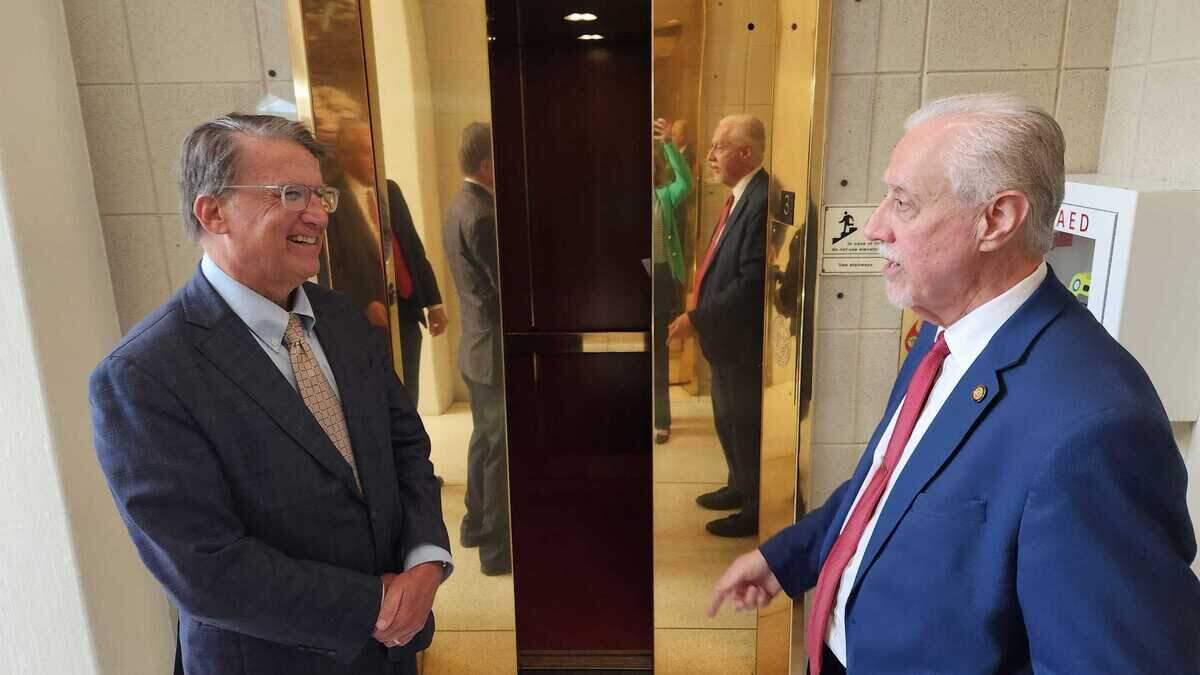
Before McCrory left, I asked him about the REINS Act debate over who should have regulatory authority.
“I firmly believe in separation of powers, and I fought for that as governor, even against my own party, and took that case the Supreme Court,” McCrory said, referencing McCrory v. Berger.
“So I still firmly believe that, whether it be Democrats or Republicans in control. Because sooner or later, it always flips. But I firmly believe that the executive, the governor, is responsible for enforcing the laws and the operations, and the legislature is responsible for making the laws.”
“At both the federal and state level, we have that continued conflict,” he said.
When the mansion did flip to a Democrat, when former Gov. Roy Cooper defeated McCrory in 2016, the General Assembly continued its trend toward taking appointment power away from the governor. Republicans have maintained control of the General Assembly, though not a consistent supermajority.
McCrory said he believes firmly in the governor “having the power to make the appointments and to operate his sphere of influence with independence. I felt the same way when the Democrats were in control and I was mayor of Charlotte, and I had to work through the supermajority of the Democrats. ... And it’ll flip again, so you have to think long term.”
By the way, McCrory, who ran unsuccessfully for U.S. Senate after being governor, does not plan to run for office again.
Thanks for reading. Contact me at dvaughan@newsobserver.com. Be sure to listen to our Under the Dome podcast, which posts every Tuesday. This week, I’ll have a guest — N.C. Rep. Allen Chesser, a Nash County Republican.
Not a newsletter subscriber? Sign up on our website to receive Under the Dome in your inbox daily.
.jpg)