NC State Health Plan dispute with CVS Caremark may lead to litigation, premium rise
AI-generated summary reviewed by our newsroom.
- State Health Plan claims CVS Caremark withheld $31.9 million in 2023–2024 rebates.
- Dispute over rebate payments could raise member premiums by up to $500 annually.
- Contract impasse may lead to litigation as plan faces $507 million budget deficit.
A contract fight could lead to litigation and to higher health premiums for hundreds of thousands of state employees if not resolved.
The State Health Plan, part of the state Treasurer’s Department, said in a news release it has reached an “untenable impasse” with CVS Caremark, accusing the company of refusing to honor its current contract.
The plan says Caremark hasn’t paid tens of millions of dollars in rebates — post-sale discounts negotiated with drug manufacturers — since 2023, and is trying to rewrite the contract to boost its profits at the expense of teachers, employees, retirees and taxpayers.
CVS Caremark is the plan’s pharmacy benefit manager, or PBM. That means it negotiates prices with manufacturers on the plan’s behalf. The health plan covers some 750,000 current and former state employees and their families.
Caremark, through spokesperson Shelly Bendit, said the company “has, and is committed to delivering on its contractual promises” to the plan.
The company said it “has always, and continues to, pass through to the State Health Plan 100% of rebates it receives on drugs used by its members.”
Caremark also said that pharmacy spending, according to an analysis by the plan in 2025, is $158 million under budget and that the plan last month renewed its contract with Caremark through 2027. CVS Caremark has been the PBM for the plan since Jan. 1, 2017.
“We recognize the State Health Plan is facing a significant budget shortfall and welcome the opportunity to work together to create additional savings in their pharmacy spend,” it said.
The SHP voted in May on changes to plan designs for 2026, including deductibles and copays, to address the health plan’s projected $507 million deficit. Premium increases for members are also under consideration, with the board expected to vote on those at its August meeting.
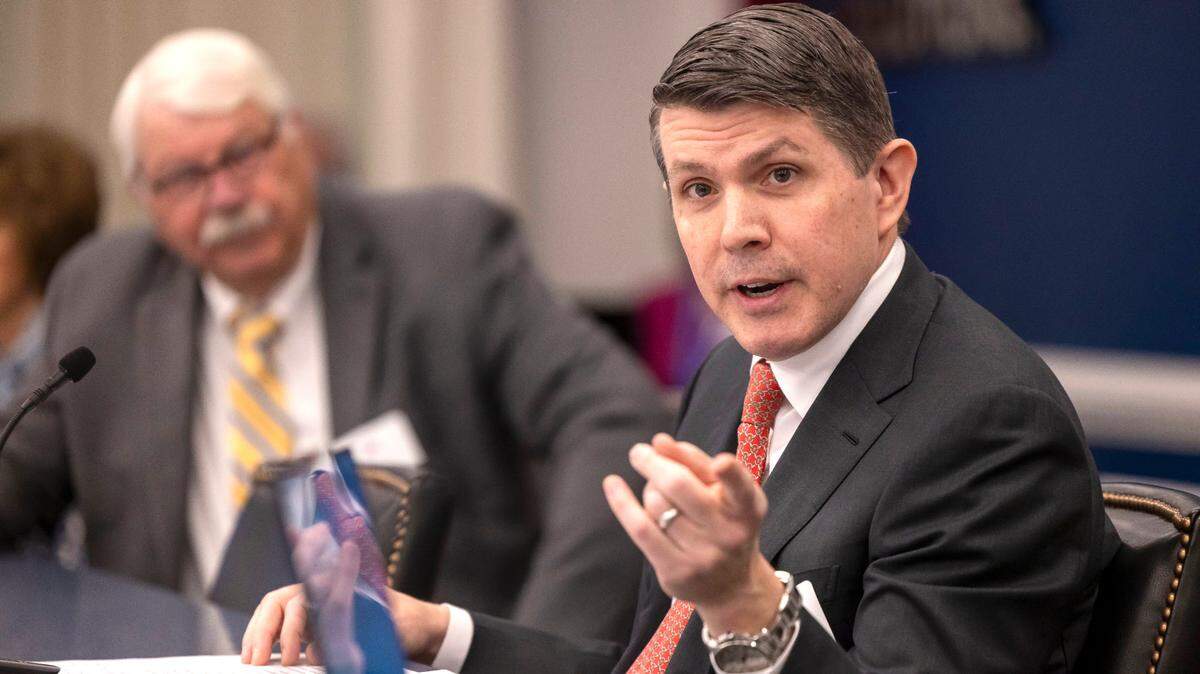
“We have been working hard to address the $500 million deficit the State Health Plan is facing since my first day in office,” Treasurer Brad Briner said in a news release that reported the dispute with CVS Caremark.
“Part of that work includes partnering with organizations who are committed to working alongside us. We cannot proceed with vendors who will force the Plan to raise premiums on our state employees by not honoring their contractual obligations,” he said.
“Prescription drug costs are already sky high. State employees and retirees cannot afford to pay more,” State Employees Association of North Carolina Executive Director Ardis Watkins said in the plan’s news release.
“We commend Treasurer Brad Briner and State Health Plan Executive Administrator Thomas Friedman for taking on this fight to bring true transparency to what we’re paying. We stand behind their efforts to hold CVS Caremark to their word,” she said.
Millions owed, State Health Plan alleges
Asked how much is owed, the plan said Caremark owes at least $10.1 million for 2023 rebates and $21.8 million for 2024 rebates.
The plan is prepared to move forward with legal action if a solution is not found, according to spokesperson Loretta Boniti.
She said in an email on behalf of the plan that regardless of the outcome of the dispute, members will continue to have pharmacy benefits — but if not resolved, they could see premium increases down the line.
For example, Boniti said, if Caremark does not pay the $10.1 million in 2023 rebates and $21.8 million in 2024, the plan may need to require every active member to pay an additional $100 in annual premiums starting in 2026.
Another example: If Caremark continues to calculate rebates in what the plan says is an incorrect way under the contract, that could increase premiums by more than $500 per member annually for the remainder of the contract term, she said.
Rebates in dispute
Boniti said CVS Caremark told the plan its profits on the contract are no longer as high as it wants.
But the plan says that doesn’t matter — the contract requires Caremark to pay guaranteed minimum payments to the plan, no matter how much it collects from drug companies. It also says Caremark must pass along 100% of the rebates and do the rebate calculations correctly.
Boniti said Caremark wasn’t living up to those rules. It wasn’t passing along the required rebates or honoring the minimum payments agreed upon — particularity by calculating rebates in ways aimed at reducing how much it had to pay the plan.
The millions the plan says it’s owed is not tied to any specific drug but to those minimum payment guarantees, Boniti said.
“Having a PBM that guarantees payments protects the Plan from changes and provides predictable costs for the Plan,” she wrote.
“If Caremark wants to change its contract with the Plan, the process is not to breach its commitments. It’s to seek to negotiate amendments to the contract,” she said.
Boniti said the investigation is ongoing and the plan continues to find new areas of noncompliance that increase what it believes is owed.
Caremark identified GLP-1 drugs and Humira as the main source of contention in the ongoing contract dispute.
In early 2024, the State Health Plan stopped covering the popular but expensive medications — GLP-1 weight-loss drugs and Humira, used to treat rheumatoid arthritis — to cut costs.
Caremark said drug manufacturers only fund rebates for drugs included on the Plan’s formulary and used by members. The company said it does not dispute the Plan’s right to exclude these drugs or its obligation to pay rebates for Humira and GLP-1s during the periods in 2023 and early 2024 when they were still covered.
However, it argued that the Plan, “which has already saved millions on its drug costs in 2025 by excluding Humira and the weight loss GLP-1s, still wants to be paid rebate guarantees on drugs it excluded from coverage and for which drug manufacturers no longer pay rebates.”
Caremark said it has spent the past 18 months trying in good faith to resolve the dispute and has continued to make payments through Friday. But it called the continued payments a “windfall” and said they are not sustainable.
Asked if there were any other drugs involved in the dispute, Bendit said there were not.
Boniti, meanwhile, said GLP-1s and Humira are not the core of the dispute.
“CVS has mischaracterized the issues. The Plan has repeatedly sought a compromise, recognizing that amending the contract may be beneficial for both the Plan and CVS, but CVS has repeatedly refused the Plan’s offers,” she wrote.
Past issues between CVS and the plan
The plan has had snags in its relationship with its PBM before.
And state lawmakers are pondering PBM reform legislation this year. Past efforts have failed.
In 2023, under former State Treasurer Dale Folwell, the plan estimated it received a 40% rebate from Novo Nordisk, the manufacturer of GLP-1s Wegovy and Saxenda. That saved the state $539 off the $1,347 list price for each prescription of both drugs, The News & Observer previously reported.
The plan said those rebates for grandfathered members ended when it placed a moratorium, effective Jan. 1, 2024, on new Wegovy prescriptions. That moratorium followed multiple cost-cutting proposals that the plan said were met with resistance from Caremark, The N&O previously reported.
The plan voted in January to end coverage for weight-loss use of GLP-1 drugs in April 2024.
Novo Nordisk, in an April 2024 email to The N&O, disputed the plan’s version of events, saying it had “provided numerous options for the State Health Plan to maintain coverage for patients” and continued providing rebates through the first quarter of the year.
Former Deputy Treasurer Frank Lester also told The N&O in an email that on April 3, Caremark raised the possibility of rebates being available for GLP-1 drugs dispensed in the first quarter of 2024.
This story was originally published June 9, 2025 at 5:30 AM.