
NC lawmakers considering reducing public access to autopsies in criminal cases
When people die in the custody of law enforcement, death records such as autopsies play a crucial role in revealing if anyone was at fault.
One example: After Forsyth County jail inmate John Neville’s died in custody in 2019, an autopsy made public the following year showed that he died from cardiac arrest after deputies restrained him on his stomach, suffocating him.
But bills recently passed in both legislative chambers would limit public access to such records when a death is under criminal investigation. Both would give district attorneys discretion to release the records or withhold them.
Media organizations say district attorneys have yet to show how the current 20-year-old law governing public release of autopsies has hindered a criminal investigation or jury trial.
Keeping the records secret could potentially prevent the public from ever finding out the details in a controversial death, particularly if it involves law enforcement, said Tim Nelson, an attorney for the N.C. Association of Broadcasters.
“The argument is that this information has to be kept secret because having it out there for the last 20 years and earlier somehow taints jury pools. We believe there is no evidence that that is the case, ” Nelson told lawmakers in a House judiciary committee meeting Tuesday.
“We believe the section is anti-transparency and anti-accountability,” he said.
State government officials have made efforts to limit access to death records since at least 2019. The state Department of Health and Human Services, which includes the Office of the Chief Medical Examiner, had sought then to prevent the release of records provided to the medical examiner for a death investigation.
The state medical examiner’s office released its autopsy on Neville’s death a day after the Forsyth County district attorney filed charges of felony involuntary manslaughter against five detention officers and a nurse from a company that provided medical care at the facility. Under the proposed legislation, the district attorney could have refused to make them public then.
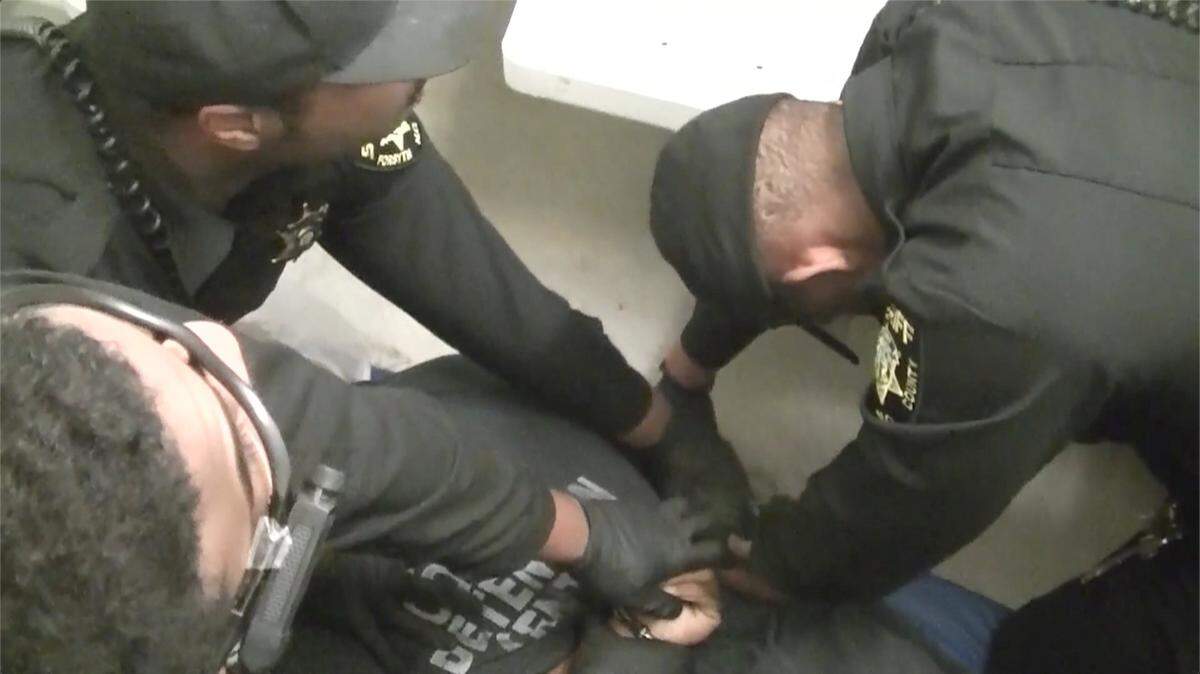
The News & Observer and other media had to file a lawsuit to obtain more records related to Neville’s death, which were not released until Friday.
Correspondence between Rep. Sarah Stevens, chairwoman of the House judiciary committee and the N.C. Association of Broadcasters makes clear that the N.C. Conference of District Attorneys is pushing for the legislation reducing public access to autopsies and death records.
Chuck Spahos, the conference’s legislative liaison, was present at the hearing but did not respond to Nelson’s concerns.
Neither he nor Kimberly Spahos, his wife and the conference’s executive director, responded to a reporter’s requests this week seeking comment on the provision.
Even with family access, critics have concerns
Both Senate Bill 429 and House Bill 307 include provisions that allow for the release of information to a representative of the deceased’s family, to other professionals assisting with the medical examiner’s investigation or to address public health or safety concerns.
Kris Parks, a policy attorney for Disability Rights North Carolina, said in an interview that giving family members access is a plus, but the advocacy group still has concerns about the lack of public access.
The two bills also include provisions that allow the media or members of the public to petition a state Superior Court judge for the release of the records. That’s a similar process required in North Carolina to obtain body camera, jail and other law enforcement video as part of legislation passed in 2016 that exempted it from the public records law.
At Tuesday’s judiciary committee hearing, chairwoman Stevens, a Surry County Republican, said the bill would be amended to add giving those petitioning a judge the opportunity to seek reimbursement for legal fees.
During the hearing, lawmakers on the committee did not discuss the death-records provision, which is one piece in a package of crime-related legislation.
Since House members made changes to the Senate bill at the hearing, it will require votes in the House and the Senate to be finalized.