
Who gets credit for NC’s top business ranking? Stein and GOP differ
North Carolina is back on top of CNBC’s list of best states for business.
Politicians are all ready to take the credit, and the ranking shows there is plenty to go around, even if they differ on the exact ways to get there.
Good Sunday morning to you and welcome to our Under the Dome newsletter that focuses on the governor. I’m Dawn Vaughan, The News & Observer’s Capitol bureau chief.
For Democratic Gov. Josh Stein, who was interviewed by CNBC for its story, North Carolina’s people, business climate, research universities and community colleges are big contributors. He thanked former Democratic Gov. Roy Cooper as well as state lawmakers “who have helped North Carolina create a welcoming climate.”
Republican Senate leader Phil Berger credited the UNC System and community colleges with being “vital partners in preparing our citizens to fill the thousands of jobs being created here and the existing ones.”
Berger also highlighted the tax cuts that have been led by Republicans.
“Since 2011, the Republican-led General Assembly has reshaped our state’s business climate by slashing our tax rates, reducing regulatory hurdles, and supporting world-class educational and job training programs,” Berger said in a statement.
Stein talked about taxes during his CNBC interview about the TV network’s ranking.
“No one likes to pay taxes. So we want taxes to be as low as possible, but we need enough,” he said, to pay for “excellent public schools,” community colleges, roads and infrastructure.
Historically, Republicans have been the drivers of reducing both the state and corporate income tax rates.
The Republican-controlled House and Senate are squabbling over future tax cuts, which is one of the reasons the fiscal year began with no budget deal from the legislature, much less a bill sent to Stein’s desk for action.
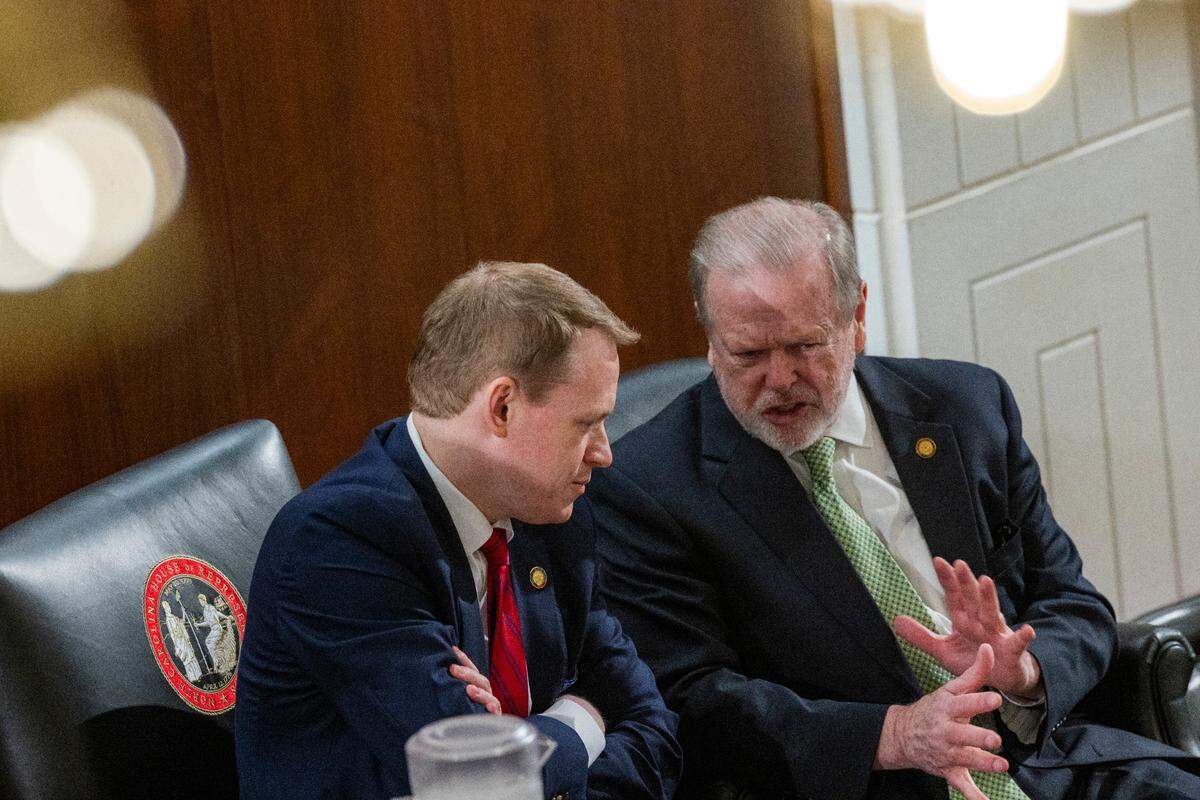
Republicans spent Thursday adding to the accolades, and credit, for the state’s business ranking.
U.S. Rep. Tim Moore, the former state House speaker, both took credit for what Republicans have done and used it to try recruiting more business to the state.
“We’ve worked hard to build an environment where businesses can grow with low taxes, fewer roadblocks, and a focus on results. Come build in NC — we’re not slowing down,” Moore posted on social media.
House Speaker Destin Hall wrote that the ranking is “the latest example of the successful reforms implemented in North Carolina by the Republican-led General Assembly.”
Republican Labor Commissioner Luke Farley sent out a press release complete with red siren emoji subject line.
“This recognition validates what we see on the ground every day: common-sense regulation promotes job growth, while burdensome red tape drives jobs away,” Farley said in a statement.
However, North Carolina’s lowest CNBC ranking was for “quality of life,” and one of the reasons was being “not terribly friendly to workers.”
Beyond tax cuts, Republicans also mentioned deregulation.
State Rep. John Bell, the powerful Republican Rules Committee chair, wrote on social media that “North Carolina is back on top as the #1 state for business! Proud to work with my @NCGOP in the General Assembly to build the best business climate in America through less taxes, fewer regulations and fiscal responsibility.”
And Republican Rep. Erin Paré, a budget committee chair, posted “Republicans in the General Assembly have built the best climate in America for job creators, workers and families. Smart policy. Strong leadership. Real results.”
The General Assembly is expected to reconvene in Raleigh at the end of July. Aside from veto override votes on the agenda, they may be making, or at least trying to make, progress on a budget deal.
Stein told me on Tuesday that he had not talked yet to Berger and Hall about the budget — since they left Raleigh in June — but is urging them to be “fiscally prudent” given the federal government’s recent action on Trump’s megabill. You can read more about it in my story.
“There’s no question, but that the federal government is just dumping expenses onto the state, whether it’s health care or whether it’s SNAP benefits, and what we have to do as a state is make sure that we do not abandon our people the way that the federal government is abandoning our people,” Stein said.
Trump’s Medicaid cuts are a “headwind” that North Carolina faces, CNBC reported.
Democratic Sen. Sydney Batch, the minority leader, called the ranking a “major victory,” but also a reason to return soon to Raleigh to pass a budget.
“Today, we should celebrate this achievement, but tomorrow, we must get back to work. I urge Republican leadership to call the Senate back into session to work on passing a state budget that continues to invest in the very programs that make North Carolina the best place to do business,” Batch said in a statement.
A new state law about school salaries data
Stein’s desk is now clear of bills. Here’s more on a new state law from my N&O colleague T. Keung Hui, who covers K-12 education:
North Carolina school districts are now required under state law to post online the salaries of their central office employees. Each school district must now post on its website the total compensation, title and job description for every central office employee.
The requirement is part of a bill increasing penalties for hazing in K-12 schools and universities that Stein signed into law on Wednesday. But the new law doesn’t require schools to list the names of the employees associated with the salaries.
Salary information for school employees is already public information.
But Paré, a Wake County Republican, said the new law will make it easier for the public to find the information without having to submit public records requests to school districts. The requirement had been criticized by some Democratic lawmakers as stoking opposition against public schools by painting a narrative about bloated school bureaucracies.
The central office requirement had been passed by the state House in May in a standalone bill. When the Senate didn’t act on the House bill, the House inserted it into several Senate bills. Senate Bill 375 was overwhelmingly passed by both chambers and signed into law.
The bill now makes it a Class A1 misdemeanor for students and a Class I felony for school employees to engage in hazing.
— T. Keung Hui
Stay informed about #ncpol
Catch up on more North Carolina politics news by listening to our Under the Dome podcast, which posts every Tuesday morning. On our most recent episode, I talk with reporters Avi Bajpai and Korie Dean about the chances of successful veto overrides, and about accreditation politics in higher education.
Thanks for reading. Contact me at dvaughan@newsobserver.com. Not a newsletter subscriber? Sign up on our website to receive Under the Dome in your inbox daily.
This story was originally published July 13, 2025 at 5:00 AM.
.jpg)