Top NC lawmakers weigh Medicaid cuts and budget strains from Big Beautiful Bill
AI-generated summary reviewed by our newsroom.
- Federal law changes could cost NC up to $50B in Medicaid funds over 10 years.
- Work rules and cuts could end Medicaid expansion without swift state intervention.
- County agencies face tech and staffing strain from new requirements.
Now that Congress has passed a sweeping federal spending bill, states are rushing to understand how it will affect their budgets and residents.
In North Carolina, lawmakers and the state health and human services department face a slew of changes — especially to Medicaid — that could strain state finances and reshape coverage for hundreds of thousands. Without new state funding, the loss of federal dollars threatens to force cutbacks to Medicaid benefits or eligibility.
The pressure comes as lawmakers navigate a delayed state budget process, with the new fiscal year beginning on July 1. The House and Senate, both led by Republicans, left Raleigh at the end of June without a deal. The House is seeking higher raises for state employees than the Senate and wants to cancel future tax cuts unless state revenue is high enough. They have yet to decide whether — or when — lawmakers will return later this month.
Several top state appropriators told The News & Observer the state likely won’t fully meet new Medicaid funding demands, indicating cuts to Medicaid services could follow.
Republican state leaders have backed the federal spending bill, known as the One Big Beautiful Bill. Congressional Republicans in North Carolina also supported it, with the exception of U.S. Sen. Thom Tillis — who is not seeking re-election — and who criticized its Medicaid cuts and voted against the spending bill.
Asked about the Medicaid implications of it, in an email statement, House Speaker Destin Hall praised the legislation.
“President Trump’s One Big Beautiful Bill roots out waste fraud and abuse, incentivizes school choice and cooperation with Immigration and Customs Enforcement, and delivers the largest tax cut for middle-and working-class Americans in history — great news for North Carolina.
“We are confident that we can implement the president’s entire welfare reform agenda while maintaining Medicaid and Supplemental Nutrition Assistance Program services. The North Carolina House Republican budget framework would put us in the strongest position to implement the BBB in North Carolina,” he said.
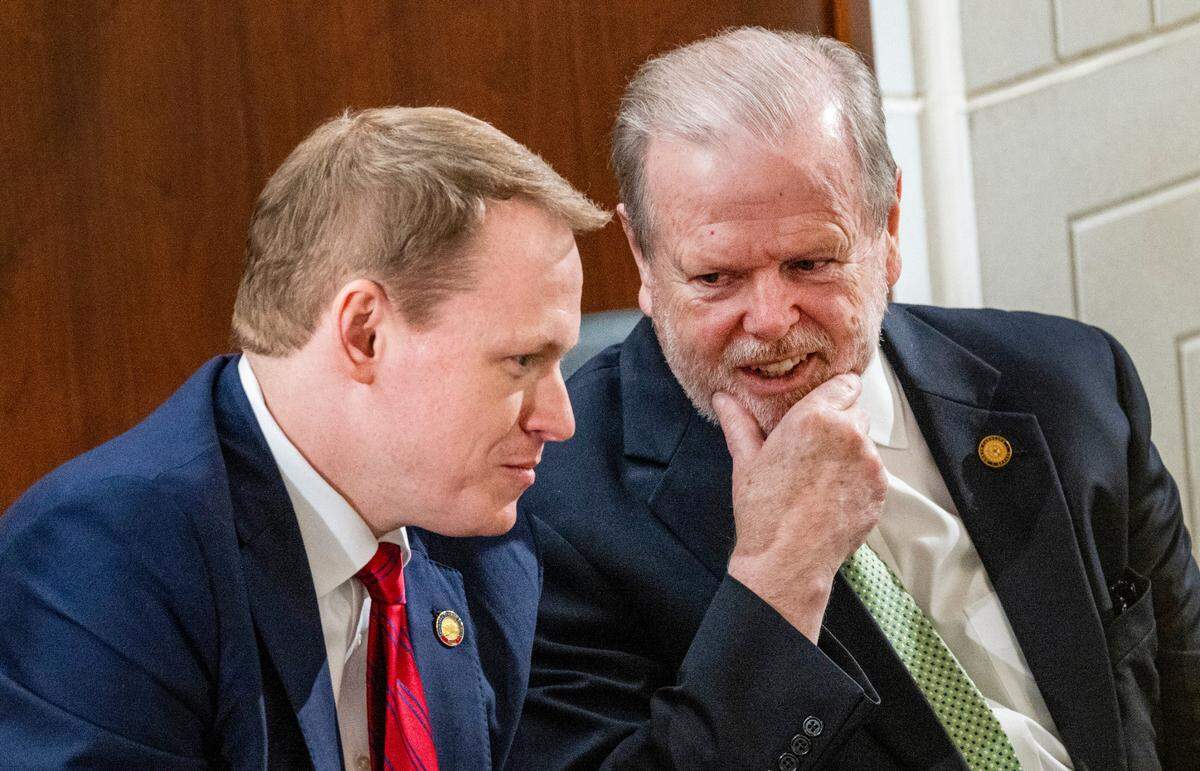
Senate leader Phil Berger’s office said in a statement that they are “still evaluating the One Big Beautiful Bill, and it would be premature to discuss any legislative action or plans.”
“Gov. Stein and other Democrats in North Carolina have been misleading the public about the future of some rural hospitals in our state. Sen. Berger has been reassured by UNC Health leadership that UNC-Rockingham is not under any threat of closure,” it said.
The Big Beautiful Bill and NC’s health care budget
In mid-June, before the bill passed, Gov. Josh Stein wrote on social media platform X that five rural hospitals in North Carolina could be in danger of closing due to the federal plan. One of them, UNC-Rockingham, is located in Berger’s district.
Earlier this month, Stein criticized the bill again, calling it a federal “expense dump” on states and warning lawmakers to write an “exceptionally conservative” budget in response, The N&O previously reported.
The federal changes affect multiple funding streams that support Medicaid and other safety-net programs. Combined, they could create a multibillion-dollar hole in North Carolina’s health care budget over the next decade, according to the state’s health and human services department.
Supporters of Medicaid cuts and changes have said the spending bill will eliminate wasteful spending and fraud. Various sources, including the Centers for Medicare and Medicaid Services, state that most Medicaid fraud is committed by providers — not patients or caretakers — and is limited in scale. Immigrants without legal status are not eligible for Medicaid services, according to state and federal websites, as previously reported by The N&O.
Meanwhile, research shows that most people on Medicaid are working. According to KFF, about 92% of Medicaid enrollees are either working, in school, caregiving or too ill to work. The remaining 8% report being retired, unable to find work or not working for another reason.
Medicaid changes could mean a funding loss of billions
Jonathan Kappler, deputy secretary for external affairs and chief of staff at DHHS, said the law will have major impacts over the next decade. But, since the bill has been in effect less than two weeks, and the federal government needs to issue further guidance and rules, officials are still assessing its details.
While DHHS does not yet have a “comprehensive assessment of what our next steps” are, Kappler said the department has quickly engaged the congressional delegation, partners and the General Assembly to outline the timeline of key provisions and what that may mean for future funding decisions and requests.
Key changes include new federal work requirements for Medicaid expansion recipients, restrictions on provider taxes that fund expansion, elimination of an over $6 billion hospital payment program, and new state obligations to contribute to food assistance programs. These pieces do not all take effect at once, with varying enactment dates.
DHHS estimates all these changes could translate to a $50 billion loss in Medicaid funding for North Carolina over 10 years, with hospitals absorbing over 70% of the cuts, according to a forecast dated July 9 provided by DHHS.
A new $50 billion rural health fund is included in the federal bill, but how much North Carolina would receive remains unknown.
Medicaid work requirements, administrative challenges
One of the earliest changes coming up is the introduction of work requirements for Medicaid expansion recipients, scheduled to begin in early 2027. According to Kappler, these work requirements could trigger the end of Medicaid expansion if the state does not act.
Legislative action to avoid that is “time sensitive,” he said, adding that DHHS believes action needs to be taken this year despite pending federal guidance.
“‘Can we wait until the short session next year?’ And I think the answer to that question is no, we would likely need a change before the end of this calendar year ,” he said.
Enrollees would need to work, volunteer, or engage in approved activities at least 80 hours per month to maintain coverage, though parents and others may qualify for exemptions. States must also recheck eligibility every six months.
DHHS estimates that as many as 255,000 people in North Carolina could lose coverage — largely due to administrative hurdles — even without factoring in a potential rollback of expansion.
The changes will put “a big burden on local DSS officers,” said Rep. Larry Potts, a Lexington Republican, who served on the Davidson County social services board for 19 years and chaired the state board of social services.
“We already have difficulty hiring people, and the fact that we may have to do work requirement reporting twice a year will make it more difficult because we’ll have to have the system set up to track and transmit data,” he said. And many people subject to the requirements lack internet access or equipment to report, he said.
Need for rapid expansion of county technology, staffing
Complying with the rules will require rapid expansion of county staffing and new technology infrastructure, Kappler said. He added that North Carolina’s Medicaid eligibility determination system is county-administered and state-supervised, adding another layer of difficulty in the development of such a tracking system.
While final federal rules are pending, the upfront implementation cost could range from $150 million to $250 million, plus ongoing maintenance, he said. It’s unclear if the federal government will cover any of those costs.
As for why the work requirements could end expansion, according to Kappler that’s because they could trigger a clause in North Carolina’s 2023 Medicaid expansion law that ends the program if the state can no longer afford its share. Medicaid expansion passed with bipartisan support. The state funds its portion of costs through hospital provider taxes that help draw down federal funds, supporting not only expansion but also optional services under the program like dental, vision care and home and community-based services. More than 3.1 million North Carolinians are covered by Medicaid overall.
Kappler said lawmakers have three options: allow some provider tax funds to cover administrative costs, change the trigger law to enable an appropriation, or find another way to fund the work requirements.
On whether hospitals would support using provider taxes for administrative costs, Kappler said he could not say but noted, “rural hospitals in particular have seen significant benefits from Medicaid expansion.”
“They’ve been able to improve the health of their communities and their residents. They’ve been able to drive down the cost of uncompensated care, and they’ve received payments for care that they otherwise would not have received any compensation for,” he said.
The N&O reached out to the North Carolina Health Association last week, but a spokesperson said they were unavailable for comment due to hosting their annual meeting.
Top appropriators: still reviewing impacts of the bill
Lawmakers are still assessing the bill’s impact, and it will likely be a while before a clear course of action emerges.
Potts, senior chair of the Health Committee, vice chair of Appropriations, and chair of Appropriations on Health and Human Services, said lawmakers are working with DHHS and legislative fiscal staff but are still waiting on federal guidance.
“Even though the bill has been passed, we still aren’t sure what the ramifications are,” he said.
He said the financial impact could run into the hundreds of millions, putting the state in a difficult position. The budget delay could help if guidance arrives soon, allowing for a policy change or funding to be provided. But he added, “There probably wouldn’t be an appetite to return later and re-appropriate money.”
Though the changes phase in over time, the state likely won’t be able to meet all needs.
Potts warned, “We’re in a tight budget year, and it’s going to be extremely difficult for us to make up hundreds of millions of dollars.”
Failing to cover these costs “will place some hardship, particularly on rural hospitals, where they’ll probably have to provide services through emergency rooms and won’t get paid for it. It will be hard on young working families,” especially those without employer-sponsored health insurance, he said.
Who’s covered under Medicaid expansion?
Medicaid expansion typically covers adults ages 19 to 64 with incomes up to 138% of the federal poverty level — about $21,000 a year for a single person in 2025. Before expansion, adults without children or another qualifying exception — such as a disability — generally couldn’t get Medicaid coverage, no matter how low their income was.
These adults, and others who weren’t eligible for Medicaid before expansion, could only get coverage through the federal marketplace if their incomes were between about 100% and 400% of the federal poverty level. That left people who made too little to qualify for subsidies, with no affordable coverage option.
Sen. Benton Sawrey, chair of both the Appropriations on Health and Human Services Committee and the Health Care Committee, said the changes will “have a significant impact in the state revenue with respect to Medicaid.”
“We’ll probably have to sit back and reevaluate what the program looks like to make sure we do the best job possible providing services to the people that need it in North Carolina.”
Asked whether lawmakers would intervene if the expansion trigger activates due to the work requirements, Sawrey said Republicans support the requirements, but opinions differ between the chambers on how to respond. He said any action would likely depend on whether the changes are technical or would require additional funding.
“We’re running on lean budgets,” he said. “These are people that are arguably able-bodied and can work and can obtain insurance on their own… at what point is it the state’s obligation to provide more funds?”
He also noted other budget pressures. “Is the money going to be there, even if we want to do it? I don’t know — without a tax increase. And I don’t think there’s an appetite” for that.
Still sorting out the plan
Rep. Donny Lambeth, senior chair of the House Appropriations Committee, vice chair of Health and Human Services Appropriations, and chair of the Health Committee, said in an email that lawmakers are “still sorting out all aspects of the plan.”
“The General Assembly has not met since the bill was released, and the health chairs have not discussed,” he said in an email. Lambeth was a key figure in getting Medicaid expansion across the finish line.
“So it is my opinion and recommendation that state taxpayers not cover the federal shifts to the state. So benefits would be adjusted consistent with federal law and funding.”
Potts said there are “always private budget talks going on,” but “our most difficult part is we don’t know what we don’t know.”
Still, even a short-term fix wouldn’t address the long-term billion-dollar shortfalls projected.
“It would appear to me that we have two choices: have more restrictive qualifications to qualify for Medicaid through the state. Cut the services that we provide or let the system simply phase itself out on Medicaid,” Potts said. “We’re faced with the lesser of two or three evils.”
This story was originally published July 22, 2025 at 5:00 AM.