
Will the Trump administration use the Harvard and Columbia playbook on Duke?
AI-generated summary reviewed by our newsroom.
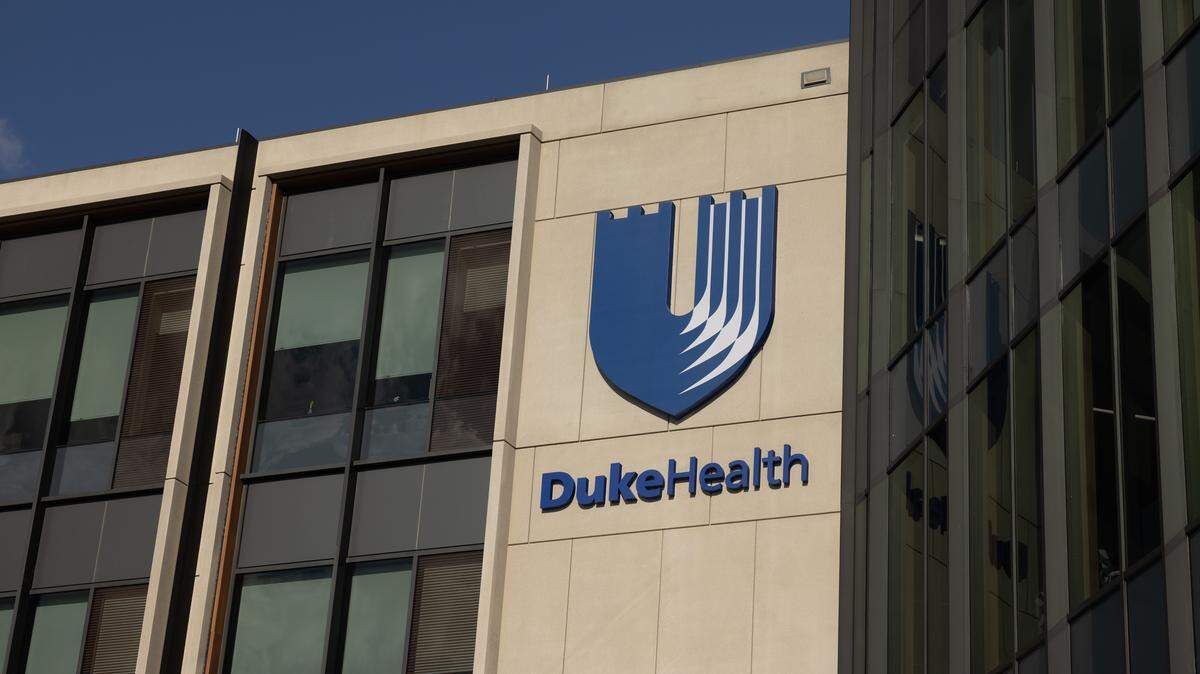
- Trump officials froze $108M in federal funding for Duke Health over Title VI claims
- Education Department launched investigations into Duke University and law journal
- Actions mirror federal probes of Harvard and Columbia for civil rights violations
Duke University is the latest college the Trump administration is stripping funding from for alleged civil rights violations.
Education Secretary Linda McMahon and Health and Human Services Secretary Robert F. Kennedy Jr. sent a letter to Duke officials on Monday, accusing Duke’s School of Medicine and Duke Health of violating Title VI of the 1964 Civil Rights Act. On Tuesday, The Trump administration froze $108 million in federal funding for Duke Health, The News & Observer reported.
The Department of Education also announced on Monday that it is investigating Duke University and the Duke Law Journal, The N&O reported. The department cited a report from the conservative outlet Washington Free Beacon about how the journal graded personal statements for students applying to be editors.
The Trump administration has previously targeted Harvard and Columbia universities, accusing them of violating Title VI of the Civil Rights Act and failing to protect Jewish students from antisemitism.
Columbia announced on July 23 it had settled its investigation with a $200 million fine. Harvard sued the Trump administration for freezing federal funds but is said to be open to paying a $500 million settlement, The New York Times reported.
Why can the Trump administration investigate Duke?
Ted Shaw, director of the UNC-Chapel Hill Center for Civil Rights, said the U.S. Constitution — namely the equal protection clause of the 14th Amendment — does not apply directly to Duke because it is a private institution.
But private universities are subject to Title VI of the Civil Rights Act, which prohibits any organization receiving federal money from discriminating based on race, Shaw said.
Shaw said prior to the second Trump administration, allegations of civil rights violations in admissions focused mostly on if universities used racial quotas to admit minority students.
Quotas in admissions have been illegal since the U.S. Supreme Court decision in Regents of the University of California v. Bakke in 1978. Allan Bakke, a white man, successfully sued the University of California to end an affirmative action program that had reserved 16 spots for minority students.
In Bakke, Justice Lewis Powell wrote that while the University of California’s special admissions program for minority students violated the equal protection clause, “the goal of achieving a diverse student body is sufficiently compelling to justify consideration of race in admissions decisions under some circumstances.”
The Supreme Court affirmed Powell’s stance in the 2003 case Grutter v. Bollinger when a white woman, Barbara Grutter, sued the University of Michigan alleging racial discrimination in its law school admissions process.
The court ruled in favor of the university, arguing that the university’s “narrowly tailored” use of race in admissions served a compelling interest in increasing diversity at the school.
Jon Guze, a senior fellow at the John Locke Foundation, a conservative think tank, said though he thought Duke was indeed guilty of “reverse discrimination,” he feels a “modicum of sympathy” for the university being singled out.
“Nobody was ashamed of it or tried to hide it because they thought it was the right thing to do and they thought it was legal,” Guze said.
The Supreme Court only reversed the precedent of diversity as a compelling interest in 2023 after Students for Fair Admissions v. Harvard, Guze said. Universities have not had very long to change their policies, but Guze said he wasn’t sure Duke and Harvard had made enough effort to comply with the law.
Familiar targets
Even Duke’s law journal is not the first journal the Trump administration has targeted.
On April 28, the Education Department and Department of Health and Human Services opened an investigation into the Harvard Law Review after the Free Beacon alleged a “pattern of racial discrimination” by the journal’s editors in their article selection.
Unlike the Duke Law Journal, which is a publication of Duke Law School, the Harvard Law Review is published by the Harvard Law Review Association, a nonprofit organization that is independent from Harvard University, according to a factsheet from the Harvard Law Review. Nonetheless, both Harvard and the journal were named in the investigation.
The Harvard Law Review used the factsheet to defend its editorial process and independence from the university but also scrubbed the names of its board of editors from its website and changed a prompt for applicants to not mention race, the Harvard Crimson reported.
Students who applied to be editors for the Duke Law Journal could receive up to 30 points on their personal statement — 10 points for “contribution,” 10 points for “polish” and 10 “bonus” points — according to a packet distributed to affinity groups obtained by the Free Beacon.
An applicant’s contribution would be given points based in part on whether the person’s perspective would help the journal publish “excellent academic scholarship and promot[e] diverse voices in legal academia.”
Perspectives could include being part of an underrepresented group, being a first-generation student, professional or academic background or if an applicant is a student in public interest law — a branch of law that includes public defenders, nonprofits who represent marginalized groups and impact litigation groups like the American Civil Liberties Union .
Three to five bonus points would be awarded “if the person has meaningfully advanced the interests of communities with diverse perspectives and experiences either at school or in their community.”
Is that enough for an investigation?
Shaw said that in today’s environment, just using the word diversity can draw a legal challenge but diversity can mean many things, including diversity of viewpoints.
Guze said diversity is often a codeword for reverse discrimination, but more evidence is needed than language to prove discrimination, and Title VI cases are hard to win. That’s in part due to a 2022 U.S. Supreme Court case, Cummings v. Premier Rehab Keller, in which the court ruled victims of discrimination cannot seek damages for emotional distress, but must prove economic harm.
In an amicus brief, the ACLU, the NAACP Legal Defense Fund and the National Women’s Law Center argued that discrimination cases like Franklin v. Gwinnett County Public Schools, where a girl who was sexually harassed by a teacher sought damages for emotional harm — not economic harm — would be much harder to bring.
But the Trump administration is withholding funding before an investigation has concluded. In Duke’s case, the administration cut funding just a day after announcing its investigation.
“It would be nice if all this were a bit more nuanced [rather] than go after the whole university and cut off all kinds of funding, including for research and things that have nothing to do with the civil rights law violations,” Guze said.
Guze said universities may fight back by claiming the Trump administration is punishing them because of their protected speech. Indeed, Harvard sued the Trump administration for violating its free speech rights by freezing funds in April.
“The government has not — and cannot — identify any rational connection between antisemitism concerns and the medical, scientific, technological and other research it has frozen that aims to save American lives, foster American success, preserve American security, and maintain America’s position as a global leader in innovation,” the university wrote in its complaint to the U.S. District Court of Massachusetts.
The court heard oral arguments on July 21, CNN reported. Yet Trump said on Wednesday Harvard is negotiating with his administration to settle the dispute, Reuters reported. The New York Times reported that the school was open to paying that much to end the investigation.
Guze said once the government witholds some funding, universities cannot afford to lose more and are tempted to settle, even if the administration’s actions are possibly illegal.
“Arguably, at least in some cases, they’re doing it not so much because they want to enforce the law, but because they don’t like these institutions and some of the things that they’re doing and saying,” Guze said.
Shaw, who worked for the NAACP Legal Defense Fund and the U.S. Justice Department, agreed. Whenever he sued for discrimination, he never sued for money but instead sought an injunction to stop discriminatory behavior, he said.
In contrast, the Trump administration is withholding funding in exchange for compliance and accepting cash settlements to dismiss cases.
“This is an attempt to bully these institutions and to try to get them to cease their efforts to bring about a more inclusive society,” Shaw said. “But in the way they’re doing it, it’s very different from traditional civil rights litigation.”
This story was originally published August 1, 2025 at 3:38 PM.
.jpg)