
President Donald Trump tries to end carnage in Ukraine through Russia peace talk
Welcome to another week! It’s Danielle Battaglia with Monday’s Under the Dome, focused on the latest actions by President Donald Trump and his administration.
I received a news release last week about online bets being placed on Trump’s meeting with Russian President Vladimir Putin that took place Friday in Alaska. It felt callous to gamble money on war talks between two world leaders.
Let’s be clear: Russia’s invasion of Ukraine is the deadliest war to take place in Europe since World War II.
It’s estimated that Russia has lost 1 million soldiers due to death or injuries. That does not include civilians, or Ukrainian soldiers or citizens killed or injured.
The war between Russia and Ukraine began in 2014, but escalated with Russia’s February 2022 invasion. Putin has used propaganda in his rationale for attacking the neighboring country, but some experts say it’s a mix of ongoing tensions, Putin’s souring relationship with NATO and his own ego.
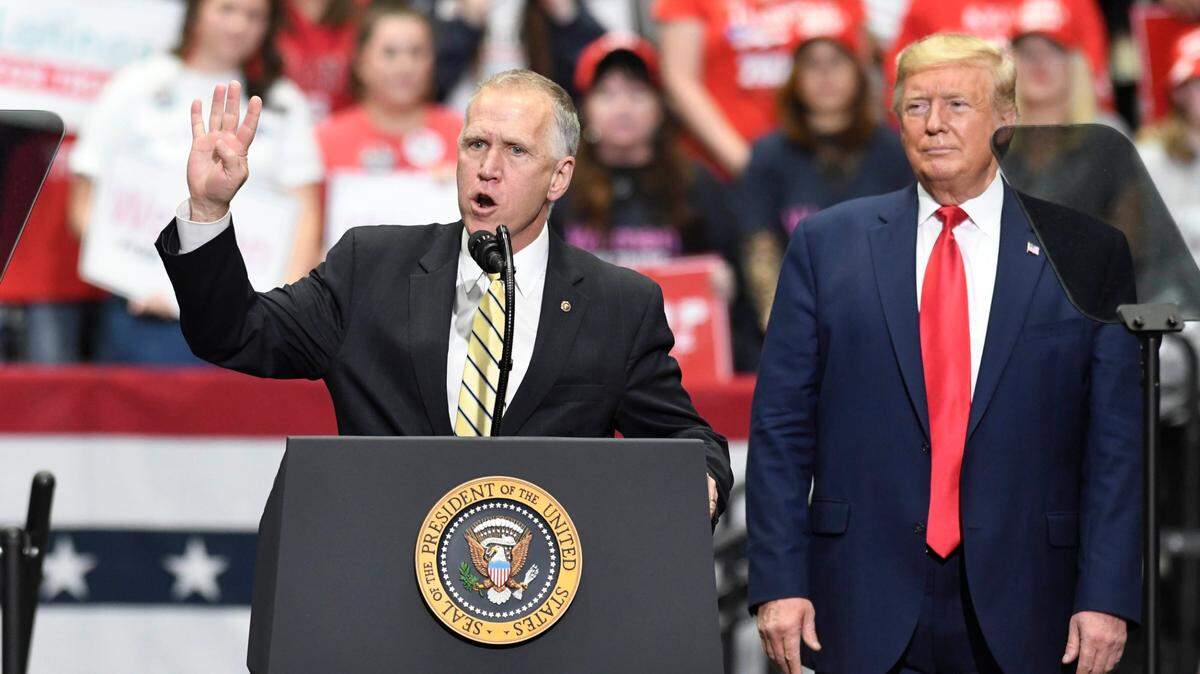
Sen. Thom Tillis, a Republican from Huntersville and co-chair of the Senate NATO Observer Group, has spent the past three and a half years emphasizing the brutality of this war.
He has repeatedly called Putin “pure evil,” “a dictator,” “a liar” and “a murderer.” And he has no patience for anyone who stands with Russia (ask former Rep. Madison Cawthorn).
In March, while Ukraine waited for Russia to agree to a ceasefire (the agreement never came) Tillis took to the Senate floor asking his colleagues to provide Ukraine with congressional support.
He said Putin’s actions led to half-a-million deaths and injuries in Ukraine (the country does not release casualty information, so exact numbers are hard to come by). He detailed the grotesque realities of teenagers having their limbs blown off, drone strikes of children’s hospitals, women being raped and civilians being shot for walking their dogs or riding their bikes down the street.
“This is the carnage that the Ukrainian people are experiencing every single day, 24/7, 365 days since the invasion began three years ago,” Tillis said in March.
On Thursday, during an Oval Office meeting, Trump told reporters he wanted to meet with Putin to put an end to the thousands of deaths taking place daily.
“I want to see if I can stop the killing,” Trump said in the Oval Office.
I wrote this newsletter as Trump was flying to Alaska, so you’ll know before I do how the meeting turns out. Hopefully, there’s peace. History tells me that’s a long shot.
Regardless, please pause and remember the grim reality the Ukrainian people are facing.
Here are other stories from the week
- Dozens of federal employees living in North Carolina and laid off by DOGE gathered in Chapel Hill last week to discuss how the Trump administration affected their lives. Kristen Johnson reports their stories.
- More than 100 members of Duke University staff, faculty and alumni signed a letter urging its leadership to strongly reject attacks from the Trump administration, Johnson also reports.
- I reported on a North Carolina’s SNAP recipient’s reaction to the passage of the One Big Beautiful Bill Act. She called it “the cruelest thing” she’s seen the government do.
- The Trump administration froze $108 million to Duke University accusing the school of racial discrimination. Korie Dean, Kyle Ingram and I report what we know about this freeze and what the school is doing about it.
- North Carolina officials ended a program that gives low-income residents access to solar energy after the Environmental Protection Agency cut federal funding, calling the program a “boondoggle,” Martha Quillin reports.
- More than 100 rabbis signed a letter criticizing the North Carolina Democratic Party for a resolution it passed calling for the end of the United States’ support of Israel’s military, Avi Bajpai and Korie Dean write.
- North Carolina Democrats criticized Republican Senate candidate Michael Whatley for supporting former Lt. Gov. Mark Robinson, saying Robinson’s rise is evidence of Whatley’s bad judgement, Dawn Baumgartner Vaughan reports.
- With Erin now the Atlantic Ocean’s first major hurricane this season, FEMA is trying to fill empty positions after Trump placed a hiring freeze on federal workers. That includes a top position in North Carolina, Emily Goodin and Alex Harris report.
That’s it for now. Be kind to each other. And check back tomorrow for the Under the Dome podcast newsletter.
And if you have any feedback or tips for this new edition of the newsletter feel free to reach out to me directly at dbattaglia@mcclatchydc.com.
Not a subscriber? Sign up on our website to receive Under the Dome in your inbox daily.
