
NC Indian-American group promoted event as political fundraiser. Was that legit?
AI-generated summary reviewed by our newsroom.
- NC Indian American hosted a fundraiser for North Carolina’s top two legislative leaders.
- Government watchdog questions whether event fits with group’s nonprofit status.
- Proponents of new, cricket-ready stadium received audience before UNC Chapel Hill trustees after event.
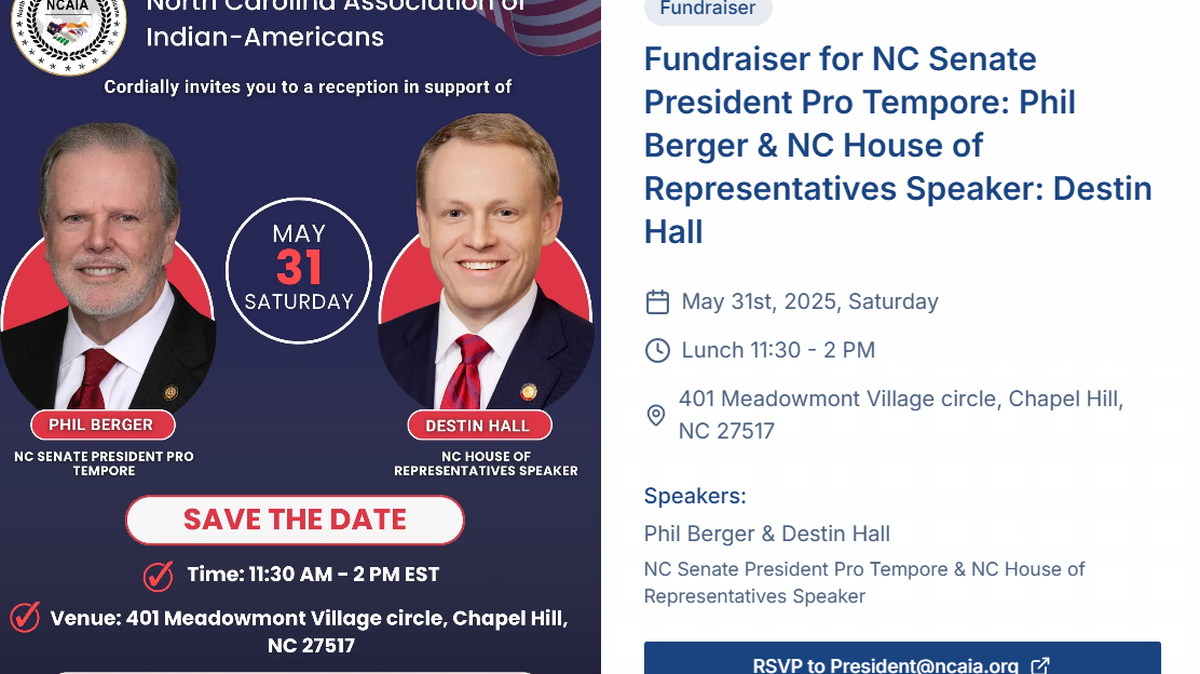
Three months ago, the N.C. Association of Indian Americans hosted a fundraiser for two of the state’s most powerful politicians that raised more than $150,000 for each of their campaigns, a watchdog’s review of campaign finance records show.
At a packed Indian restaurant in Chapel Hill’s Meadowmont community, UNC-Chapel Hill Trustee Jim Blaine, N.C. Insurance Commissioner Mike Causey and N.C. Labor Commissioner Luke Farley spoke in support of longtime Senate leader Phil Berger and first-term House Speaker Destin Hall.
The officials also praised the association and one of its most prominent members: hotel chain owner Vimal Kolappa, also a UNC trustee, who has given tens of thousands of dollars to state and federal candidates since 2010.
All stood in front of a custom-made backdrop celebrating the event that included the logos of 22 businesses with North Carolina ties, many in the Triangle.
But the N.C. Association of Indian Americans’ organizing papers filed with the N.C. Secretary of State show the organization claimed a nonprofit status — known as 501(c)(3) under the federal tax code — that prohibits political fundraising.
Its website describes the group as a social welfare nonprofit — known as a 501(c)(4) under the tax code — that allows for fundraising, which the website says the association has done since 2016, the year it was founded. But the IRS website doesn’t show the association nor its tax returns, which is required of such groups.
Association president Saikiran Kolavennu did not respond to The News & Observer’s requests for information about the fundraiser or for the group’s tax returns.
Federal law requires tax returns to be made available upon request in person and within 30 days if a request is in writing. The N&O visited Kolavennu’s home, listed as the association’s address, to request the documents in person last week. He did not respond to a message left there with a family member.
An IRS spokesman said the agency could not comment on specific nonprofits.
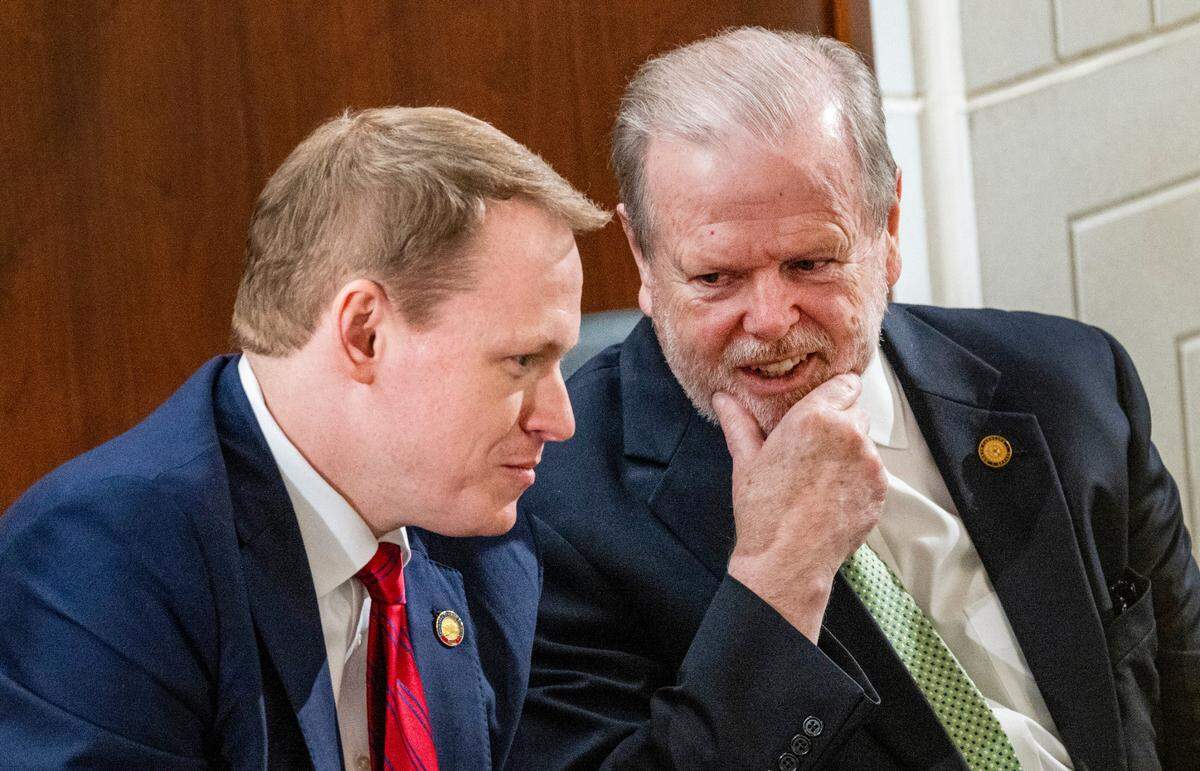
Spokesmen for Berger and Speaker Hall’s campaigns say their organizations paid for the May 31 fundraiser but did not have needed invoices by June 30 to include the spending in their latest campaign finance reporting. They did not respond to a request for copies of those invoices.
Bob Hall, the retired executive director of Democracy North Carolina, is preparing a complaint to the State Board of Elections about the fundraiser, he said. He wants the board to investigate the association’s nonprofit status to determine if it can engage in political fundraising.
The association’s business support, as evidenced by the companies listed on the fundraiser backdrop, also might prohibit it from raising money for candidates, he said. State law bars businesses from underwriting political fundraisers.
“It is a question as to what is this entity and whether this event is a violation of state law — state campaign finance law,” Hall said. “I’m concerned about that.”
If the board determines the association could not hold the fundraiser, Hall said all the campaign money it raised should be forfeited to the state as the law requires.
Donations to two powerful politicians
Hall reviewed the LinkedIn pages of donors who gave the day of the fundraiser and up to two weeks after the May 31 event, he said. The majority were people he identified as Indian Americans, mostly from the Triangle, he said.
Hall identified more than $338,000 in contributions — with Speaker Hall collecting more than $173,000 and Berger more than $165,000. After checking state records, Hall found many people on his list appeared on campaign donor rolls for the first time.
The $173,000 to Hall, a Caldwell County Republican, is nearly a quarter of the roughly $748,000 he raised between January and June of this year. The money tied to the association’s fundraiser for Berger, a Rockingham County Republican, accounts for nearly 10% of his campaign’s haul during that time.
Kolavennu and Kolappa have made donations to candidates in both major political parties. But the association event at the Lime & Lemon Indian Grill & Bar appears to be one of the largest fundraisers they’ve helped organize, Berger and Hall’s campaign records show.
In an interview, Kolappa said the association did not run afoul of election law because it did not collect the money, nor did it spend “a dime” on the fundraiser.
“There were many people that were there, that is true,” he said. “But the association did not collect the money.”
An invitation posted on the association’s website identifies the event as a fundraiser. The invitation says it “cordially invites you to a reception in support” of Berger and Hall, and gives Kolavennu’s association email to reserve a seat. It does not list a contribution amount needed to enter.
Kolavennu and Kolappa invited Causey early in the year, the insurance commissioner said in a video of his remarks at the reception on the association’s Facebook page.
“And they said, ‘Whatever you do, don’t put anything on your schedule for May 31,’ and I said ‘Yes sir,”’ Causey told the audience.
The two legislative leaders’ campaign finance reports do not show any money spent on the fundraiser, or any in-kind contributions from people who attended or the businesses listed on the banner. Campaigns are required to report such expenses under state election law, Hall said, and that will be part of his complaint.
Berger and Hall did not respond to interview requests. Michael Luethy and Jordan Shaw – their respective campaign spokesmen – said in a joint statement that the campaigns “paid all event expenses once the invoices were received, as the next report will show and as they have done for numerous events over the years.”
The CEO of one of the companies whose logo was on the banner, Pinnacle Tek, told The N&O the company made a donation to the event.
“We donated money,” said Lavanya Poosarla, but she did not say how much. She also gave $500 each to Berger and Hall’s campaigns.
A community on the rise in North Carolina
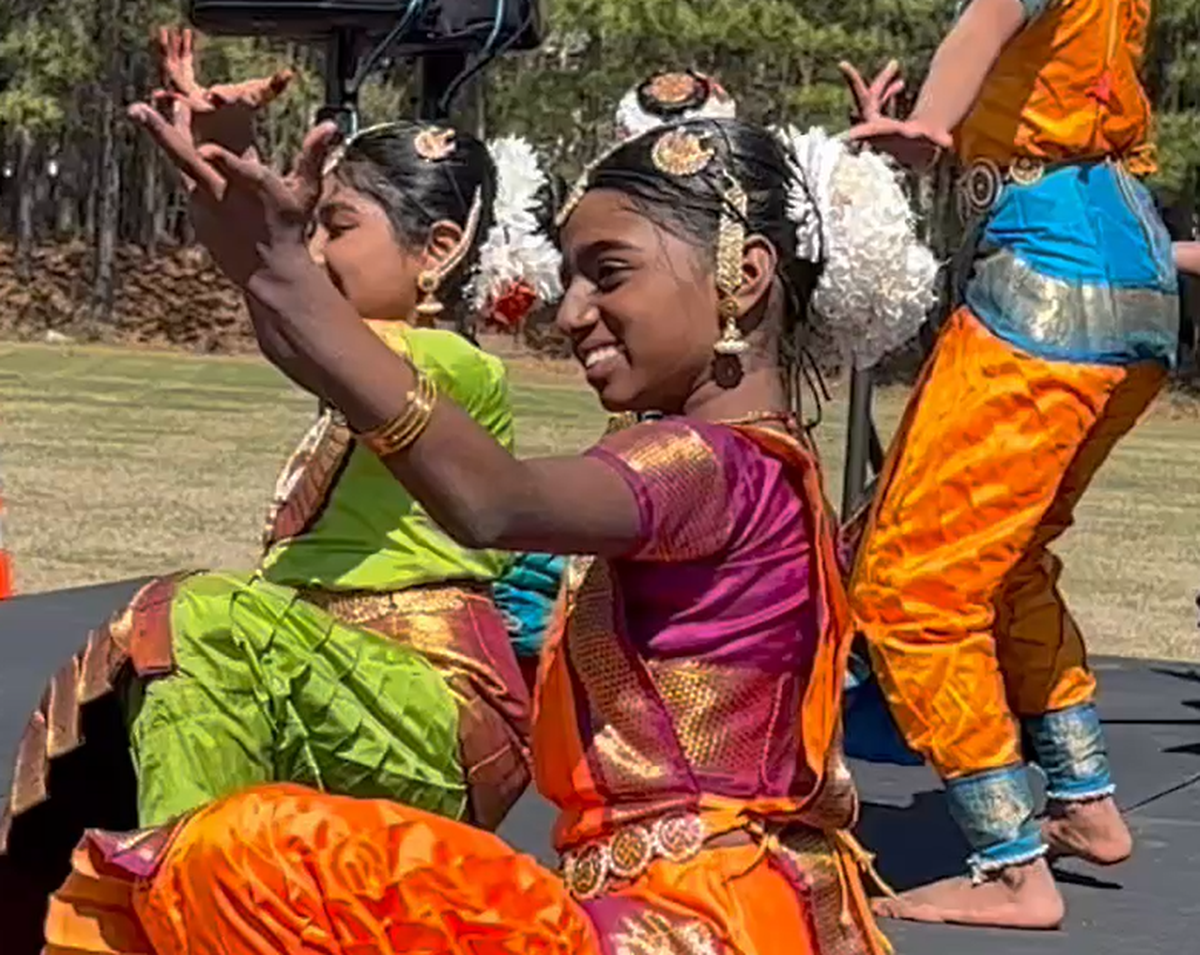
The Triangle’s Asian Indian population has grown tremendously since 2000, particularly in Morrisville. It was a small town of 5,000 then and is now approaching 35,000, with Asian Indians accounting for more than a third of the population, the town has reported.
The former state House speaker, Tim Moore, now a congressman, appointed Kolappa to the UNC trustees in 2023, and appointed Kolavennu to the NC Information Strategy Board last year. Kolavennu is an executive at CogniAI, an information technology company that was among those listed on the banner. Kolappa and Kolavenna have given $15,200 and $3,750, respectively, to Moore’s campaigns since 2018.
In the months before the fundraiser, Kolappa reached out to state lawmakers seeking $100 million in state funding for a 25,000-seat cricket stadium, he confirmed in an interview. One he met with is Rep. John Bell, a Wayne County Republican and the powerful House Rules Committee chairman.
Bell is interested in exploring the stadium, which could be used for other sports, as a public-private partnership, but “I don’t think it’s realistic to have $100 million in the budget for this,” he said in an interview.
Cricket is considered the world’s second most popular sport by number of fans, The Conversation reports. It is especially popular in the Indian subcontinent, a region that includes India, Pakistan and Bangladesh.
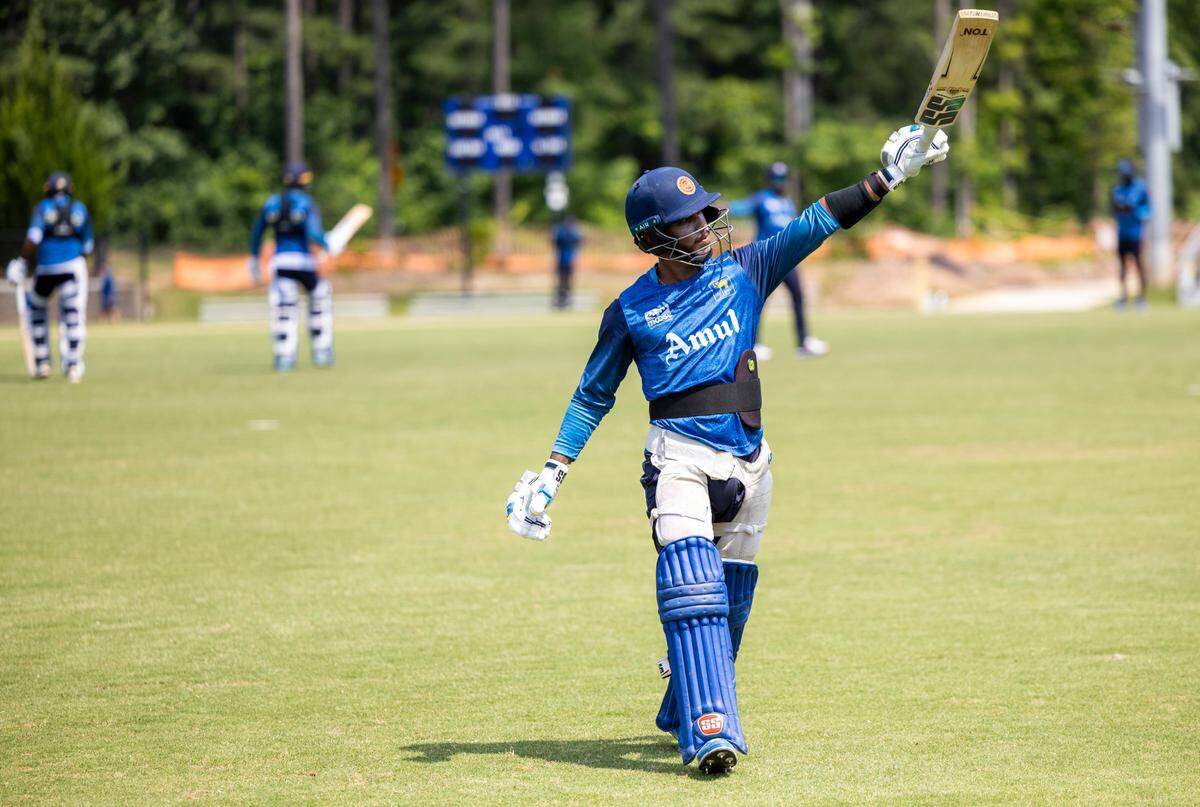
Morrisville opened a cricket facility in 2015 that has hosted international tournaments, and the town is home to a minor league team called the Raptors. One co-owner is Vijay Nandakumar, who co-owns the Core Cricket Academy in Raleigh that trains young athletes in the sport.
The week following the fundraiser hosted by the N.C. Association of Indian Americans, Berger’s campaign reported receiving $3,500 from Nandakumar and his wife, and Hall’s campaign reported receiving $3,500 from Nandakumar.
Two months later, Nandakumar presented the cricket stadium proposal to the UNC trustees for the planned Carolina North campus. Trustees John Preyer, a former chairman of the board, and Marty Kotis spoke favorably about the proposal. Kolappa thanked trustee Blaine at the meeting for helping build support.
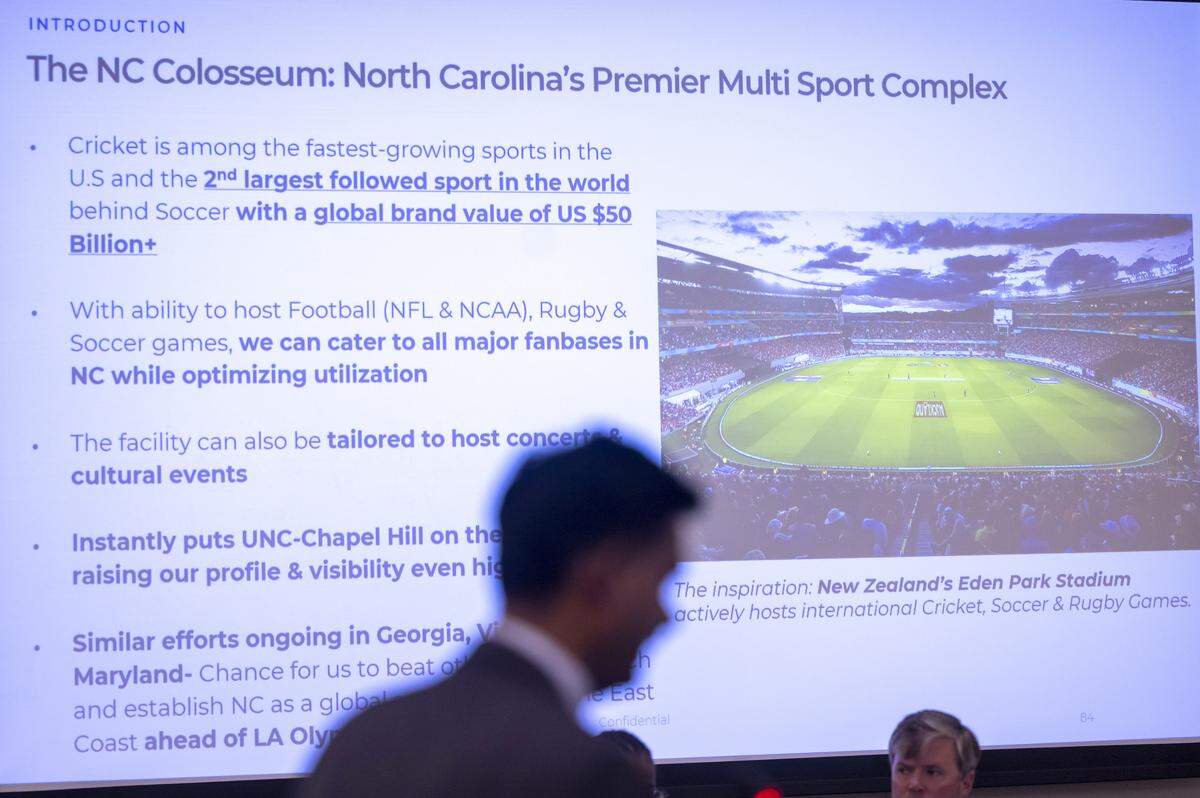
“You have focused this board’s attention on something that we otherwise would not have been thinking about for Carolina North, and you have done it in a way that I think everyone here would love to see this happen,” Preyer told Kolappa and Nandakumar.
Nandakumar, in an interview, said there was “no correlation” between the fundraiser and the drive to build a cricket stadium.
Berger appointed Preyer, Kotis and Blaine to the UNC board.
Campaign finance complaint in the works
Bob Hall, whose campaign finance complaints over the years have uncovered some improper activity, said the UNC presentation on the heels of the fundraiser gives the impression that campaign donations could be driving political leaders’ interest in the cricket stadium.
”It sends a message, reinforces a message, to a large constituency of people that the way we can succeed is by throwing a lot of money to these politicians, and that’s not the way democracy is supposed to work,” he said.
There is no connection between the fundraiser and the effort to land a stadium at UNC, Preyer said in an interview. He had attended the fundraiser, where he praised Kolappa.
Preyer stressed that stadium advocates have not asked the university for money.
“If we thought that the revenue coming would be several times the investment, and it might generate several hundreds of millions of dollars, then it would certainly be worth it,” Preyer said of a cricket stadium. “But there has never been any ask of the university for a commitment.”
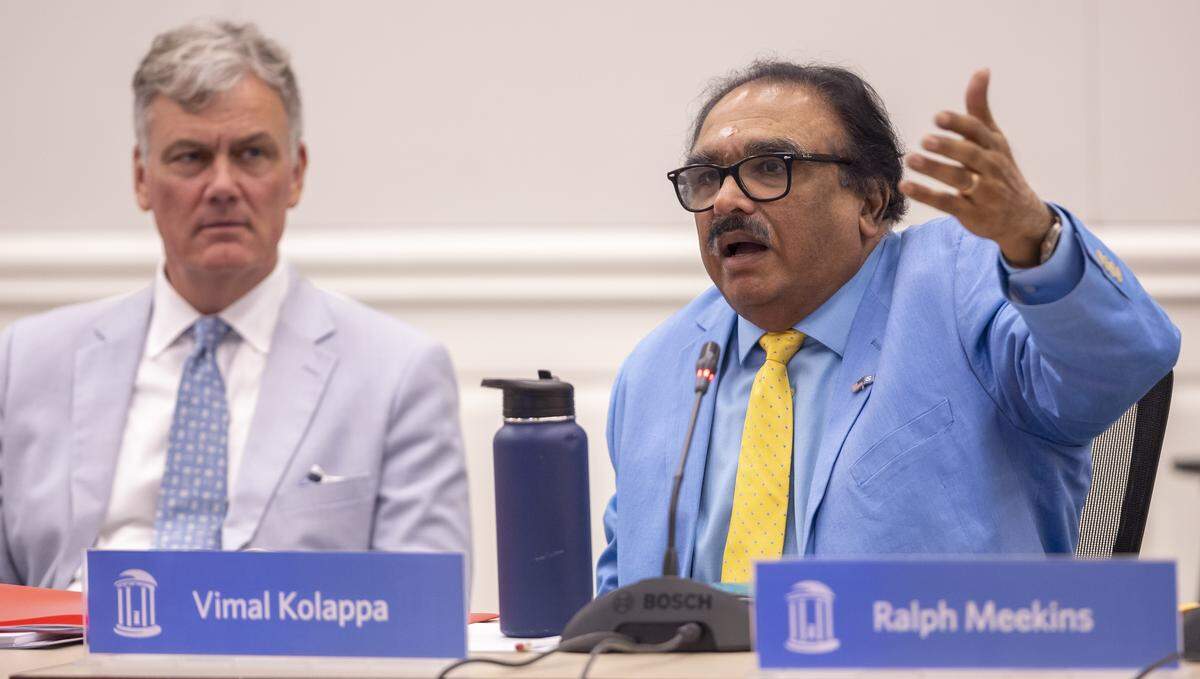
Kolappa said he has no financial interest in the cricket stadium. None of his hotels are in the Triangle area. He sees the stadium as an opportunity to help a state that helped him flourish when he and his wife came to the U.S. more than 40 years ago with $8 in his pocket.
“I’m only trying to help because I might have some connections and I thought this might be a good idea to get revenue into the state and tourism into the state,” he said.
This story was originally published September 2, 2025 at 5:30 AM.