Homeland Security asks NC to feed voter list into citizenship verification system
AI-generated summary reviewed by our newsroom.
- DHS urged NC to test voter rolls through federal citizenship tool SAVE.
- Critics warn SAVE contains outdated data that risks wrongfully flagging voters.
- NC Board of Elections will weigh SAVE use amid rising scrutiny on voter fraud.
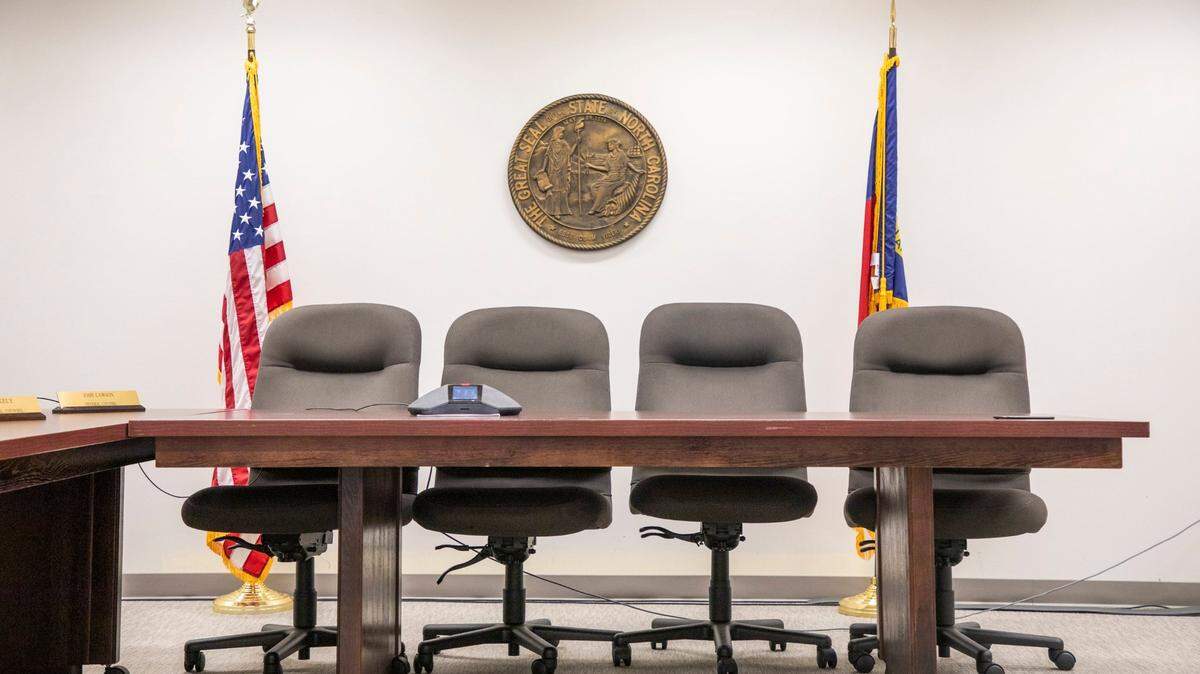
The U.S. Department of Homeland Security has asked North Carolina election officials to run potentially millions of voters through a national citizenship verification system.
The Systematic Alien Verification for Entitlements, or “SAVE” program, which is housed within DHS, is traditionally used by federal and state agencies to determine citizenship for people applying for government benefits or licenses.
But recently, the Trump administration has promoted SAVE as a method for states to check voters’ eligibility. They’ve made the program free to use and are targeting certain states — including North Carolina — for early adoption.
Last week, DHS officials invited the State Board of Elections to submit the names of up to 1 million voters at a time to be run through an overhauled version of SAVE that now requires less data to identify a match.
“This new enhancement will allow state voter verification agencies — such as yours — to submit SAVE verification cases using only the following data points: First Name, Last Name, Date of Birth, and the SSN Last-4,” the letter, sent Thursday, said.
The program has drawn criticism — both nationally and in North Carolina — for using unreliable or outdated information that could incorrectly identify people as noncitizens.
“It might be used with great caution as one source of data in a case-by-case investigation, but the State Board can’t take its information as definitive,” Bob Hall, an election watchdog and the former director of Democracy North Carolina, said. “It’s just not trustworthy; it can create false charges that amount to fraud against voters rather than stopping fraud.”
The State Board of Elections, which has a 3 to 2 Republican majority, had planned to consider implementing SAVE for voter list maintenance at its meeting Wednesday, but delayed that discussion.
The board is “doing due diligence to ensure that if we provide the voter rolls to the federal government that that information is safeguarded, protected and only used and seen by the people that are working on that project,” spokesperson Pat Gannon said.
At least 20 states use SAVE for voter registration or list-maintenance purposes, but problems have been reported about the effectiveness of the system.
In an audit of the 2016 election, the North Carolina State Board of Elections — under a director put in charge while a Republican governor led the state — concluded that a match with the SAVE database was “not a reliable indicator that a person is not a U.S. citizen.”
The audit detailed several problems with the database, including infrequent updates and issues with naturalized citizens or those who derived citizenship from adoption incorrectly showing up as noncitizens.
Agreements with DHS and election offices generally require states to allow potential voters who fail SAVE verification to attempt to prove their citizenship after the fact.
“We hope that the state board will not be reckless by uploading large amounts of voter data into this unreliable system,” said Ann Webb, policy director at voting rights group Common Cause NC. “(It) would likely lead to an enormous waste of public resources and result in eligible voters being falsely accused and required to respond to unnecessary inquiries.”
How common is noncitizen voting?
Noncitizen voting has become a major conservative talking point nationally and in North Carolina — where allegations of improper registration practices upended the 2024 state Supreme Court race and led to a six-month legal battle over the results.
But national studies have consistently found noncitizen voting to be an exceedingly rare issue.
A 2016 study conducted by the liberal Brennan Center found that in 42 jurisdictions accounting for 23.5 million votes, there were 30 estimated incidents of suspected noncitizen voting.
The conservative Heritage Foundation also conducted a nationwide study of elections between 2003 and 2023 and found 24 instances of noncitizen voting.
North Carolina’s audit of the 2016 election found 41 instances of noncitizens casting a ballot.
This story was originally published August 27, 2025 at 6:00 AM.