Duke bus driver, set to lose legal status within days, asks NC Republicans to help
A bus driver who has been shuttling students across Duke University’s campus for several years and is a fixture in the community is among the tens of thousands of Hondurans whose legal status will end on Monday following a decision by the Trump administration.
Luis Alonso Juárez immigrated to the United States in 1995 and has been living here lawfully since 1999 under Temporary Protected Status, a federal designation made by the Department of Homeland Security that allows foreign nationals to live and work in the U.S. if they can’t safely return to their home countries because of war, natural disaster, or other extraordinary conditions.
Juárez is one of 51,000 Hondurans who have been living in the U.S. with TPS who will lose their authorization to legally live and work in the country on Monday. The termination of TPS for Honduras was announced by Homeland Security Secretary Kristi Noem on July 7.
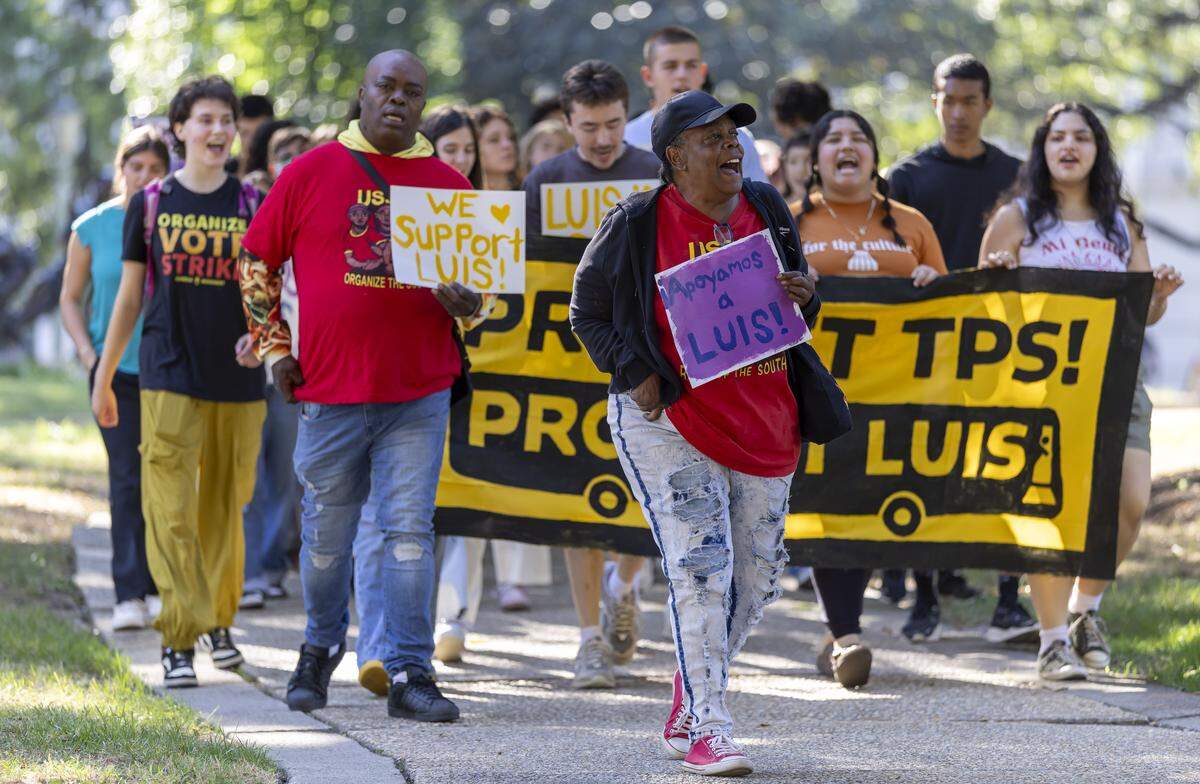
On Thursday, days before he loses his legal status, Juárez was joined by dozens of Duke students and activists in calling on top Republicans in North Carolina to lobby the Trump administration to protect him from losing his job and his authorization to live in the country he has called home for three decades.
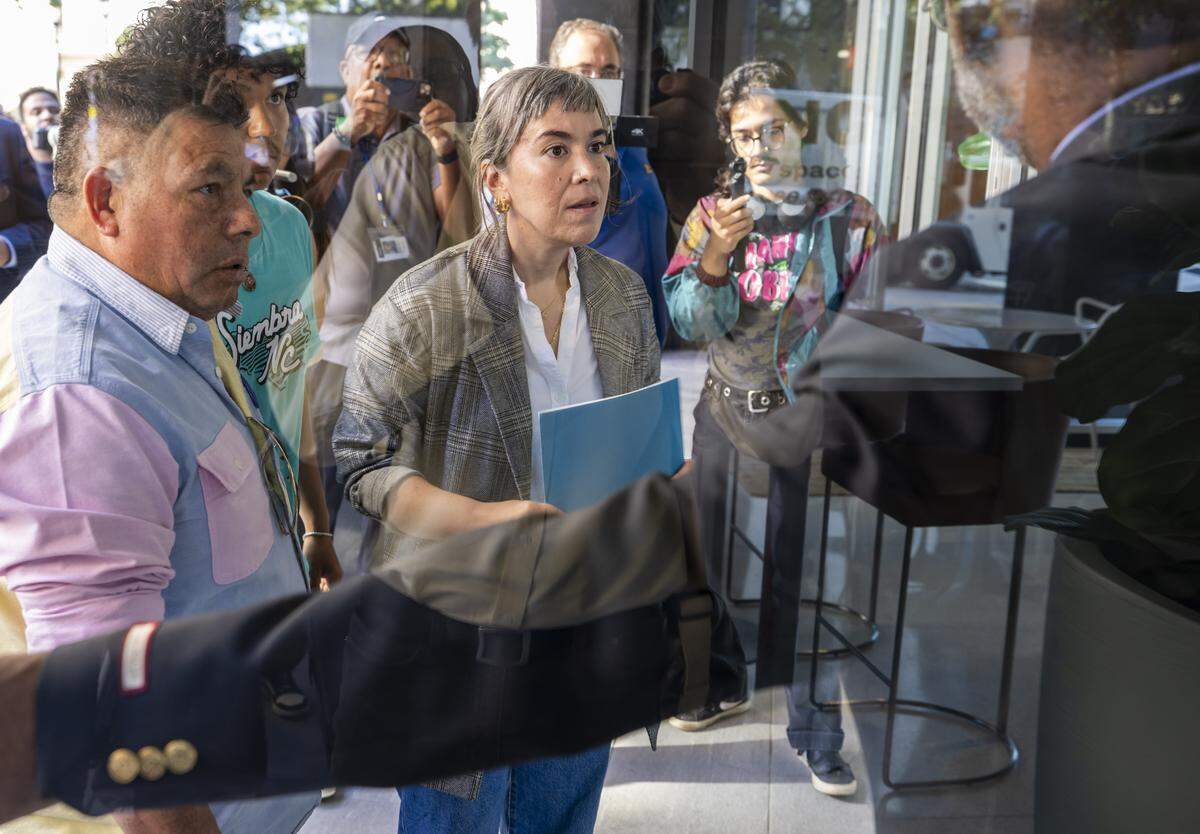
The group of students who came with Juárez to publicly appeal for him first stopped at the downtown Raleigh office building where U.S. Sen. Ted Budd has a district office, before visiting the General Assembly to deliver letters to the offices of Senate leader Phil Berger and House Speaker Destin Hall.
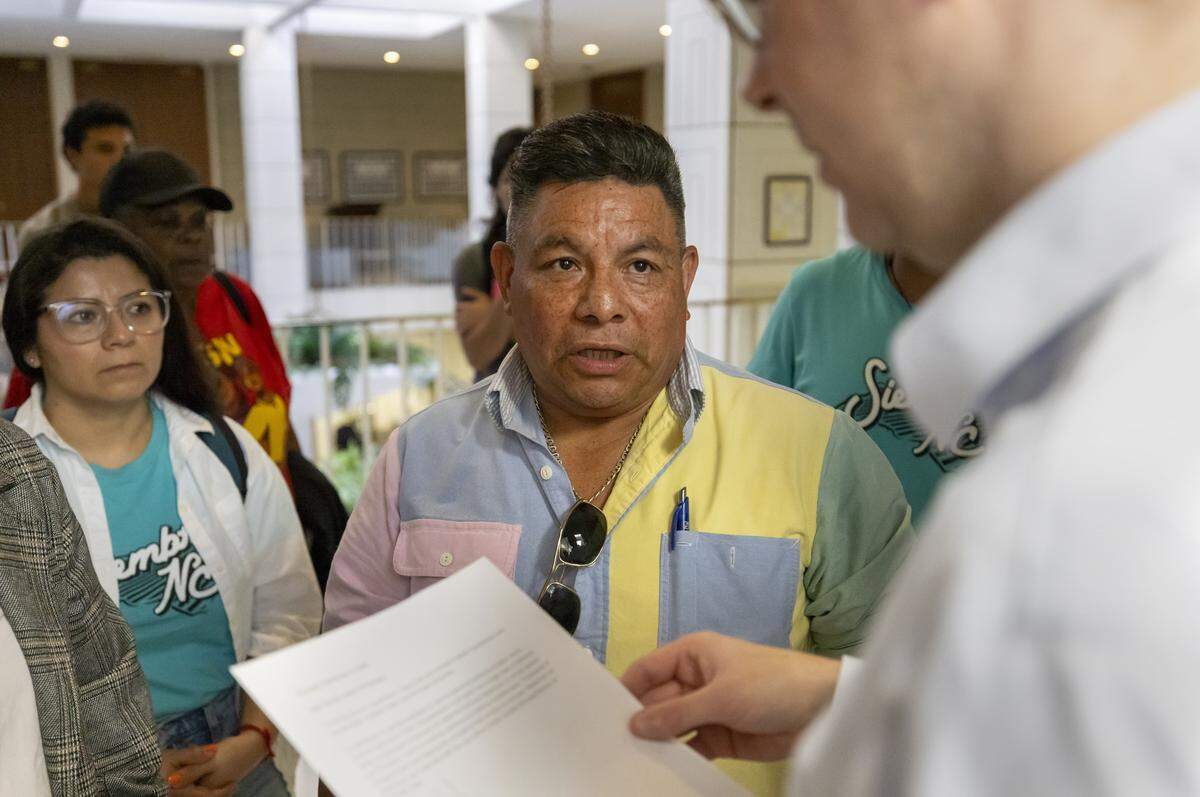
During a press conference at the legislature Thursday morning, Juárez said through a translator that he loves being a part of the lives of the Duke students he has been shuttling on the C1 route, between the university’s East and West campuses, for years.
Students who accompanied Juárez to Raleigh spoke about the impact he has had on campus, greeting them each morning with a smile and his “uplifting spirit,” and plenty of good music that helps them get excited for the day ahead and distracts them from the stress of college.
Michael Ramos, a senior from San Diego, said he’s been motivated by watching Juárez work hard beyond his hours as a bus driver, as he seeks to improve his English skills and gain his GED. He said Juárez reminds him of and connects him to his mother, who works as a custodian at a university in California and also takes classes outside of work, “pursuing her dream.”
Juárez said he values being able to serve the Duke community, but with his income, also supports his four brothers and four nieces and nephews in Honduras.
“We deserved to be able to keep helping our families, and helping businesses,” Juárez said through a translator, who read a copy of his remarks in Spanish translated into English. “We are the people who make this economy in the state strong. Without us, there are no businesses, there is not as much learning, there is not work without workers.”

The economic contributions of workers who have been living in the U.S. legally under TPS was also the pitch activists advocating on behalf of Juárez made to Republicans.
“It will be a catastrophe for Duke and other major employers in the state of North Carolina if they have to lay off many of their most vital workers,” said Nikki Marín Baena, co-director of Siembra NC. “Luis has done nothing wrong that would change his immigration status, and still, like so many others, he is about to have no legal protections after two decades working for our state’s second-largest employer, simply because one person in Washington decided that immigrant workers are expendable.”
In a statement, a university spokesperson said that Juárez is “beloved by many at Duke.”
“Since we learned of the change to his immigration situation, Duke has provided him with significant support and resources,” the spokesperson said. “At this stage, the University has done all it can under the law.”
Juárez said he doesn’t want to go back to Honduras because he doesn’t think it is safe. Activists said Thursday that once his TPS expires on Monday, he won’t have authorization to live or work in the U.S. anymore.
In its July announcement, DHS said Honduran nationals leaving the country following the expiration of their TPS should use a mobile application offered by Customs and Border Protection “to report their departure from the United States and take advantage of a safe, secure way to leave the United States with a complimentary plane ticket, a $1,000 exit bonus to help them resettle in Honduras, and preserve future opportunities for legal immigration.”
Baena and other activists who have been trying to raise awareness about Juárez’s situation called on Budd, Berger, and Hall to use their influence and relationships with the Trump administration to highlight Juárez’s case and request some sort of intervention to allow him to stay in the country and keep his job at Duke.
Activists said the White House could cancel the July 7 order terminating TPS for all Hondurans in the country, or designate Hondurans for deferred enforced departure, allowing them to stay for a set period. Or, they said, authorities could grant a “single case” of deferred action for Juárez.
President Donald Trump, on the last day of his first term, the activists noted, issued deferred enforced departure for Venezuelans living in the U.S. for 18 months, and twice extended similar protections for Liberians. In his second administration, Trump is moving ahead with ending TPS for Venezuela, with DHS announcing the termination on Wednesday.
They also highlighted Republicans in other states who have recently lobbied the Trump administration on individual cases that have been brought to their attention, including U.S. Sen. John Kennedy of Louisiana, who asked officials in July to release the wife of a Marine Corps veteran, a Mexican national, from Immigration and Customs Enforcement custody.
A federal district judge in California had initially blocked the administration’s termination of TPS for Honduras, Nicaragua and Nepal pending a Nov. 18 hearing, but a three-judge panel of the 9th Circuit Court of Appeals later granted the administration’s request to pause that order and allow the termination to go through, the Miami Herald reported.
This story was originally published September 4, 2025 at 1:50 PM.