
How NC’s Berger broke from Tillis on Medicaid after a call from a Trump ally
AI-generated summary reviewed by our newsroom.
- Tillis opposed Medicaid cuts in Senate bill, citing $26B impact on NC coverage.
- Berger backed bill after Trump ally's call, despite potential harm to expansion.
- Tillis dropped reelection bid after GOP backlash and Trump's repeated criticism.
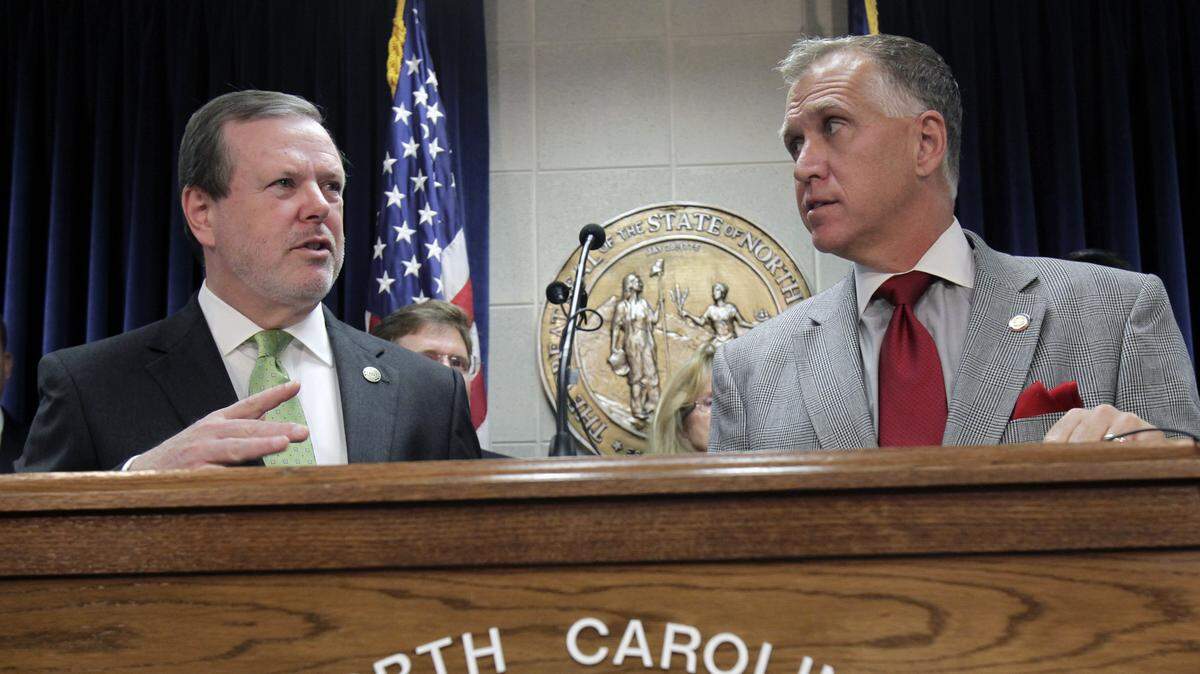
A Trump administration official told U.S. Sen. Thom Tillis and state Senate leader Phil Berger, during a June meeting, that the One Big Beautiful Bill would have significant impacts on their state’s Medicaid program.
But the two Republicans ended the week of that meeting with very different public responses to the bill.
Berger embraced the legislation, posting his support on social media — something he said then-Republican National Committee Chairman Michael Whatley asked him to do.
Tillis, on the other hand, railed against the legislation on the Senate floor, before voting against it and choosing to retire from Congress.
Tillis was unable to stop the bill’s passage, which has put more than half a million people in North Carolina at risk of losing their health care coverage. What happens next is likely up to Berger and other state lawmakers, who could face a choice of ending expansion, raising taxes or cutting services elsewhere.
In Tillis’ floor speech, he first mentioned the series of calls he had with Berger and Dr. Mehmet Oz, administrator for the Centers for Medicare and Medicaid Services, and their staffs. Tillis told McClatchy this month that three calls took place in the days leading up to the Senate’s vote on the One Big Beautiful Bill Act, including at least one with both Berger and Oz.
Tillis contended that the bill would cost North Carolina more than $26 billion and cause hundreds of thousands of residents to lose Medicaid coverage.
Tillis said on the Senate floor that Oz couldn’t “find a hole in his estimates.”
“Dr. Oz basically said, ‘Yeah, North Carolina’s leveraged the system … there’s going to be an impact,’” Tillis told McClatchy in an exclusive interview.
Berger told McClatchy in a written statement that it was a phone call from Whatley, while the bill was making its way through the U.S. Senate, that led to his public show of support.
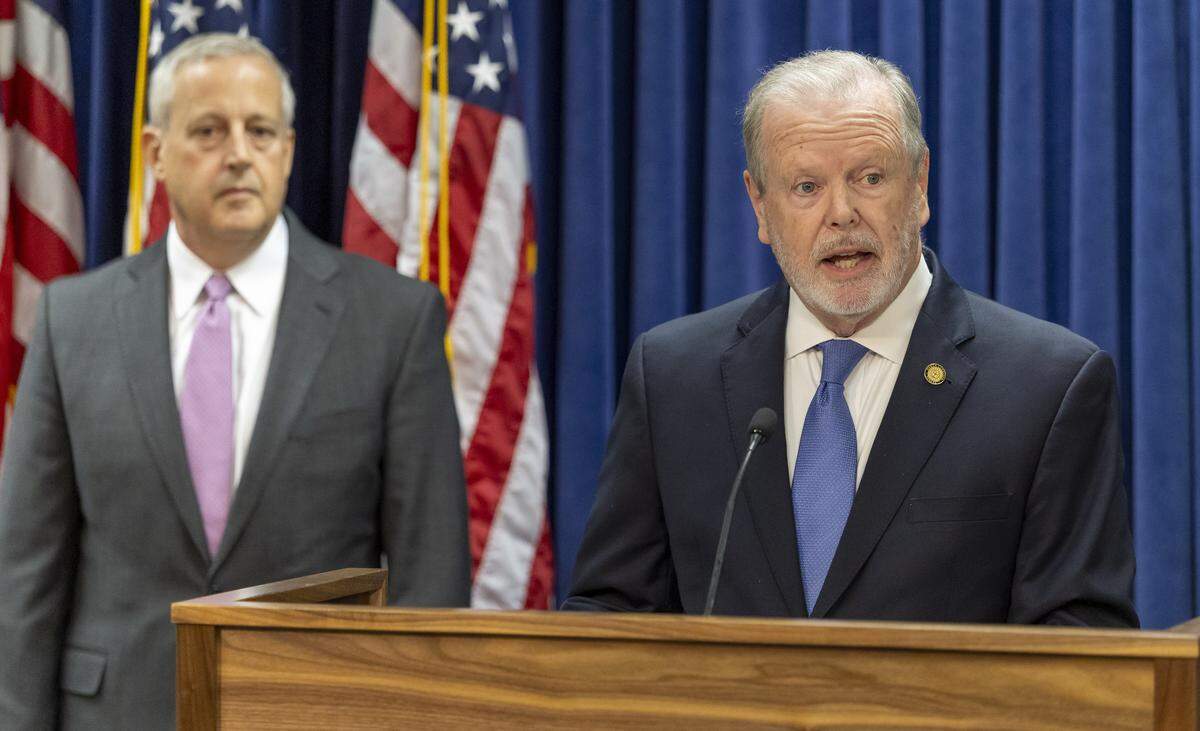
“Michael was in contact with top officials at the White House who were looking for state leaders to support the bill publicly,” Berger said. “I of course offered to publicly support the bill and President Trump’s efforts to get it enacted.”
At the time, both Tillis and Berger were facing reelection campaigns. Tillis soon scrapped his plans to run for a third term in the Senate. Berger is facing his local, seven-term sheriff, Sam Page, for the seat Berger’s held since 2001.
Protecting Medicaid
McClatchy spoke to two sources familiar with conversations between Tillis’ and Berger’s offices who were granted anonymity so both could speak freely.
One of the sources confirmed the conversation between the two staffs began early in the year, and both confirmed they centered on how state leaders could protect Medicaid expansion from federal changes to the program.
Those conversations were with key stakeholders. Once the One Big Beautiful Bill was written, the conversations turned to the bill’s effect on North Carolina.
Tillis said he believed Berger and House Speaker Destin Hall were concerned.
“I think they’re trying to make it work, but there were concerns,” Tillis said.
Changes to funding Medicaid were in the works from the time Trump took office. Tillis and Berger’s early conversations revolved around what state legislators could live with or not.
They knew changes to the amount the federal government pays — 90% of Medicaid costs for the population covered under the state’s 2023 expansion of the program — or the state’s ability to use provider taxes to fund expansion, would be devastating.
The bill did the latter.
It lowered what states could tax health care providers, like hospitals and nursing homes, from 6% down to 3.5%. That reduction begins in 2028. Many states, including North Carolina, use the provider tax to fund expansion.
Opposing Medicaid
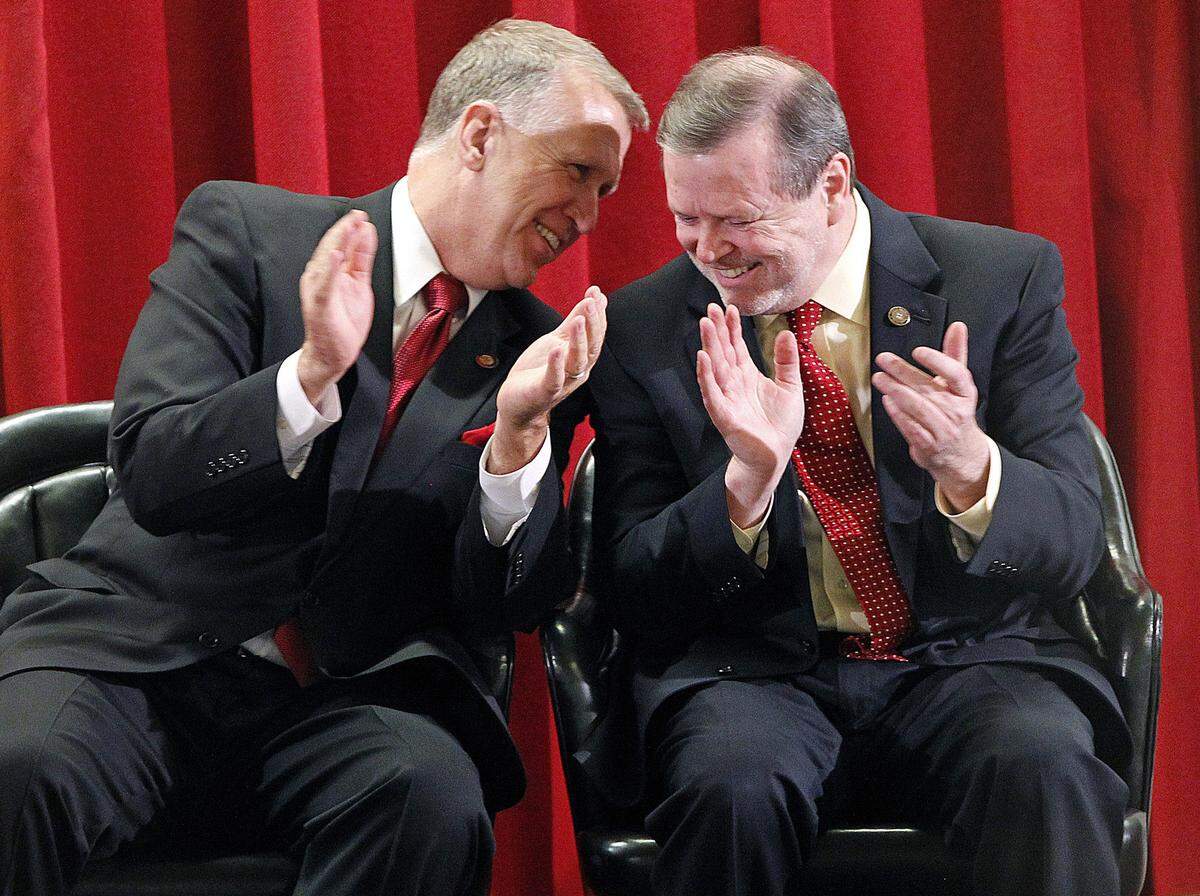
Berger and Tillis became leaders of the state Senate and House, respectively, when Republicans took the majority in both chambers in 2011. And both were staunchly opposed to Medicaid expansion.
Tillis explained his initial objection to Medicaid expansion, in his speech on the Senate floor, saying he believed one day “we would be here” — put in this position of taking health insurance coverage away from people who desperately needed it. He believed there were other ways to ensure more people could qualify for Medicaid that wouldn’t later risk their coverage.
In 2023, Berger wrote an opinion article saying he had changed his mind about Medicaid expansion, believing that it would not harm the state budget since the federal government would pay outright 90% of costs and hospitals would pay 10%. A proposed bill provided an emergency button: If the federal government paid less than 90% of Medicaid expansion, the state would cancel expansion.
Berger also said that by then, Republicans had reformed the state’s Medicaid program that he thought was previously broken, mismanaged and prone to fraud.
And he predicted that the majority of adults who would be covered under Medicaid expansion were working adults. That has been supported by research from Kaiser Family Foundation, which found 64% of adults on Medicaid are working, 29% are not due to caregiving responsibilities, schooling or due to illness or disabilities. The other 8% are retired or can’t find work.
Berger’s change of heart was welcome news for then-Gov. Roy Cooper, a Democrat who had campaigned on expanding Medicaid. The legislature passed Medicaid expansion in 2023, and Cooper signed it into law on March 27 of that year. Cooper is now running to succeed Tillis in the Senate.
Expansion didn’t go into effect until Dec. 1, 2023. A year later, just as Cooper hit his two-term limit as governor, he announced that 600,000 North Carolinians had enrolled in Medicaid.
Now, six months later, Tillis and Berger were facing the possibility that Medicaid expansion was under threat.
“Phil was involved,” Tillis told McClatchy. “I engaged him because I was leveraging their resources.”
Tillis has spoken publicly about the steps he took ahead of the vote in the Senate to ensure he understood the bill’s ramifications.
The Medicaid impact
Tillis supported the version of the One Big Beautiful Bill Act that the House passed. The Senate version of the bill, released on June 16, included reducing the provider taxes as well as what are known as state-directed payments.
Those payments allow North Carolina officials to direct Medicaid managed care plans to pay more to providers, funded by provider taxes and the federal share of costs.
Tillis said the new version came after the White House asked for changes that would set permanent levels for the payments.
“I said, we need to understand what that really means to the health care system at large,” he said.
Tillis said he had Gov. Josh Stein’s Medicaid office work with five Republican states’ Medicaid directors and House speakers to try to understand how the changes to the Senate bill would affect their states.
Tillis would not comment on which states were involved in these conversations.
The states all came back concerned about the impact, Tillis said, and he decided he needed to drill down on the specific impact on North Carolina.
North Carolina impact
In a floor speech, Tillis said he called Berger and Hall asking if North Carolina’s nonpartisan Fiscal Research Division, which reports to both legislative leaders, would analyze the impact. But knowing the state legislature is majority-Republican, he worried the analysis would have a conservative slant.
So, Tillis said, he called Stein, a Democrat, asking for his Medicaid team to also analyze the impact.
Now with potentially left-leaning and right-leaning analyses, Tillis said he wanted one more nonpartisan entity to analyze the bill for him. He called the North Carolina Healthcare Association, which represents hospitals.
Tillis said the three groups studied the bill’s impact independently, without comparing notes or sharing their reports.
After analyzing their findings, Tillis said he learned that the best-case scenario from the Senate’s version of the bill would be a $26 billion cut to Medicaid — a death sentence to expansion in North Carolina.
White House weighs in
Tillis said the White House told him he was wrong so he asked for Oz to hold a series of meetings with key stakeholders from North Carolina to try to tear up the reports.
“I said, ‘Great, that is fantastic news, because I would hate to see a $26 billion impact on North Carolina, so please check my math,’” Tillis said. “Tell me where.”
He said information gathering was slow.
“I said, ‘Guys, Washington loves embarrassing people that are saying things that are against their objective,’” Tillis recalled. “The fact that we are now months into this and none of our estimates have ever been disproven suggests to me our estimates are right.’”
Tillis said that the first meeting happened around June 23.
“(CMS) looked at our analysis, which was pretty extensive, with the help of the three agencies who put it together,” Tillis said, “and they said, ‘Well, let us look overnight, and we’ll get back to you the following morning.’”
The next morning they said they needed more time. Tillis said they did an all-nighter and met the next morning but they still needed more time. They would have one last call at the week’s end.
“(Dr. Oz) said after a series of meetings CMS relented that North Carolina leveraged the system more than other states and would have a disproportionate impact,” Tillis said.
Tillis said Berger was present in at least one, if not two, of these calls, and his staff attended all three.
“In every case, Fiscal Research and the leader and the speaker’s office were engaged, because I wanted them engaged,” Tillis said. “They were actually the source of most of my information.”
Hall’s team confirmed he helped facilitate Tillis’ connection with Fiscal Research but was not otherwise involved and did not attend the meetings.
One of McClatchy’s sources said during the call Oz suggested North Carolina lawmakers raise taxes to ensure Medicaid expansion could continue. Berger made clear that that would never happen.
Over the next four days, Tillis repeatedly told reporters he would vote against the bill if the Medicaid portion wasn’t changed before a final vote.
A vote to move the bill forward in the Senate was expected June 27, but was canceled that morning.
That night, Axios reported, President Donald Trump called Tillis. He wasn’t moved.
But the next morning, June 28, as Tillis met with Republican leaders about the bill and prepared to cast his vote, Berger was getting ready to publicly announce where he stood.
At 11:58 a.m., Berger posted on social media, “I support (Donald Trump’s) Big Beautiful Bill and the legislature will work through any implementation issues.
“It was a no-brainer for me — I support the bill and President Trump,” Berger told McClatchy in a written statement. “When the legislature expanded Medicaid, we put guardrails in place knowing that the federal government could change the financing because the Obama/Biden scheme was unsustainable and racking up a huge debt. I knew President Trump would win in 2024 and would make a real effort to rein in spending.”
Whatley’s team confirmed he made the call to Berger.
“Whatley spoke with Berger and others,” said Jonathan Felts, spokesman for Whatley’s campaign. “President Trump needs an ally in the Senate and North Carolina wants a conservative fighter.”
Tillis votes no
At 2:20 p.m., reporters met up with Tillis leaving a Republican lunch. He was still a “no.”
At 7:31 p.m. he became one of two Republicans to reject the motion, voting with Democrats. Three more Republican defections would have killed the bill.
It had been a long week. Emotions were bubbling over and an hour later Tillis was still on the Hill. He decided he wanted to make a floor speech.
At 8:28 p.m. he asked the speaker if he could address the floor.
He raged against his colleagues, saying they didn’t do their due diligence in researching the impact of the Medicaid proposal. He said the bill writers didn’t provide insights into how the restriction on provider taxes could be absorbed without harming people on Medicaid.
“And even worse, most of my colleagues do not even understand — on either side of the aisle — the interplay of state-directed payments and the devastating consequences of the funding flows that are going to be before us,” Tillis said.
Tillis’ speech lasted 10 minutes. It was clear he was angry.
At 8:40 p.m., he left the floor.
Trump wasn’t happy.
At 9:48 p.m. Trump posted on Truth Social a lengthy diatribe against Tillis, finishing it off with: “Thom Tillis is making a BIG MISTAKE for America, and the Wonderful People of North Carolina!”
At 9:54 p.m. Tillis texted Trump, in messages obtained by McClatchy: “Ack Mr. President Start thinking about my replacement.” Trump replied immediately: “I am!”
Trump took the conversation back online at 10:01 p.m.
“Numerous people have come forward wanting to run in the Primary against ‘Senator Thom’ Tillis,” Trump posted. “I will be meeting with them over the coming weeks, looking for someone who will properly represent the Great People of North Carolina and, so importantly, the United States of America. Thank you for your attention to this matter!”
Trump’s attacks on Tillis continued into the morning with another post at 10:20 a.m: “Tillis is a talker and complainer, NOT A DOER!”
At 1:59 p.m., Tillis put out a statement. He was ending his reelection campaign.
“Too many elected officials are motivated by pure raw politics who really don’t give a damn about the people they promised to represent on the campaign trail,” Tillis said. “After they get elected, they don’t bother to do the hard work, to research the policies they seek to implement and understand the consequences those policies could have on that young adult living in a trailer park, struggling to make ends meet.” Trump posted again at 5:19 p.m: “Great News! ‘Senator’ Thom Tillis will not be seeking reelection.”
Tillis told McClatchy he has not spoken to Berger about Medicaid since.
With Trump’s endorsement, Whatley entered the U.S. Senate race to succeed Tillis.
