
Fired NC DMV officer failed to hold 135 DWI-related hearings, records show
AI-generated summary reviewed by our newsroom.
- DMV fired officer Troy Strickland for failing to hold 135 refusal hearings.
- Backlog allowed potentially impaired drivers to regain licenses without rulings.
- Administrative oversight and staff cuts contributed to scheduling failures.
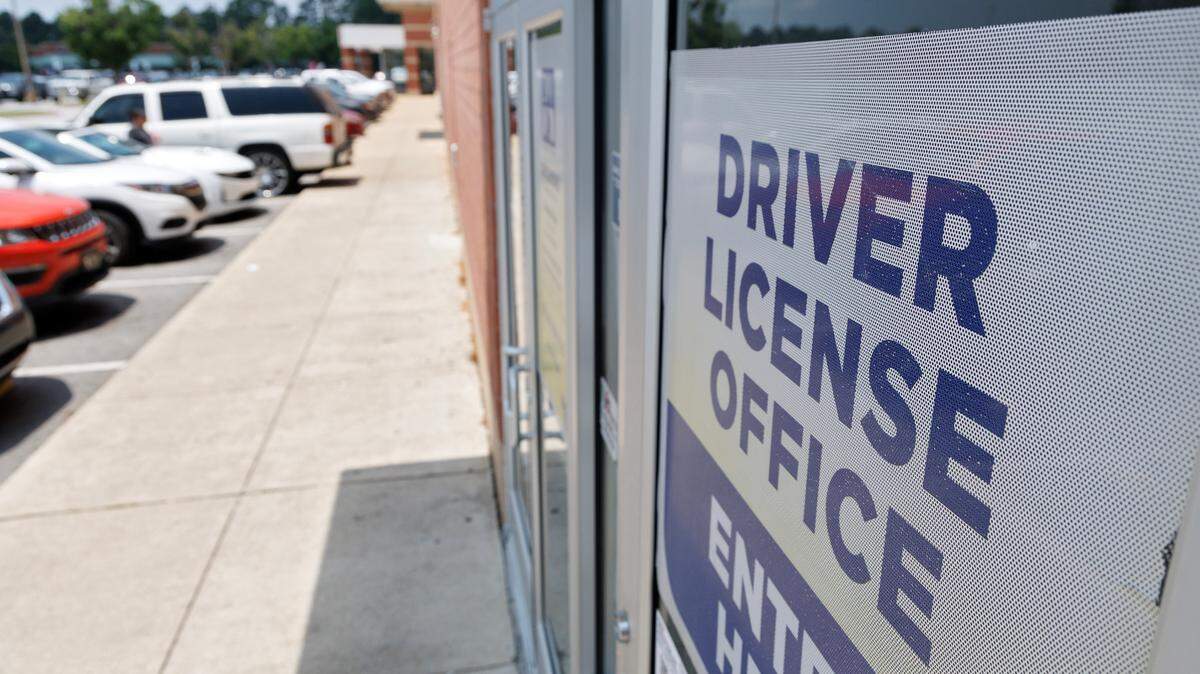
An N.C. Division of Motor Vehicles hearing officer failed to hold 135 hearings for drivers accused of refusing chemical tests between 2022 and 2025, according to a letter of dismissal obtained by The News & Observer.
Troy Earl Strickland, a program coordinator responsible for holding hearings for driver-license revocations, was fired for “unacceptable personal conduct and unsatisfactory job performance” on July 24, according to the letter.
Former N.C. Department of Transportation Customer Compliance Services director Jacqueline Mitchell wrote the letter of dismissal.
In several cases of hearings that Strickland failed to conduct, drivers suspended for driving while impaired regained their licenses — even though refusing a chemical test carries a further suspension, Mitchell wrote. That could cause possible hazards involving drivers who would otherwise be suspended, as well as other legal issues.
“This failure [to hold refusal hearings] constitutes a violation of the affected individuals’ constitutional right to due process,” Mitchell wrote.
Drivers accused of refusing a chemical test — breathalyzers, blood samples or urine tests — must pay a non-refundable fee of $450 to have a refusal hearing. There, a hearing officer determines whether their license should be suspended for up to a year.
Between July 1, 2024, and June 30, 2025, drivers in North Carolina requested 722 refusal hearings, and the DMV completed 607 of them.
Mitchell was demoted Aug. 16 due to personal conduct, DMV communications manager Marty Homan told The N&O. Ignition Interlock & Adjudications Units Manager Laura Main became the interim director for Customer Compliance Services on Aug. 8.
Strickland had been a hearing officer since Nov. 12, 2022. He primarily covered Johnston, Nash, Wayne and Craven counties. At the time of his dismissal, he had met expectations in a 2023-24 annual performance evaluation and was making $63,147 a year, records show.
Strickland was fired for five “conduct and performance issues,” Mitchell wrote:
- “Failure to produce work by established deadlines” — referring to his failure to schedule 135 refusal hearings.
- “Abuse of work time” — Strickland falsified his time sheet.
- “Willful violation of known or written work rules” — Strickland was found to have misused his state vehicle.
- “Conduct unbecoming a state employee detrimental to state service”
- “Conduct for which no reasonable person should expect to receive prior warning.”
The N&O tried contacting Strickland by phone and email for this story but did not receive a reply.
What is the purpose of a refusal hearing?
When a driver is accused of refusing a chemical test, a police officer and a certified chemical analyst send an affidavit to the DMV, according to state law. The DMV notifies the driver their license has been suspended, and the driver has 30 days to request a hearing.
Hearing officers are not required to schedule a refusal hearing within a particular time, Main said. But it is best practice to schedule one within 60 days. The actual hearing does not need to be conducted within 60 days.
At the hearing, the hearing officer takes testimony from the driver, chemical analyst and arresting officer, Main said. They rule on key facts such as if the arresting officer had probable cause to suspect the driver was impaired, if the officer and chemical analyst read the driver their rights and if the driver actually refused to provide a sample — or tried to but was unable.
When a driver requests a refusal hearing, state law requires that their suspension is lifted until the hearing. If the hearing officer determines the driver refused a test, the suspension takes effect.
How did Strickland fail to conduct hearings?
Strickland had scheduled 119 refusal hearings on his calendar but had not sent notices to drivers and their attorneys — nor did he complete other actions necessary to hold the hearing, Main said.
“Standard practice is for the hearing officer to receive the hearing request, review the affidavit, schedule the hearing, provide notice to the requesting party and subpoena the officer,” Homan said. “Review of each case is ongoing to determine which actions were taken or not taken.”
At the time of his dismissal, 16 future refusal hearings had been scheduled in this manner, Main said, meaning Strickland had failed to hold 135 hearings.
As of mid-July, 119 refusal hearings had yet to be scheduled. As of Sept. 19, 94 hearings were waiting to be scheduled.
Homan said an “administrative oversight” allowed Strickland’s failure to conduct hearings to go undetected — and the oversight has since been addressed, but he did not provide further details.
What Strickland’s letter of dismissal said about unscheduled refusal hearings
Strickland met with Mitchell and chief hearing officer Wiahdee Wreh on June 24 and said he had not scheduled the refusal hearings due to a lack of training, Mitchell wrote.
“Following the meeting, a database query revealed 135 outstanding refusal hearings where no decision had been entered,” Mitchell wrote. “In several cases, drivers had already completed their DWI suspensions and had their licenses reinstated.”
Mitchell met with Strickland again July 14 — joined this time by operations manager Ericka Amerson — to discuss the backlog, according to the letter. There, Strickland said he knew about the backlog but did not notify management because of the ongoing transition and learning curve.
Strickland said the lack of training was because the hearing officer training him, Chris Marshburn, had been on medical leave, according to the letter.
Hearing officers are cleared to conduct refusal hearings based on training evaluations, Main said. Strickland had been cleared to do hearings on his own prior to Marshburn taking medical leave.
Training had resumed once Marshburn returned, with Strickland observing him while he conducted a hearing and vice versa, according to the letter.
Strickland then began to take on caseloads separate from Marshburn, Mitchell wrote. Strickland acknowledged he had a large batch of cases recently reassigned to him by Marshburn.
After the meeting, Mitchell placed Strickland on paid leave while the investigation continued, according to the letter. Ten days later, Strickland was dismissed.
Fewer staff creating challenges for DMV hearings unit
Refusal hearings are one of many hearings DMV officers conduct. The goal is for officers to spend four to five hours in hearings per day, Main said.
But in 2017, the state budget bill, Senate Bill 257, changed how the hearings unit was funded. Now, the unit would only get funds from the fees it collects. The bill became law after the Republican-led legislature overrode then-Gov. Roy Cooper’s veto.
A resulting budget shortfall forced the unit to cut the hearing officers from 24 to 12 in 2018, said Main, who was one of the officers laid off.
“We have staff that — now that there’s half the amount of hearing officers — they travel three hours to a location, and they only can spend two hours there,” Main said.
Longer travel times reduce the number of hearings each day and make drivers wait longer to be scheduled, Main said. Hearing officers often work longer than eight hours as a result, forcing the DMV to give them paid time off in lieu of overtime pay.
To help clear the backlog, the unit got approval to conduct refusal hearings virtually, but Main said there are difficulties with that.
“It’s difficult to read a person’s body language when they’re on the screen,” Main said. “There’s technology difficulties when we are conducting [hearings] virtually and just being able to all communicate.”
Lawyer whose clients paid hearing fees wants their money back
Emails obtained by The N&O show that in May 2023, attorney Jack O’Hale’s office asked to postpone two refusal hearings because O’Hale had a conflicting jury trial. Strickland wrote that the DMV would not hold any refusal hearings until Marshburn returned from medical leave and that the hearings would automatically be postponed.
In postponing these hearings, Strickland was not following policy, Main said.
On Dec. 31, 2024, O’Hale emailed Strickland asking if he wanted a client present for a hearing scheduled for Jan. 14, 2025. The client had moved to Georgia, and a judge had dismissed the case in 2022 on the grounds that there was no probable cause to charge them.
Strickland emailed O’Hale on Jan. 4 that the case was not ready and that a hearing notice had been generated by accident — it was just listed on Strickland’s calendar to prepare for a hearing. Strickland wrote that the client’s DWI case was separate from the matters of the refusal hearing, so the hearing would still have to take place.
Strickland had also notified O’Hale of hearings scheduled for three other clients on Jan. 14, according to the emails. But on Jan. 6, he emailed O’Hale that the cases were not ready to be heard and that he still needed to schedule the hearings.
“I am sorry for the confusion,” Strickland wrote. “It is possible these cases came from another hearing officer and the letter was sent when the case was transferred.”
On Jan. 13, O’Hale emailed Strickland that four of his clients had hearings scheduled for Jan. 14. Strickland emailed O’Hale that he was sick and unable to hear cases the next day.
In a Sept. 10 letter obtained by The N&O, O’Hale wrote to DMV chief hearing officer Patrick Clancy that nine of his clients who had been accused of refusing a chemical test had not received a refusal hearing.
All of O’Hale’s clients’ memories of events have faded over the years, and several suffered serious medical conditions which will affect their memory of events from several years ago, O’Hale wrote in his letter. Two of his clients now live out of state and cannot attend their hearings.
O’Hale requested that the DMV cancel all pending refusal hearings and refund each of his clients their $450 fee, O’Hale wrote.
Eight of O’Hale’s clients had hearings the week of Sept. 15, O’Hale told The N&O. None of the arresting officers or chemical analysts were present in any of the eight hearings, O’Hale said.
State law regulating chemical test refusals says arresting officers and chemical analysts’ affidavits are permissible as evidence, so they do not need to attend a hearing unless the driver “has properly requested their presence by subpoena.”
“I object to them even having a hearing without the officer being here,” O’Hale said. “Because who’s going to testify what happened other than the officer? And they said, ‘well, we can do it just on the affidavit.’ That’s [expletive], and that needs to be changed.”
Dan Kane contributed to this report.
NC Reality Check is an N&O series holding those in power accountable and shining a light on public issues that affect the Triangle or North Carolina. Have a suggestion for a future story? Email realitycheck@newsobserver.com.
This story was originally published September 25, 2025 at 5:30 AM.
.jpg)