NC lawmakers question leaders on Helene recovery. Three key issues emerged.
AI-generated summary reviewed by our newsroom.
- Counties report FEMA delays and unclear guidance hinder post-Helene recovery aid
- Local leaders request $10 million in state loans to offset federal reimbursement lags
- Debris removal stalls as FEMA limits pickup and USDA watershed funds contract
Lawmakers heard from local and state leaders Wednesday about the biggest obstacles to getting aid out quickly and moving Western North Carolina’s recovery forward one year after Helene.
The state’s bipartisan subcommittee on hurricane response and recovery — which has also examined lingering recovery from Hurricanes Florence and Matthew — has often taken a more contentious tone.
But this time, members largely focused on understanding where the biggest holdups are.
The panel is led by Republicans, who control the General Assembly and the state’s purse strings. The executive branch, largely responsible for carrying out recovery, is led by Democratic Gov. Josh Stein.
Here are three key points from the hearing:
Federal delays remain a big hurdle
Dennis Aldridge, an Avery County commissioner, told lawmakers that recovery costs have dwarfed their budget. Avery has spent $53 million on debris removal — more than its entire $42 million annual budget — but FEMA has reimbursed only about $700,000 so far.
“Our biggest obstacle is the lack of clarity and consistent guidance from FEMA. Every time we get close to the finish line, they change the goal posts, and we have been round and round,” Aldridge said.
Yancey County Manager Lynn Austin said her county has faced similar pressures, with recovery spending roughly equal to its $37 million annual budget, including $30 million just on debris removal. They’ve recouped about $300,000. She said the state’s cash-flow loans have been a lifeline, but federal delays continue to put residents at risk.
“Time is money for use and time means people’s health in our community,” she said.
Republican Sen. Ralph Hise, who represents Western North Carolina and chairs the committee, asked both leaders how much more they would need in cash-flow loans. Both said about $10 million more would be a good start.
FEMA reimbursements are moving slowly under new Trump administration rules. As of Sept. 17, the state was waiting on $64 million in already approved reimbursements, delayed by extra review layers that require sign-offs from Homeland Security Secretary Kristi Noem and the Department of Government Efficiency’s “Defend the Spend” program, The Charlotte Observer previously reported.
“The feds have promised huge amounts of money coming from the sky. They just can’t get out of their own way to get any of it actually here,” Hise said.
“We are on every member of Congress. We have all hands on deck. On a regular basis talking to these agencies to try to get them to move some money. I don’t even think they recognize the scope of it when they go in. Requirements to sign everything over $100,000 when it’s multi-billion dollars, you can do some math on that. .”
Debris remains a problem
The issue isn’t with the initial debris cleanup but with what comes after, local leaders said.
Aldridge said the first phase was roadside pickup, followed by river and waterway cleanup — now about 90% complete.
The next phase, the Private Property Debris Removal Program, which is funded by FEMA, has been a “disaster”, he said. “I’ve got a pile in my very own yard that has a big red tag on it that will probably never be picked up.”
Another stage, the Emergency Watershed Protection Program run by the U.S. Department of Agriculture, has been “severely contracted.”
“So the large-scale, showy piles of debris, that’s being moved out,” but “as we move forward, this next phase has pretty much stopped.”
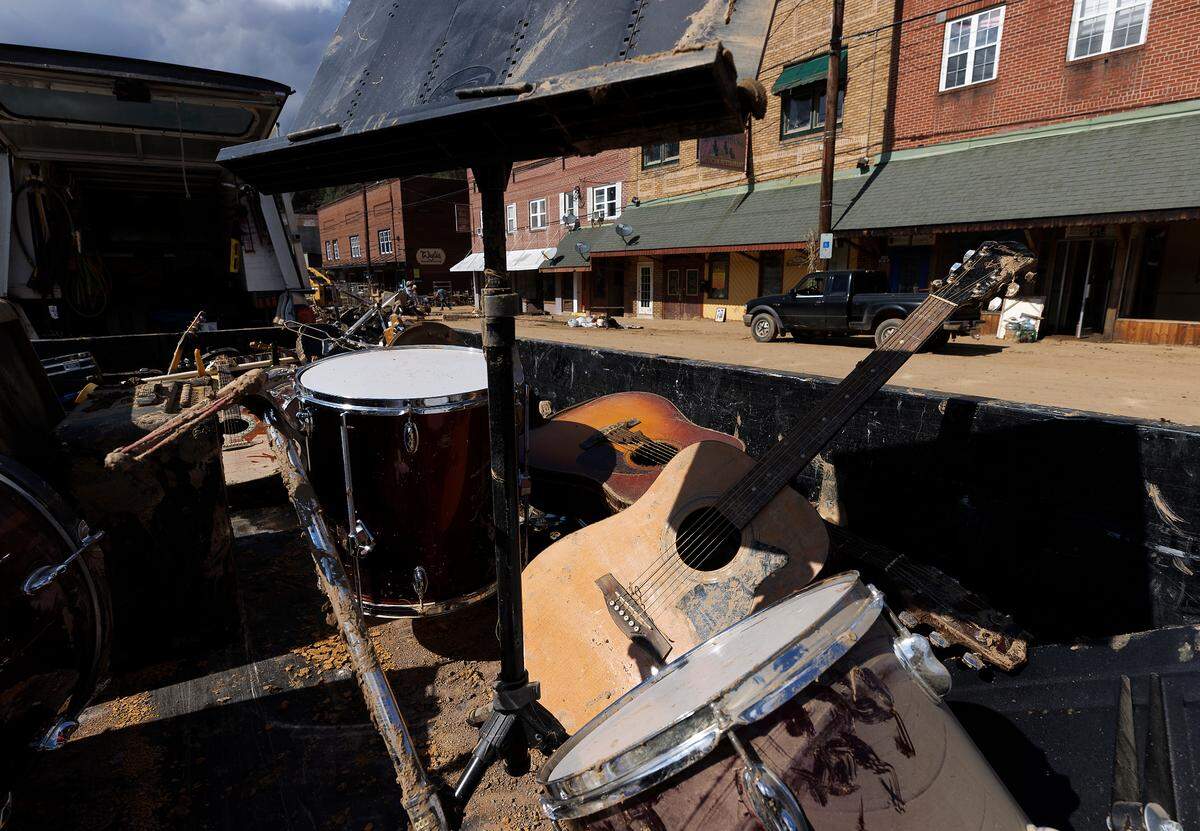
Austin added that delays have left dangerous debris piled near homes and driveways, creating fire hazards. Sen. Timothy Moffitt, a Republican representing several western counties, said in his district, “it seems our debris problem continues to grow as we open up more areas and give people access to their homes and as we rebuild these roads.”
Nonprofits can move faster, but state and federal funds are still critical
The state’s home-rebuilding program. funded with federal dollars, has finished its first repair of a home and expects its first fully reconstructed home to be ready in January, said Stephanie McGarrah, deputy secretary for community revitalization within the state’s Department of Commerce.
“Our goal is to try to get any foundations and footings poured before it gets cold. And if we can do that, then we can start on the rest of the construction,” McGarrah said.
Before state officials spoke, Luther Harrison, a vice president of North American ministries for Samaritan’s Purse, said the group has delivered 39 mobile homes, with 37 new homes under construction and six provided. For repairs, Samaritan’s Purse has completed work for 52 families.
Rep. Brenden Jones, House majority leader and a chair of the committee, asked whether it might make more sense for the legislature to direct more money to nonprofit groups which can move faster than government.
Jonathan Krebs of Stein’s recovery office said the state is already funding some nonprofits, leading to hundreds of homes repaired or rebuilt. He said he agreed with Jones that directing more money to nonprofits is a good idea, but cautioned they are best suited for smaller projects.
“They’re probably providing a service of $25,000 in market value with volunteer labor to those homes and families. When that average value starts getting really high, I think that’s where state and federal solutions have to step in,” he said.
“I think if you’re able to hone in on the low-hanging fruit and deploy the masses of volunteers that want to help and are capable and qualified, you can make very rapid, immediate impacts post-disaster,” he said.
This story was originally published September 24, 2025 at 5:16 PM.