New NC law seeks to restart long-paused death penalty. What happens now?
AI-generated summary reviewed by our newsroom.
- Iryna's Law directs state prisons to adopt an alternative execution method.
- Law aims to restart executions halted since 2006 but faces active court challenges.
- Officials acknowledge the law outlines steps but legal rulings will determine executions.
The crime bill Gov. Josh Stein signed into law on Friday that was drafted by GOP lawmakers after a fatal stabbing on Charlotte’s light rail in August will have ramifications for North Carolina’s death penalty.
That’s because Republicans added a provision to the wide-ranging bill before it was sent to the Democratic governor’s desk that directs state prison officials to implement an alternative method of execution. It’s an attempt to eventually restart executions in North Carolina that have been on hold since 2006 due to legal challenges over the state’s use of lethal injection, and claims of racial bias in trials and sentencing.
The newly enacted law lays out a process for prison officials to follow to try to restart executions, but as top lawmakers and state officials acknowledge, the pending court cases remain a roadblock to that happening.
Here’s what we know about what this law requires the state to do, and how its implementation will be affected by continuing legal issues.
What are the death penalty provisions in the law?
Republican lawmakers in the House and Senate negotiated House Bill 307 among themselves and released it to the public on the legislature’s website on Sept. 21. The omnibus crime bill was then quickly voted on over the next two days and sent to the governor’s desk.
Named for Iryna Zarutska, the 23-year-old Ukrainian refugee who was fatally stabbed on a Charlotte light rail train while returning home from work on Aug. 22, “Iryna’s Law” contains a number of measures GOP lawmakers said were necessary to address violent crime.
Among other things, the law includes stricter bail rules for a broad category of violent offenses, a new protocol for judges and magistrates to follow in ordering mental health evaluations if a defendant has been involuntarily committed or is suspected to have mental health issues, and funding for additional prosecutors in Mecklenburg County.
Through an amendment introduced by Senate leader Phil Berger during the end of a lengthy debate on the Senate floor on Sept. 22, the law also takes steps to try to restart executions in North Carolina.
The law provides that if the state’s current method, lethal injection, is found to be unconstitutional or is unable to be administered, the N.C. Department of Adult Correction “must select another method of executing a death sentence that has been adopted by another state” within 120 days.
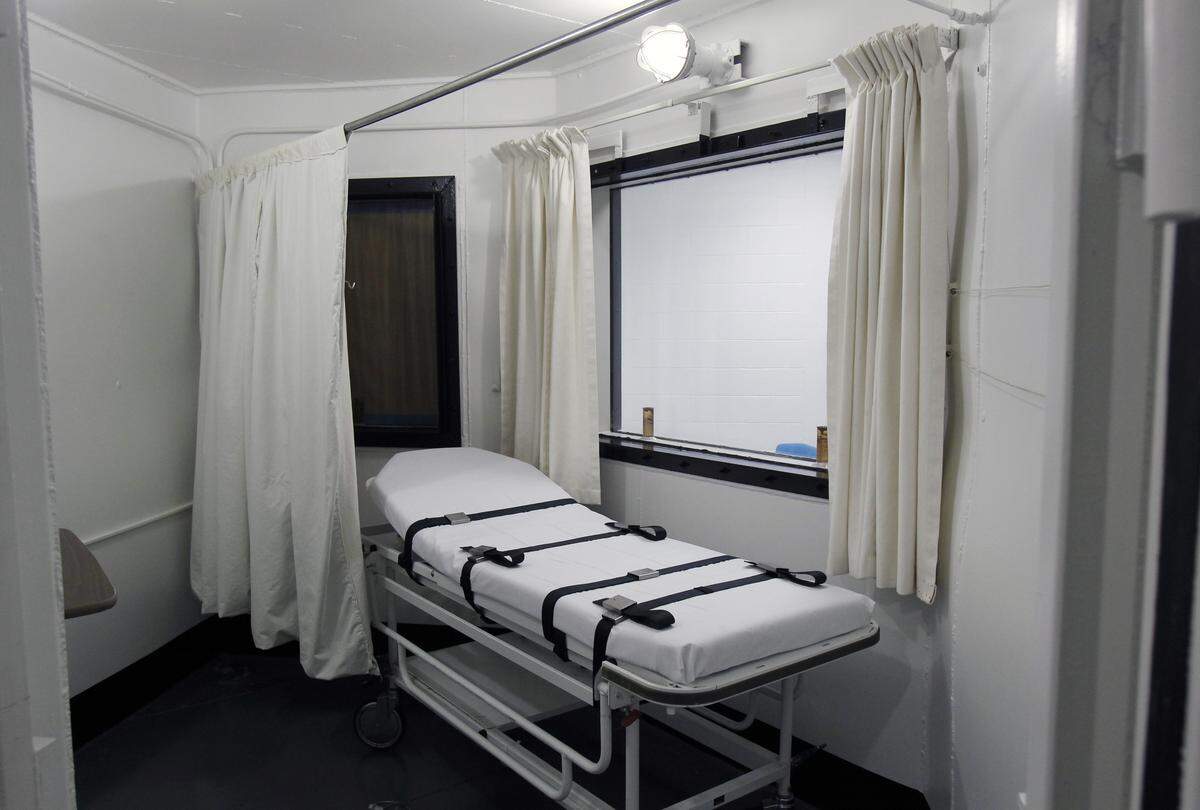
If the alternative method DAC selects is found to be unconstitutional, the department would have another 120 days to select a different option.
The alternative method can be any method used in another state, as long as it hasn’t been deemed unconstitutional by the U.S. Supreme Court, the law states.
This could open the door to methods previously used in North Carolina that have since been outlawed, according to the Death Penalty Information Center.
The state assumed responsibility for carrying out executions from individual counties in 1910. Since then, North Carolina has used three methods: electrocution, gas chamber and lethal injection, according to the Department of Adult Correction.
State lawmakers designated lethal injection as the only lawful method of execution in 1998.
“The U.S. Supreme Court has never found a method of execution to be unconstitutional,” the Death Penalty Information Center noted recently, after the passage of HB 307.
Beyond the selection of another execution method, the law also imposes the following timelines and reporting requirements:
- Within 120 days of DAC selecting an alternative method, the department must establish “protocols and procedures” for carrying out executions by that method.
- Within 60 days of those protocols being adopted, or within 120 days of notice by the attorney general of pending appeals or other legal action in a particular case, DAC must “immediately schedule a date for the execution of the original death sentence.”
- Within 14 days of selecting an alternative method, DAC would need to report it to an oversight panel of state lawmakers.
- The attorney general and DAC would need to report to lawmakers within a week each time a defendant challenges a method of execution, a method is found to be unconstitutional, or is unable to be administered.
Why are executions currently blocked by the courts?
Lawmakers have laid out this process for DAC to follow, but it’s unclear how soon this could take place since there are court orders currently in effect that are blocking prison officials from conducting any executions whatsoever.
In a letter to Berger last month, Eric Wilson, the chief of staff at the N.C. Department of Justice and the top aide to Attorney General Jeff Jackson, wrote that “courts are prohibiting the state from carrying out any executions.”
Berger acknowledged this situation while speaking with reporters last month.
“We understand that the court process has to play out on claims that are out there, that need to be resolved through the court system,” Berger said.
He said the point of his amendment is telling prison officials that once an inmate has gotten to the end of the court process, and they’ve “had their direct appeal, they’ve had their collateral appeal, they’ve raised all issues that are out there, and you get to where the execution date is not set because there’s not an accepted protocol because there’s an injunction, or there’s some other issue that’s taken place, that we’ll go to a different protocol, as far as the method of execution.”
“I think unfortunately, there are all too many folks who are opposed to the death penalty, but they’re just fine with having it on the books, they just want to make sure that we’ve got so many roadblocks that it’s never going to be implemented,” Berger said.
Wilson’s letter came in response to a request from Berger to Jackson on Sept. 19 for a “comprehensive update on the status of the cases of all inmates awaiting execution in North Carolina, including pending appeals, legal challenges, scheduled execution dates, and other relevant case developments.”
Wilson identified two court orders, both in the same case, which was brought by four death row inmates in January 2007 challenging the use of lethal injection on constitutional and statutory grounds.
The first order, issued by Wake County Senior Resident Superior Court Judge Donald Stephens in April 2014, blocked prison officials from “either scheduling or carrying out any execution, whether by lethal injection or any other means” until the court could complete all legal reviews of lethal injection, and in particular, the specific “one-drug protocol” that had been adopted at the time.
In another order issued in March 2019, Senior Resident Superior Court Judge Paul Ridgeway temporarily “stayed,” or paused, the case until further notice in light of ongoing litigation over claims of racial bias in jury selection and sentencing.
These claims were brought by death row inmates under the since-repealed Racial Justice Act.
What is the Racial Justice Act?
The law was passed by Democrats in the General Assembly in 2009, and subsequently repealed by Republicans in 2013, after they gained control of both legislative chambers.
Under the Racial Justice Act, race could not be considered in implementing the death penalty, and inmates could challenge their sentence if they believed race was a factor in jury selection or their sentence.
Though the law was repealed, the N.C. Supreme Court ruled in June 2020 that inmates who had filed a challenge under the act before its 2013 repeal could be heard in court. More than 100 death row inmates had filed claims under the Racial Justice Act as of that point.
In February, after a two-week hearing last year in the first Racial Justice Act claim to be heard since the Supreme Court’s ruling, a Johnston County judge ruled that race was “a significant factor” in the jury selection and sentencing of Hasson Bacote, a Black man who was sentenced to death in 2009 and who was spared from death row last year.
Bacote was one of 15 inmates sentenced to death who received commutations from Gov. Roy Cooper on his last day in office in December. The clemency turned the death sentences to life in prison without the possibility of parole.
Cooper’s office said he weighed factors including the defendants’ criminal histories, their mental and intellectual capacity at the time of the crime, the influence of race in their case, sentences of co-defendants, and whether they were offered a plea agreement.
Anti-death penalty advocates praised Cooper’s action, while critics raised questions about whether victims’ families were sufficiently notified and consulted in each case, and said the governor shouldn’t be commuting sentences that were imposed by juries.
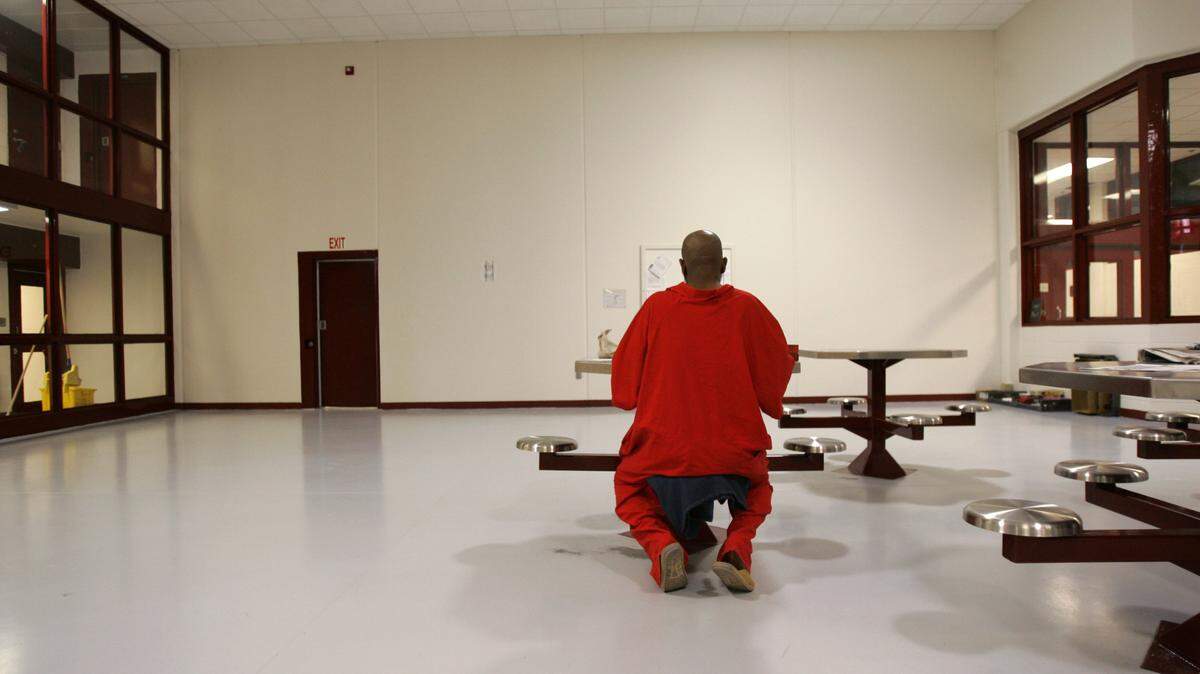
There are currently 122 people on death row in North Carolina.
This story was originally published October 7, 2025 at 7:00 AM.