Medicaid cuts are in effect. NC mom fears losing nurses helping keep her son alive
AI-generated summary reviewed by our newsroom.
- Medicaid payment cuts began Oct. 1, reducing provider rates 3–10% statewide.
- Cuts threaten layoffs, closures and reduced care access.
- Families face nurse turnover, lost shifts and higher caregiving burdens at home.
For Mary Mac Jenkins, the impact of North Carolina’s Medicaid payment cuts isn’t theoretical — it’s deeply personal.
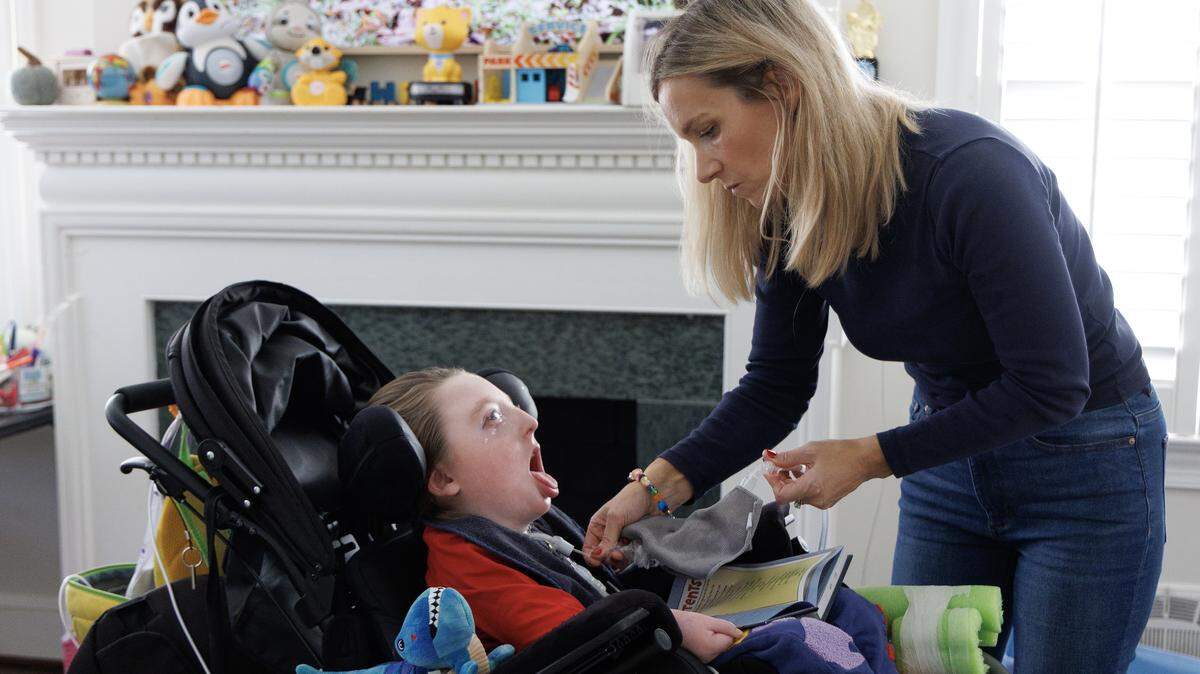
Her 9-year-old son, Miles, lives with spastic quadriplegic cerebral palsy and depends on round-the-clock care.
Most of that care comes through Medicaid, which pays for Miles’ nursing and attendant nurse care. The family also has private insurance through Jenkins’ husband’s job, but it falls far short of covering what Miles requires.
The state’s GOP-led legislature failed to reach an agreement to provide more funding after state officials said additional money was needed for Medicaid. That prompted officials in Democratic Gov. Josh Stein’s administration to implement 3% to 10% cuts on Oct. 1 in how much it pays hospitals and providers who serve people on Medicaid.
The reductions could lead to layoffs, closures, and pay cuts — as well as reduced access to care for people who rely on the federal-state insurance program.
Lawmakers are back in Raleigh this week, but it’s unclear whether they’ll agree on a plan to provide more funding and reverse the cuts.
Even before the cuts, Jenkins said there have been “periods over the past nine years where we’ve had gaps in nursing that can go for months at a time; especially night nursing is incredibly hard to find.”
“We’re constantly worried about turnover,” she said, adding they’ve had over 50 nurses across the past nine years.
Jenkins is part of the North Carolina Council on Developmental Disabilities, which advocates for North Carolinians with intellectual and other developmental disabilities and their families.
High vacancies and turnover — though slightly improving this year — continue to plague North Carolina’s nursing industry, according to a report by the NC Health Talent Alliance. Vacancies and churn rates are particularly elevated in behavioral health and long-term care settings.
North Carolina also struggles to provide community-based services for people who need them.
The state’s health department was sued in 2017 by the legal advocacy group Disability Rights North Carolina, which filed what became known as the Samantha R. case.
The group argued that North Carolina’s failure to provide access to community- and home-based behavioral health services violated the rights of people with disabilities. In 2024, a judge approved a consent order requiring the Department of Health and Human Services to spend two years working to transition more people into community-based services, including those on waitlists or in institutional settings who wish to move.
Jenkins, who cares for her two other children, fears that the lower payment rates could push more nurses to leave, leaving her family without the help they depend on to keep Miles at home.
“That’s really difficult on Miles,” she said. “He forms relationships, and it’s just so many of these nurses turn into almost like family members, because they’re in our home so much. But at a point, even though they often really love their jobs, they end up leaving because they need higher wages and will leave for a hospital position or something like that.”
Jenkins worries losing help would limit the ability of her husband to keep working, with his job requiring frequent travel — in turn, cutting their private insurance coverage.
Caring for Miles often means long, sleepless nights.
Miles is unable to speak and is almost fully unable to move, relying on a wheelchair and help. He can’t breathe on his own and uses a tracheostomy tube, which must be cleared frequently, as well as a ventilator. He also requires tube feeding.
During her pregnancy with twins, the family had no night nursing help, forcing Jenkins and her husband to take turns staying awake.
“We used to switch at 4 a.m.,” she said.
“I actually fell down the stairs when I was pregnant because I was so tired from having broken sleep for so many months. It’s just not safe — for us or for the patients — to have caregivers that exhausted.”
Busy day
Miles’ day — at least on most weekdays — begins around 7:30 a.m., when Valerie Hunter, his primary day nurse, who is funded through Medicaid-funded private duty nursing, arrives.
Private duty nursing rates were cut 3% on Oct. 1.
Hunter, a licensed practical nurse, said most mornings Miles is still sleeping when she gets there. “He’s becoming a teenage boy,” she said. “So he has mornings when he likes to sleep in a little bit.”
While he’s resting, Hunter starts his tube feeding. As he wakes up, she begins his morning routine — taking him off his ventilator, giving him his breathing treatments, tending to his eyes, brushing his teeth, dressing him and more.
Then it’s off to school. The bus picks them up around 9:15 a.m., and they arrive by 9:30. At school, Miles uses a standing aid device and works with his teachers on lessons and goals. Hunter said her role there is to help with whatever he needs — making sure his tracheostomy tube and mouth are suctioned to keep his airway clear, that he is repositioned and that he gets his medications. Sometimes, Miles requires suctioning upwards of 100 times per day.
“He requires someone to be with him all the time to ensure he’s safe,” Hunter said.
While on the bus and at school, the school system is responsible for paying for those nursing hours, Jenkins said. Schools can request reimbursement from NC Medicaid, but many counties don’t because reimbursement is so low and they lack staff to handle billing and claims, she said.
Private duty nursing rates after the cuts under Medicaid are $50.44 per hour for LPN care, compared to just $13.92 per hour in schools, DHHS documents show.
Hunter doesn’t see those payments — the money goes to her staffing agency, which then pays her. The company she works for shows a pay rate of just under $25 an hour for LPNs on Indeed, which collects data on salaries reported by employees.
After the school day, the two return home around 4:30 p.m. Hunter gives Miles his daily shower, makes sure he’s settled, and hands off his care by 5:30 p.m.
“It is a very full day,” said Hunter, who has worked with him for more than two years.
When joining a family, she said, there’s always a learning curve. “You’re going into someone’s home,” she said. But beyond that, it’s about getting to understand the person — their cues, their rhythms, their ways of communicating.
“He doesn’t tell me when he’s happy,” Hunter said. “But I caught myself just the other day telling his mom, ‘The sparkle in his eye wasn’t there today.’”
Jenkins said it’s important to keep good nurses when they find them.
“Especially with an extremely medically fragile child who is nonverbal, it’s very critical that you trust anyone with your child, because they can’t speak for themselves,” she said.
“We’ve had nurses in the past freeze and not be able to replace a trach, which is absolutely terrifying,” she said.
Support network
Hunter is just one piece of the puzzle.
Miles also has other nurses who provide skilled overnight care, monitoring his respiratory status and other medical needs. One of them, a night nurse who has been with the family for five years, has three young children of his own. “He’s worried, just like everyone else, about the cost of living,” Jenkins said.
Those nurses are available to the family through the Community Alternatives Program for Children, or CAP/C, which provides at-home health coverage for medically fragile or medically complex children up to age 20 — regardless of family income — through Medicaid.
The CAP/C program’s reimbursement rate was also reduced by 3%, though DHHS data shows some services under that program were cut by as much as 8%. Miles’ care is billed under attendant nurse services in the CAP/C program, which now pays $50.44 per hour.
Jenkins said those nurses do not receive paid time off or other benefits, and that 12% goes towards workers comp and taxes. Then, Jenkins decides how much to pay the nurses within a state-approved range. She said she pays nurses at the top of the range, $44.39 per hour.
Under the CAP/C program, families take on more administrative duties — with a fiscal management company acting as an intermediary handling payroll for Medicaid — so more of the reimbursement passes along to the nurses.
One of Miles’ longtime nurses recently told Jenkins she plans to move out of state this summer.
The nurse, a 75-year-old widow, first worked with the family years ago before leaving for a higher-paying facility job.
Jenkins was later able to bring her back when attendant nurse care became an option under the Medicaid CAP/C program.
In limbo
Hunter hasn’t been told her pay will be cut — at least for now.
And she doesn’t have plans to leave — at least for now.
“But I feel like there’s a lot of things kind of in limbo,” she said.
Hunter has a child of her own, “a family of my own… I really can’t afford much of a pay cut,” she said.
She loves her work and caring for Miles. “I love seeing his growth — the small things he’s able to do,” she said.
Home health nursing, she added, also gives her the flexibility to be there for her own family while providing the care families like Miles’ depend on.
Her voice softened. “It’s very scary. I don’t want to leave,” she said. “I just want to see these babies be able to stay home and get the love and care that they deserve.”