NC attorney general sues Trump administration as shutdown threatens food aid
AI-generated summary reviewed by our newsroom.
- AG Jeff Jackson sues USDA and OMB to force release of November SNAP funds
- USDA declined to use $6B contingency funds, risking delayed benefits statewide
- Delay would affect 1.4M North Carolinians, including nearly 600k children
November food assistance benefits for more than 1.4 million North Carolinians could be delayed as the federal government shutdown drags on, prompting Attorney General Jeff Jackson to sue the Trump administration.
The federal lawsuit — filed jointly with several other Democratic attorneys general and a few governors — targets the U.S. Department of Agriculture and the Office of Management and Budget, calling on them to release funding for November food stamp benefits.
The USDA “has broken the law in a way that will create really severe consequences for a lot of vulnerable people,” Jackson, a first-term Democrat, said Tuesday in a phone interview with The News & Observer.
He said that on Sept. 30, the USDA had indicated it would be willing to use emergency funds to keep the Supplemental Nutrition Assistance Program, or SNAP, running. But a few days ago, the agency sent a letter reversing course, saying it would cease funding for the program.
On Friday, the USDA told states the agency would not use roughly $6 billion in available contingency funds to pay for November benefits through SNAP. The state’s health and human services department said in a news release, alongside Democratic Gov. Josh Stein, that while October benefits would not be affected, November benefits would likely be delayed.
Arguments over funding
The USDA said Friday that it can’t use contingency funds to replace missing funding — only to supplement regular monthly benefits, and for emergencies like hurricanes or floods.
The agency said the federal government would not reimburse states that use their own funds to cover benefits, according to a memo shared in the state release.
“I believe this is against the law.,” Jackson said. “Congress was very clear when they provided this appropriation and this emergency fund that their intent was for there not to be an interruption in SNAP payments. For the department to essentially choose not to tap that emergency fund is overriding Congress.”
The states’ lawsuit was filed in U.S. District Court for the District of Massachusetts.
“I think we have a very strong legal argument here,” Jackson said, adding that the consequences will be severe if the situation isn’t resolved. Withholding food assistance would affect 1.4 million North Carolinians, including nearly 600,000 children — more than 40,000 of whom are under 18 months old, he said.
“We will see food pantries get overwhelmed, churches get overwhelmed, classrooms with a lot more hungry kids, and just truly devastating consequences sweeping across our state,” Jackson said.
In a news release, Jackson’s office said this would be the first time SNAP benefits have ever been delayed.
Asked why he believes the USDA reversed course, Jackson said he believed the “only reason you would have an emergency fund and decide not to use it in a situation like this is if you were playing shutdown politics. I think the department is looking to ratchet up the pain from the shutdown.”
The federal government has been shut down since Oct. 1 after Republicans and Democrats failed to agree on a spending deal to keep it running. Key differences include Democrats seeking to extend Affordable Care Act subsidies.
The USDA’s website says across the top that Senate Democrats have voted not to fund the food stamp program. “Bottom line, the well has run dry,” the website says in one of several politicized messages published by a federal department in recent weeks.
Jackson said “time is of the essence,” which is why the suit asks a judge to order the agency to resume payments — even temporarily — and to cancel the USDA’s previous unlawful orders to the states.
Who relies on SNAP benefits?
Jackson has sued the Trump administration several times, including successfully for the release of withheld funding for grants and jobs supporting Western North Carolina recovery from the remnants of Hurricane Helene.
Jackson had threatened to take the USDA to court earlier this month over SNAP funding, co-signing a letter asking the agency to explain why it would not deliver November benefits.
The USDA had sent a memo on Oct. 10 to state agencies saying it could not provide full benefits starting in November and instructing states to withhold all payments for now, The N&O previously reported.
But Jackson’s office said in its news release Tuesday that since the shutdown began, USDA has given out billions for other programs and moved around funds to help fund nutritional benefits for infants and pregnant women.
About 42 million low-income people nationwide could lose SNAP benefits if Congress fails to reach a funding deal.
SNAP benefits represent about $230 million to $250 million in monthly assistance to North Carolina families, Stein and DHHS said in their news release.
North Carolina residents relying on the program include about 143,000 in Mecklenburg County — the most of any county — and 83,000 in Wake County, according to previous reporting by The Charlotte Observer and The N&O.
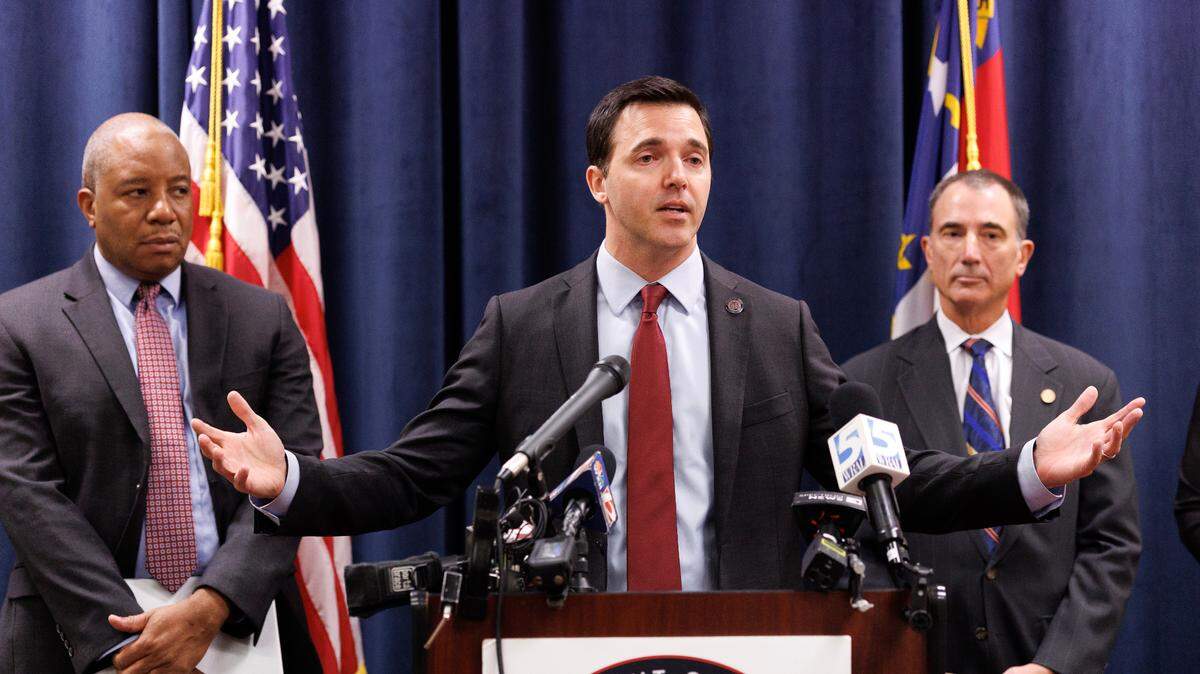
Jackson said Tuesday afternoon during a press conference that the No. 1 county in terms of money received per capita for SNAP is McDowell County, which was impacted by Helene last year.
Four in five North Carolina families participating in SNAP include either a child, senior, or adult with a disability. Over 80% of recipients are working, Stein and DHHS said in their release.
“This delay hits our small towns and rural communities especially hard. One in six rural North Carolinians depend on SNAP and when funding is delayed, local grocery stores, farmers and small businesses all feel it,” Jonathan Kappler, deputy secretary for external affairs and chief of staff at DHHS, said during the press conference.
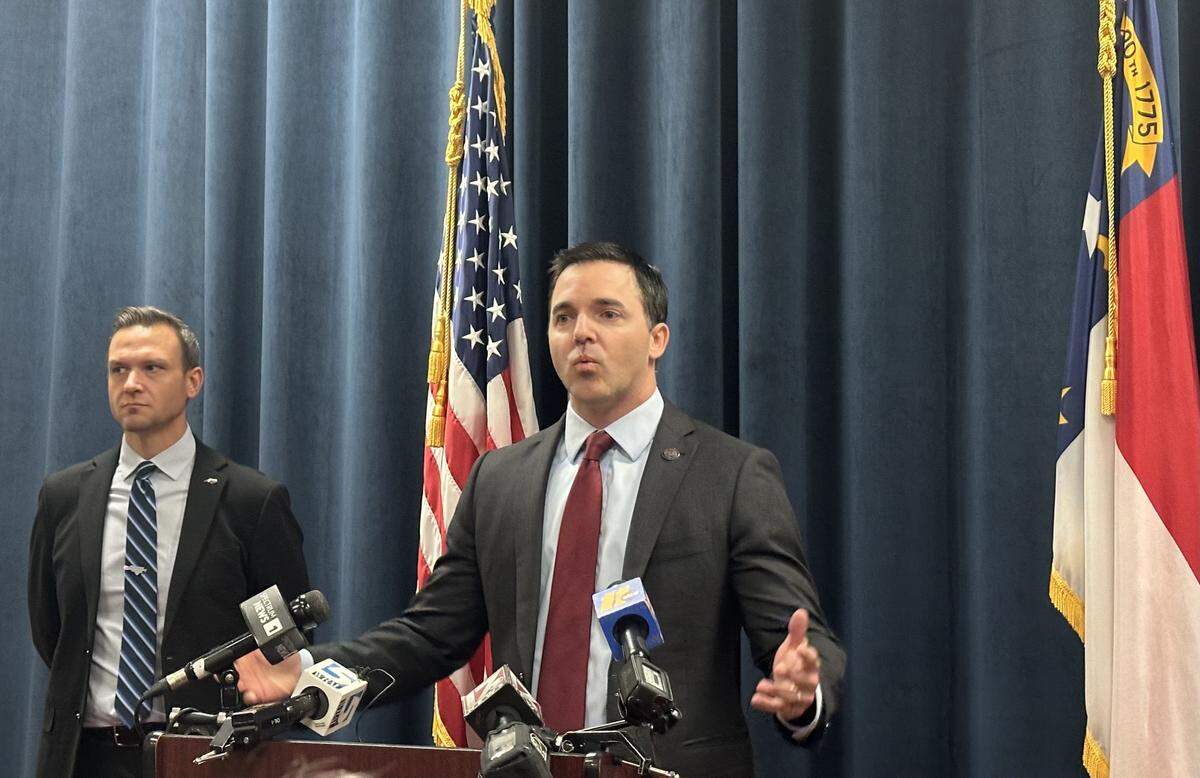
He said DHHS was working “hard to mitigate the impact” and called on people to continue to apply for and renew SNAP benefits, as local offices were still running.
Can the state take action?
Asked about the state taking any action, Kappler said: “We need the federal funds.”
He said entities that receive any kind of federal funding in the state have been doing contingency planning for weeks, evaluating each funding stream “to see what runway and pathway you have, what available resources you have, and if that runway is really short — is there any way to mitigate or shift to another funding source?” Unfortunately, the size and scope of this program is one that that avenue is not really available to us.”
Ron Pringle, CEO of Interfaith Food Shuttle, said during the press conference that “every day, our team sees more and more families standing in food lines who never imagined they would be there.”
“We often talk about hunger in terms of numbers — how many people we serve, how many pounds of food we distribute,” Pringle said. “But behind every number is a person carrying the weight of worry, parents who quietly skip meals so that their children can eat, seniors choosing between food and medicine. Families who come to our distributions in fear and their eyes ashamed, anxious and exhausted from just trying to hold it together.”
“There is no way that our nonprofits are going to be able to pick up the slack,” Jackson said during the press conference.
DHHS also said in its news release it does not currently have funding to maintain benefits past early November for the more than 262,000 people who depend on the Special Supplemental Nutrition Program for Women, Infants and Children, or WIC. The department said it is exploring options to maintain those benefits if no new federal funding is provided.
Jackson said during the press conference that while the lawsuit did not address WIC, “we are on guard against that.”
Should the shutdown extend longer and emergency funds be tapped, they “will run out pretty quick,” Jackson told The N&O.
“We really need the shutdown to come to an end, which means we need the negotiators to get in the room and get going.”
This story was originally published October 28, 2025 at 12:02 PM.