Audit says NC agency mismanagement left families waiting years after hurricanes
AI-generated summary reviewed by our newsroom.
- State audit finds NC agency mismanagement delayed home rebuilds by years.
- Eight-step approval and poor data systems stalled progress.
- Lodging costs totaled $74.4 million; program received 11,654 applications
A new report by the state auditor’s office has found the agency tasked with rebuilding homes after hurricanes Matthew in 2016 and Florence in 2018 failed to manage the program effectively, leaving families waiting years for assistance.
On Wednesday, Auditor Dave Boliek released an over 500-page report on the program tasked with those rebuilding efforts within the North Carolina Office of Recovery and Resiliency.
The audit says NCORR, which managed more than $1 billion in combined federal and state disaster-recovery funds — $709 million from federal sources and $297 million from state appropriations — left families waiting years for help in part because it required homeowners to move through a lengthy eight-step approval system before any construction could begin.
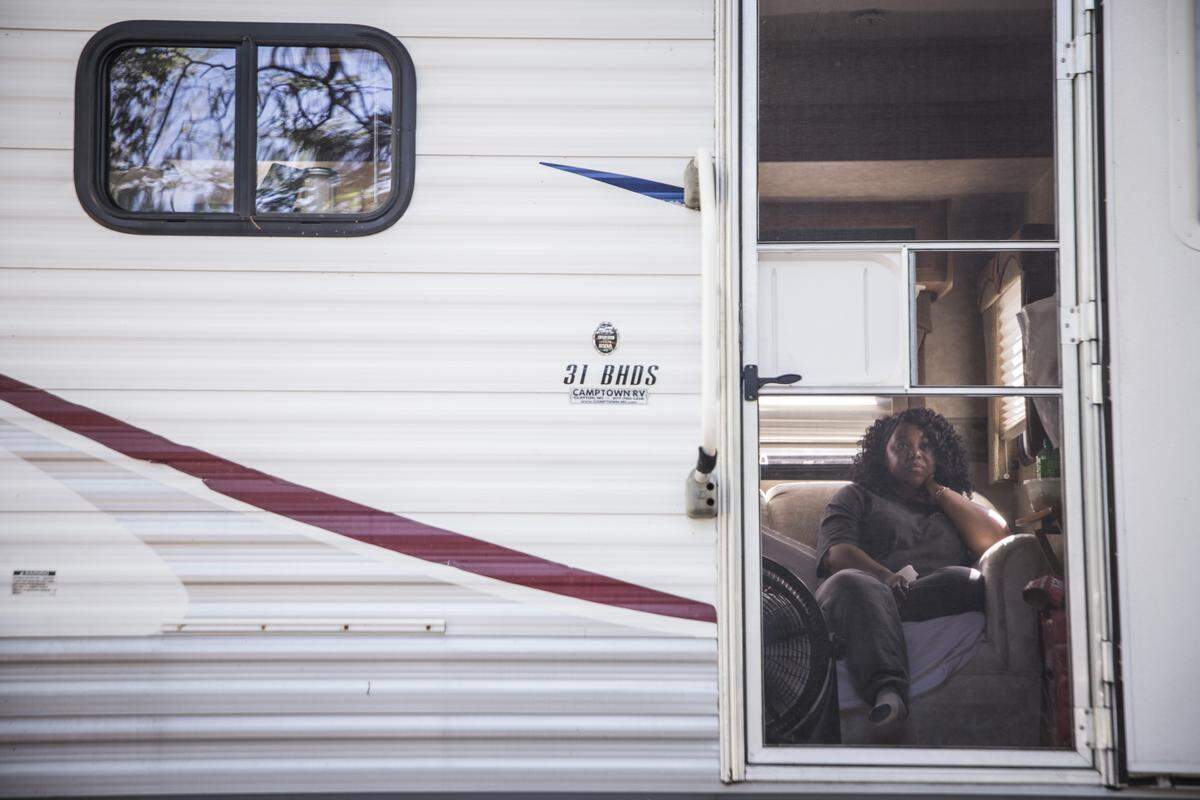
On average, it took about 140 days just to determine whether someone was eligible, and actual construction didn’t begin until nearly four years after that decision. Some households stayed in temporary housing for more than 1,400 days, incurring lodging costs of $74.4 million, exceeding $230,000 for a single family, the report says.
On Thursday, during a meeting of the General Assembly’s Governmental Operations Subcommittee on Hurricane Response and Recovery, Boliek said his office brought in experienced accountants who said “it was the worst government program they’d ever seen.”
“The inability to be able to print out or even produce a relevant and reliable data source of a financial statement or a financial position, you just couldn’t do it … without a tremendous amount of work,” he said.
This is why the audit does not reconstruct all financials. Boliek said about $1 million to $2 million would be needed to do so “and that just seems to be a waste of taxpayer dollars.”
The office’s next step is to work with businesses that were paid by NCORR. Boliek said his office will review contractor work to understand how the program operated on the ground and where breakdowns occurred.
The report says the program had received 11,654 applications and completed 3,522 projects as of April 2025. Not all applicants were eligible for assistance. Earlier this year, NCORR told The News & Observer it had completed 3,818 homes, including 622 of roughly 1,150 projects that had been pending as of late January. The agency said it expected to wrap up work in 2026.
The agency said 30 homeowners from that pending group have withdrawn. Of 71 projects flagged as having “big issues” during a legislative hearing in January, four were deemed ineligible, 14 homeowners withdrew and 15 projects had been completed.
Pryor Gibson, who helms NCORR, spoke on Thursday, showing a presentation that indicated there remained 328 projects to finish, with 3,924 completed.
He said the intention of NCORR was to be finished “well before” a deadline set by the legislature of October 2026.
NCORR was created by then-Gov. Roy Cooper in 2018 to manage long-term recovery from Matthew and Florence. It has been the focus of repeated legislative scrutiny due to delays, including hearings earlier this year after the agency requested more than $200 million in additional state funding and after its former chief operating officer Laura Hogshead acknowledged accounting errors that left some contractors temporarily unpaid. The agency later parted ways with her, and Gibson — previously a top aide to Cooper — was named interim director.
Cooper, a Democrat who served two terms as governor, is running in the 2026 election for U.S. Senate.
The audit says the agency operated without a comprehensive assessment of needs — not knowing the full cost of recovery until after the application period closed — or proper budget monitoring, and relied on three different systems to run the program. Nearly $785 million went to vendors without a reconciled financial record. There was also a lack of clear performance metrics, according to the report.
One of the systems was a Salesforce platform that cost $25 million, but that had not been used adequately, according to Boliek. That program was used to process applications, among other things.
“That program ought to do somersaults,” considering the cost, Boliek said on Thursday.
He said the issue was not the program itself, but the inability of employees to get it to work well for them. He said that the Salesforce program could be reused, but with proper training.
Boliek, a first-term Republican, said during a press conference on Wednesday that “it was very, very clear that there was no theft or fraud involved. It was just mismanagement. It was just setting up a program and throwing money at a situation without sticking to a mission with incremental goals and measurables.”
Glimmer of hope for Western NC
NCORR is not responsible for rebuilding homes damaged last year by the remnants of Hurricane Helene. Gov. Josh Stein created a separate division within the Department of Commerce on his second day in office to manage Helene recovery. He also created the Governor’s Recovery Office for Western North Carolina, which established a team within Stein’s office to coordinate state government efforts in response to the emergency.
Boliek called for a new statewide disaster-recovery structure involving all 10 Council of State members to work with legislative leaders to prevent similar failures after future storms, among other recommendations.
“Everything that the auditor said about what to address — the early administrative hiccups, the scope, (that) the criteria was too broad ... we have to agree those were problems,” Gibson said. “But you’ve heard those before, and what you’ve heard the auditor repeat more than once or twice is that over the last two years, it’s been on the right track.”
“There’s a little bit of glimmer of light that we hope is not a train in the tunnel, and that (is that) we have worked really hard at NCORR to make sure our partners at GROW NC and for western recovery have all the lessons learned.”
This story was originally published November 21, 2025 at 9:00 AM.