‘A terminal diagnosis’: NC hemp seller fights new law that will gut industry
AI-generated summary reviewed by our newsroom.
- New federal provision taking effect Nov 2026 could remove most hemp products nationwide.
- Law treats all THC equally and caps total THC per package at 0.4 mg.
- Hemp firm increases lobbying and state advocacy; warns of supply-chain disruptions.
As part of a new law passed to reopen the federal government, a last-minute provision taking effect next November could upend the booming hemp industry in North Carolina and across the country.
The new law is “very much intended, by all intents and purposes, to completely remove all hemp products from the shelves,” said Chris Karazin, CEO of the North Carolina–based hemp retailer and manufacturer Carolindica.
Hoping for a reprieve over the next year, Karazin said he’ll keep operating as usual — even negotiating leases to open new storefronts. But he said his company and other hemp businesses will be increasing lobbying efforts in response to the law.
“It’s very much a ‘keep on keeping on.’ Until the world stops spinning, we’re going to act as if the world will continue to spin,” he said.
Business growing
Karazin said his company began as a “true garage operation” in 2019 run with his best friend and brother. Over five years, it grew into a business with three stores — two in Raleigh and one in Fuquay-Varina — and an e-commerce platform that sells at least one compliant product to every U.S. state.
Hemp was legalized federally under the 2018 Farm Bill. North Carolina had already allowed limited hemp production under a pilot program, but in 2022 lawmakers made hemp fully legal to grow and sell in the state.
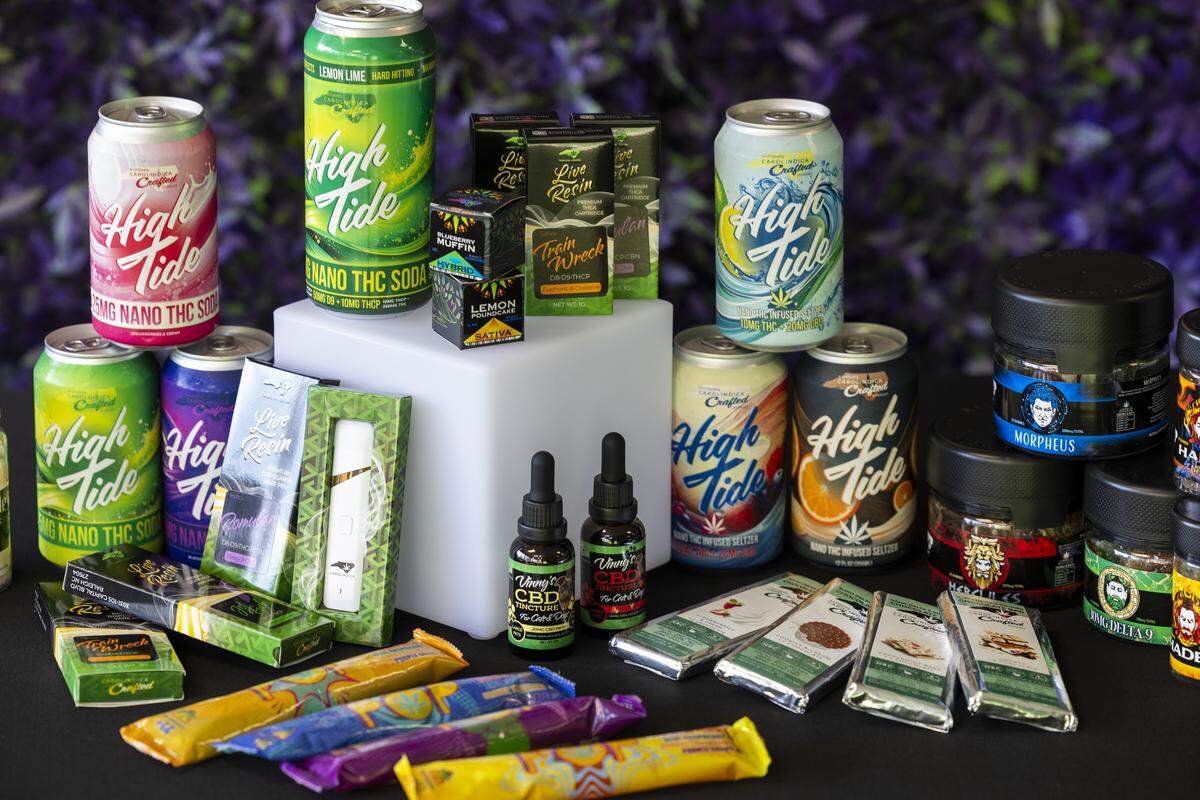
Hemp comes from the same cannabis plant as marijuana, which is illegal, but the law separates the two based on tetrahydrocannabinol, or THC, levels. Hemp must contain 0.3% or less of delta-9 THC by dry weight. Anything stronger is considered marijuana, even though the plants can look and smell the same.
Delta-9 THC is just one of many cannabinoids — the chemical compounds produced by the cannabis plant. Others include delta-8 THC, which is known to cause a high, and cannabidiol, or CBD, which does not. While some cannabinoids occur naturally in the plant, others on the market today are created through chemical processing.
These cannabinoids are mixed into products like gummies and drinks. That’s what Carolindica does. Karazin said the company works directly with some North Carolina growers but mostly relies on brokers who represent multiple farms. Raw flower is then sent to processors, who turn it into concentrated cannabinoids, which his team mixes into gummies, chocolates, candies and a new drink line. Carolindica also sells products to retailers, distributors and other hemp companies that market the items under their own brands.
Many other businesses do the same. Legalization opened the door to a wave of hemp-based companies. And while some run their own testing or refuse to sell to minors, many products are sold without oversight — with some found to contain contaminants or higher-than-listed THC levels.
North Carolina does not regulate these items, despite repeated attempts by lawmakers to come to an agreement on rules, and minors can legally buy them.
This fast-growing market, now estimated as a $28 billion industry nationwide, is what the new law targets. It treats all THC the same, not just delta-9, and sets strict new limits on the total amount allowed in products.
Effect of the new law
Karazin said “there is still a state of uncertainty” with the new law.
But he expects more clarity in February, when the law requires the Drug Enforcement Administration to issue guidance. That guidance will include a list of cannabinoids the FDA says can be naturally produced by the cannabis plant. Under the new law, any cannabinoid that isn’t naturally produced — or that may occur naturally but is synthesized or manufactured outside the plant — would be banned.
Beyond that definition change, Karazin said the main impact is that “they have looped all THC together” — delta-9, delta-8 and everything else — instead of treating them separately. The law also sets a cap of 0.4 milligrams of total THC per package, in addition to the longstanding 0.3% limit by dry weight.
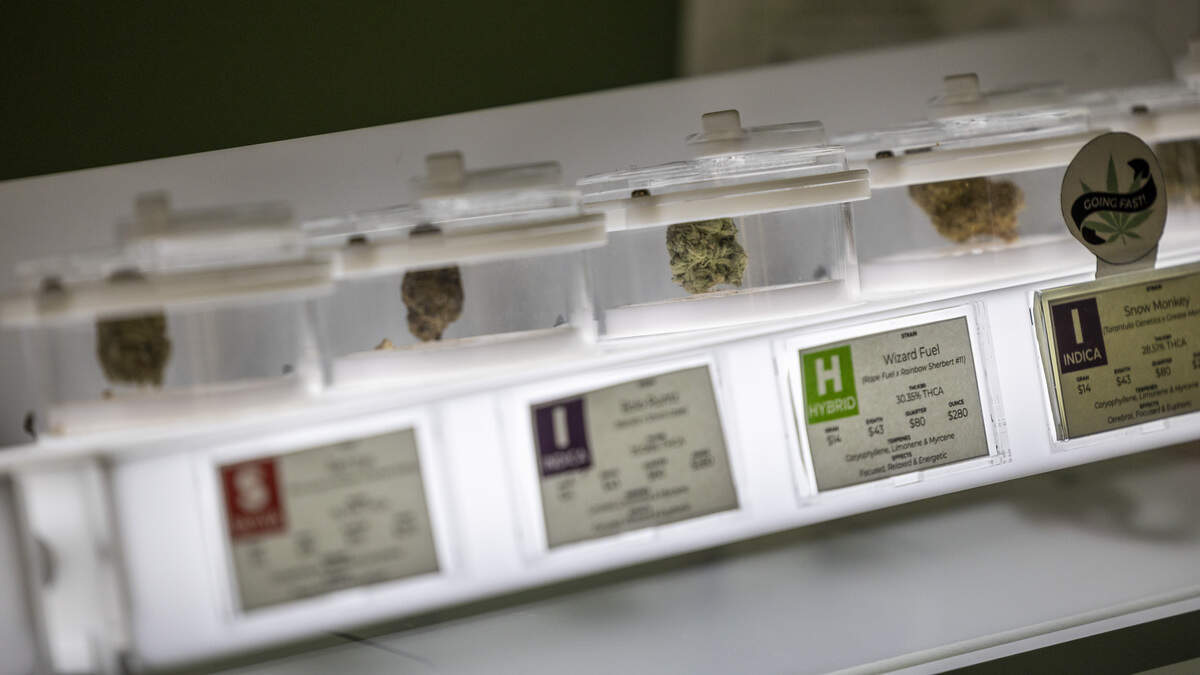
“That’s almost like a dust particle in the air,” he said. “It’s definitively like an impossible number to really work with. Because this plant — just naturally — the God-given plant here comes with a little bit of THC.”
Karazin said that under the new law the one product that “supposedly should be allowed to survive” is the purest form of CBD, or what’s known as an isolate. Full-spectrum CBD — which he said is what they typically recommend to customers for the best effects on anxiety, sleep and other issues — wouldn’t survive.
The language is so broad that “it’s pretty safe to say that 99% of all hemp products would not be allowed,” he said. That would include many non-psychoactive products, including lotions, he said.
“Your small businesses, your hemp shops, your farmers … it really is sort of putting it out of the ability for the American dream to succeed,” he said. “Very precise operations might be able to have some product types here, but the hemp industry as a whole? Just about every lawyer I’ve spoken to, every extractor, every farmer — (when you ask), ‘Can you make stuff happen here?’ they’re like, ‘No. No chance. This is a terminal diagnosis,” he said.
State and federal action
Just as marijuana laws differ state to state, hemp rules vary widely, too. The new federal changes could prompt more states to look at their laws.
Karazin said he sees this moment as calling for both a temporary state-level fix and action by federal lawmakers.
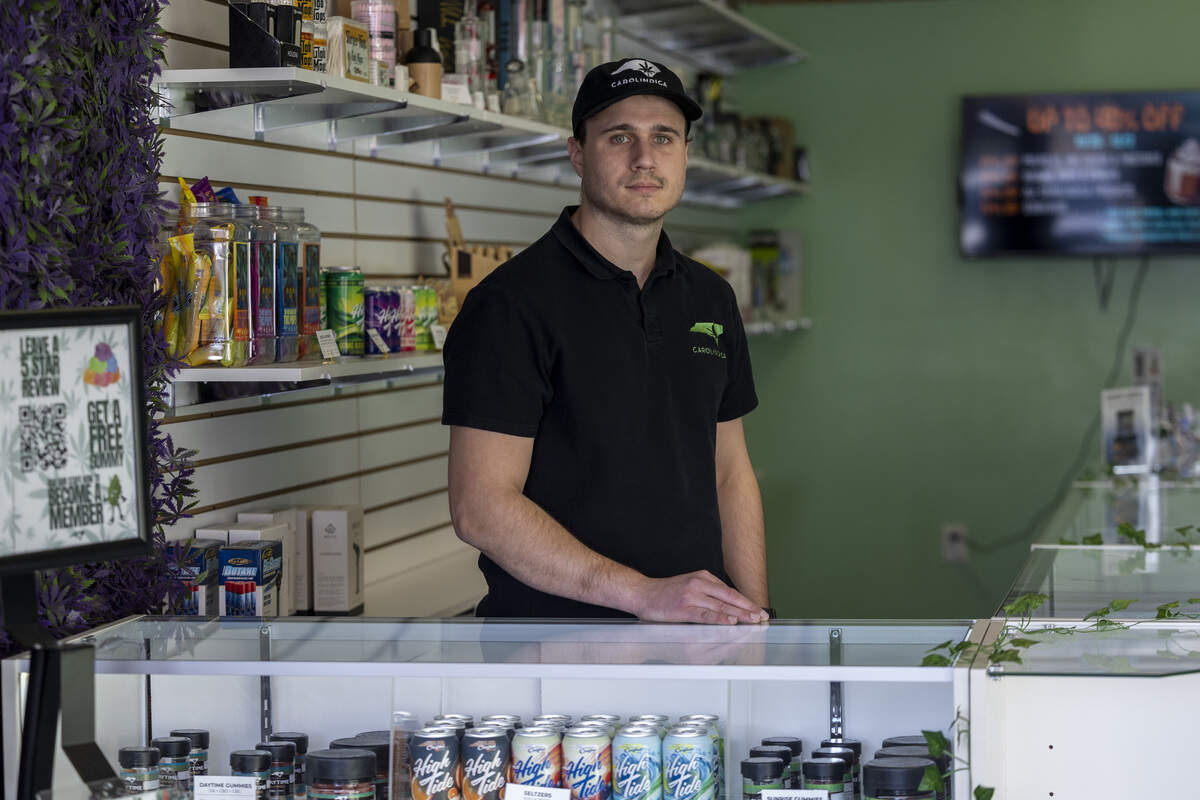
“There’s a lot of opportunity here for the government — both state and federal — to be very happy and successful in properly regulating this market, compared to trying to go a prohibition route” he said, adding that taking products off shelves would lead to a “black market.”
Last month, attorneys general across the country — including North Carolina Attorney General Jeff Jackson — urged Congress to update and clarify federal hemp laws, saying the 2018 Farm Bill had been “exploited by bad actors” to sell synthetic THC products.
In a letter, they wrote that the current system leaves consumers unprotected — including children who can buy the products in gas stations and convenience stores — and that state-by-state bans cannot stop their spread through interstate commerce.
The News & Observer reached out to Jackson’s office, but a spokesperson declined to comment on the new federal law.
Kentucky Republican Sen. Mitch McConnell, who helped usher hemp legalization into the 2018 Farm Bill, pushed for the ban in the shutdown-ending law passed in November, saying that companies exploited the Farm Bill loophole to legally formulate products with enough THC to get their consumers high, The Washington Post reported.
Karazin said that while he supports advocacy at the state level, relying only on a patchwork of state fixes would disrupt supply chains, since hemp businesses work with growers, distributors and vendors across state lines and rely on banking systems that also cross state lines.
Still, he is “hopeful” because the sweeping nature of the new law has pushed the industry together, uniting competitors who are now focused on educating consumers and lobbying to keep products on the market, he said.
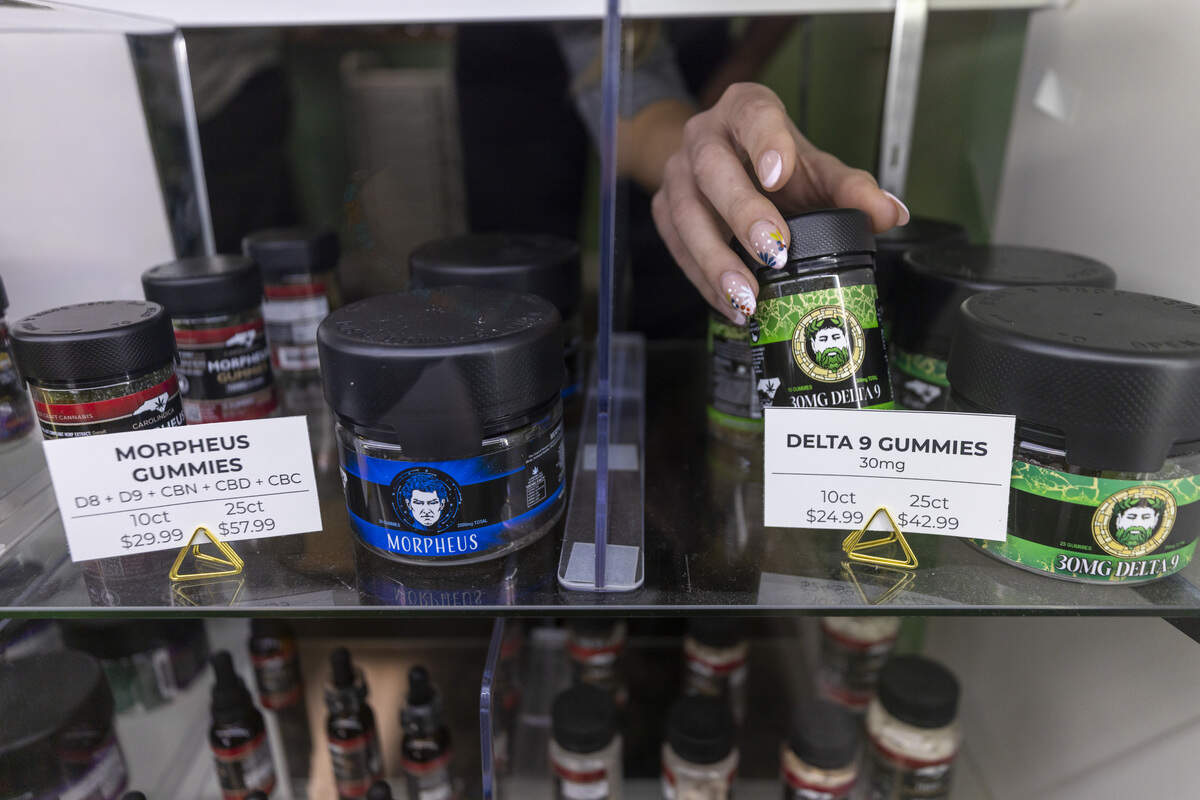
Karazin said his company has long supported state-level guardrails — including not selling to anyone under 21, clear packaging and third-party lab-testing requirements. Inside their own storefronts, he said, employees check IDs, require customers to be 21 or older and include QR codes on their packaging linking to information about lab tests.
“We’re in this for the long haul,” he said. “This conversation will be going on for years, decades. Cannabis and hemp have been hot topics for many years and will be for many more.”