With tax cuts at core of budget stalemate, see what NC speaker is floating for 2026
AI-generated summary reviewed by our newsroom.
- House Speaker Destin Hall pushes altering income tax cut triggers to fund raises.
- Budget stalemate leaves North Carolina operating on prior spending levels into 2026.
- Hall plans property tax exemption overhaul and corporate tax review for 2026.
Taxes are at the heart of the 2025 North Carolina state budget battle between the Republican-controlled House and Senate. And they’re so contentious that it is highly likely there won’t be a budget compromise until 2026, if at all.
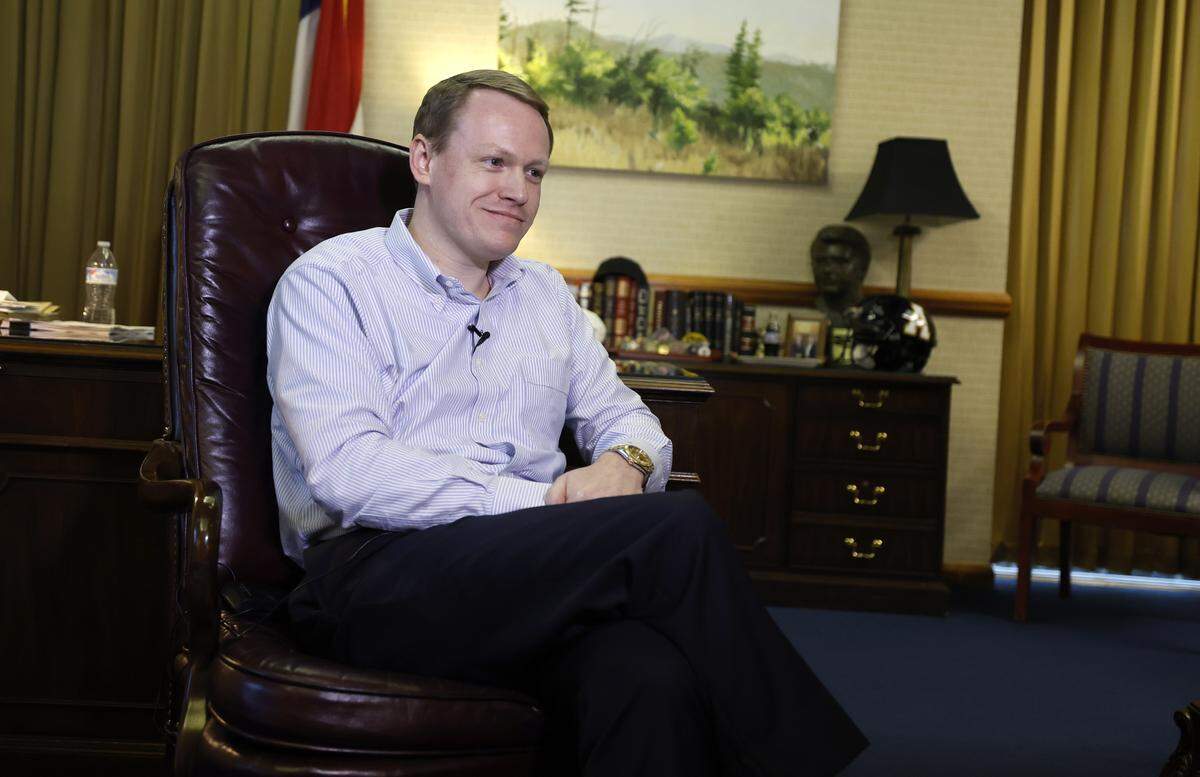
In an interview with House Speaker Destin Hall in his office at the Legislative Building, Hall laid out why he’s dug in on the tax cut fight and what other types of tax relief he’d like to pursue.
That includes legislation in 2026 that could change who gets exempted from property tax, which has statewide and local implications.
What’s ‘the right budget’ tax rate?
House Republicans, Hall said in the Nov. 19 interview, want North Carolina to have the highest teacher pay in the South.
In order to pay for that, state government needs to have enough money coming in, which is one of the reasons Hall wants to slow planned tax cuts.
Republicans in the legislature have overhauled the state’s tax structure, including by charging everyone who pays individual income taxes the same rate and gradually reducing that rate.
For the 2024 tax year, the individual income tax rate was 4.5%. For 2025, it dropped to 4.25%. The rate will drop to 3.99% in 2026, and then future reductions of another half-percent will be based on revenue. That’s the sequence Republican leaders agreed to in 2023 budget negotiations, before Hall became speaker. The trigger for those future tax cuts is set at $33 billion in state tax revenue in 2027, then $34.1 billion in 2028 and $34.7 billion in 2029 — all according to the 2023 law. The House proposal would change that 2027 trigger amount to $36.3 billion, followed by $37.7 billion in 2028 and $39.2 billion the following year.
The state’s May revenue forecast cautioned there is risk of a recession and economic uncertainty, though it also showed weakening but positive economic growth. Democratic Gov. Josh Stein wants to freeze tax cuts entirely.
One reason for Hall’s current position is that he wants North Carolina to be “number one in the South for starting teacher pay.”
“And so that’s something that’s critical to our members,” he said. “We want to be pro-education on all fronts — school choice and in our public schools. And so that’s one of the reasons that you see us holding out on the budget debate.”
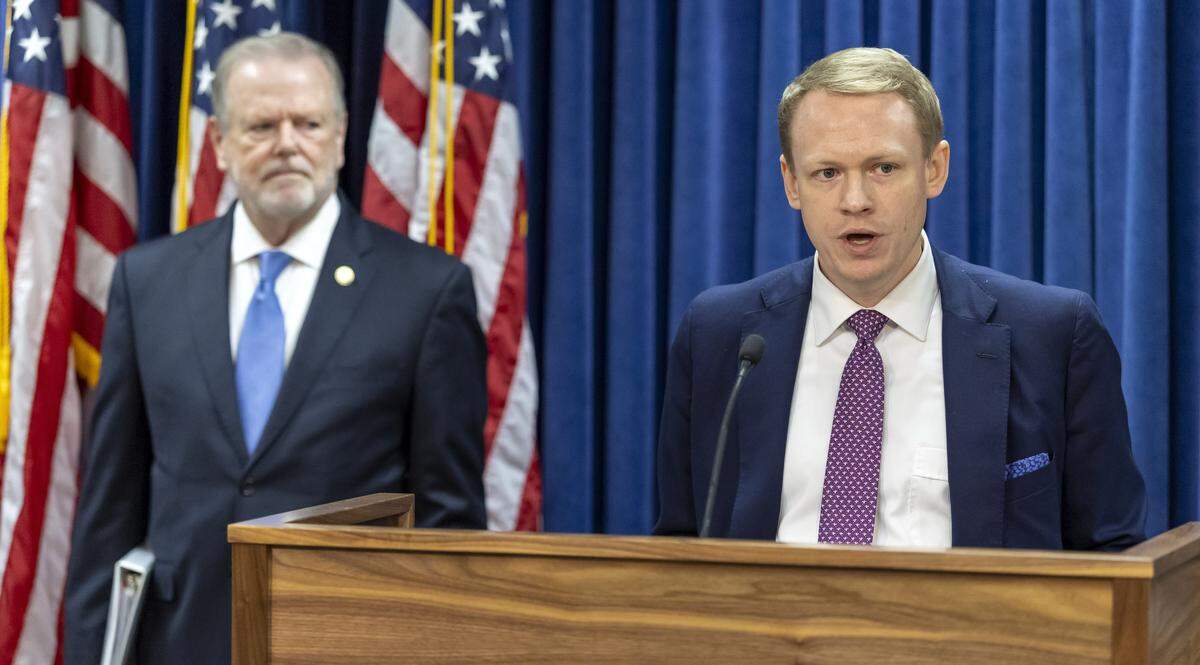
North Carolina is the last state in the country to have no budget. Without one, most spending levels remain the same as they were under the last budget signed into law, before Hall became speaker or Stein took office in January. However, the General Assembly has passed a few small spending bills since finishing the bulk of their work in July — bills that did not address taxes or across-the-board raises.
“We need to get a budget passed. The question is, are we going to do the right budget? And from our side, on the House side, with my caucus, we just think that it’s important that we do better for education in this state,” Hall said.
That strategy of focusing on teacher raises drew House Democrats’ support, with a majority of them voting for the House’s budget proposal, including Minority Leader Robert Reives. Even as they voted for it, Democrats said they want to see a different final budget. Still, they were more supportive of Republicans’ House proposal than the Senate’s, which proposed lower raises.
But Democrats are also weary of the budget stalemate. Senate Democrats held a hearing in November to highlight those impacted by the delay, including food pantry funding, in which a representative of Catholic Charities of the Diocese of Raleigh said demand continues to accelerate.
Senate Minority Leader Sydney Batch, a Wake County Democrat, said that state employees and teachers are in effect taking a pay cut without new raises, given inflation and increases in cost of living.
The tax agreements of 2023
Longtime Republican Senate leader Phil Berger, when asked by reporters about the budget and taxes battle, has pointed out that House Republicans already agreed to the tax triggers in 2023.
But Hall said that for House Republicans, “it’s really not a realistic path to simply do nothing on the finance side. When we passed that law in 2023, if you look at since then, that’s been roughly two years ago, two years plus. Over just that course of time, inflation has changed those numbers quite a bit. ... It’s not apples to apples anymore,” he said.
Hall said that while he doesn’t want to raise taxes, they want to “continue to provide tax relief and do it responsibly.”
He acknowledged, as Berger has also said, that fiscal and budget analysts could be wrong, “but I don’t think that they are so wrong this time that we’re not going to wind up in trouble, in a couple of years even, if we don’t act.”
Berger and Senate Republicans see it differently. They say that changing planned tax cuts would be an increase in taxes, because the planned tax cuts may not occur. Berger told reporters in September that the House had been “unwilling to engage” in tax negotiations.
Berger said that because Senate Republicans see increasing the tax cut triggers as a tax increase, “that is not something we can agree to.”
A month later, in October, Berger said that “if we can’t get agreement on anything beyond what we have, then what we have is certainly adequate for the functioning of state government at this time,” noting the state law that prevents a government shutdown.
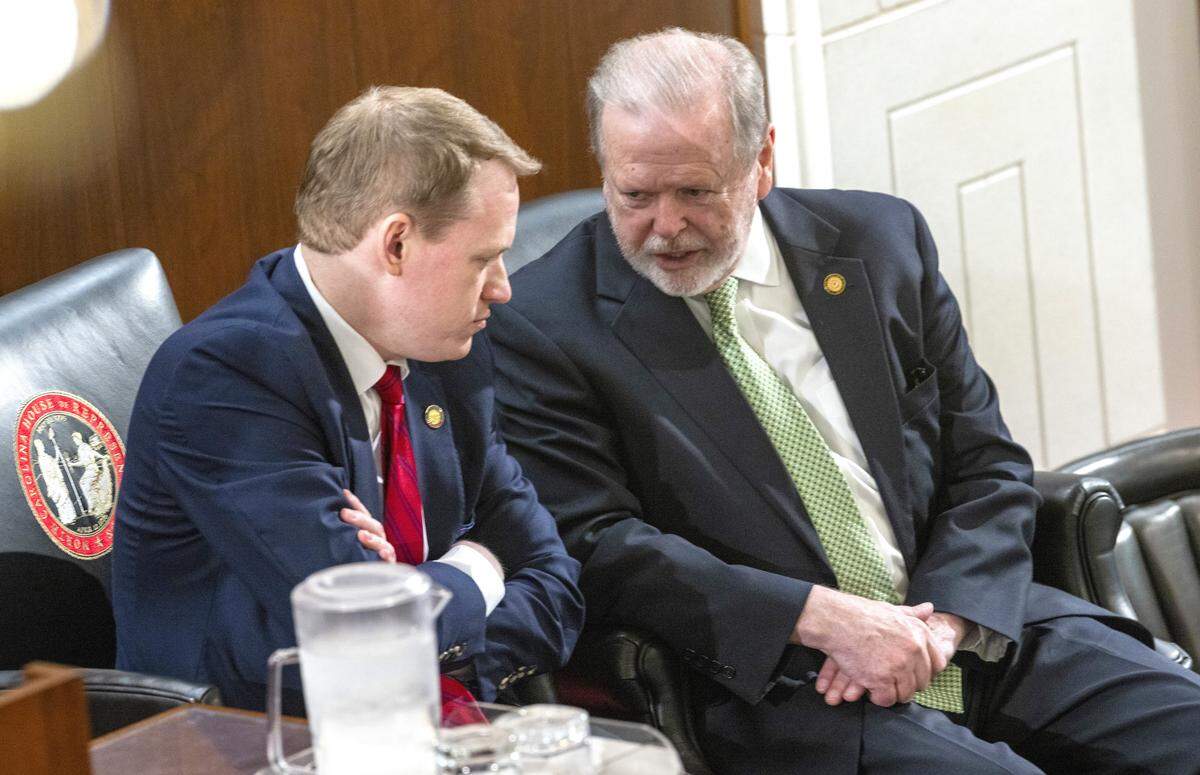
Throughout the fall, Berger and Hall have seen each other at various events, but a tax cut compromise has remained elusive.
“When the House and Senate agreed to the (2023) tax triggers, the state had already experienced the worst of Joe Biden’s inflationary policies. They made a promise to the people of North Carolina to cut the state income tax rate to help offset the higher costs they were experiencing,” Berger spokesperson Lauren Horsch told The N&O on Dec. 2.
“The Senate remains committed to lowering taxes for hardworking North Carolinians and is prepared to negotiate a full budget without any artificial preconditions,” she said.
Hall has other ideas for other changes in tax policy, including in a bill he plans to move in the short session, which begins in April. Hall is also optimistic that the House and Senate will reach a deal in the new year.
Property tax, corporate income tax changes on the horizon
It’s not just the individual income tax rate cuts that Hall is scrutinizing. He also wants to “take a serious look at how we should handle the corporate income tax.”
The corporate income tax rate for the 2025 tax year is 2.25%, which already dropped from 2.5% in 2024 and is set to drop to zero. Corporate income tax revenue is a small portion of state tax revenue.
“If we have to choose between either a corporate or a personal income tax, I’m going to go with a personal income tax cut, because I think that’s money in the pockets of those folks at the end of the day,” Hall said.
Republicans are usually not interested in cutting sales taxes, and when asked about sales tax, Hall said “you could look at all different pots of money across the state,” and focused on property taxes.
Local governments use property taxes to fund a wide variety of services, from emergency services to schools. Even if counties don’t increase property tax rates, reassessments can drive up tax bills.
A change to property tax exemptions is coming, if House Republicans have their way. Hall said he wants to make sure people don’t lose their homes because of big property tax bills. That’s why he’s looking at exemptions for other property owners.
“More and more, I hear — as I’m across the state — more about property taxes than I do about these income tax triggers that, in this (Legislative) Building are talked about every day. But the reality is, the average Joe doesn’t care at all about the income tax triggers,” he said.
Average people end up paying an unfair amount, Hall said, and he wants to take a look at the law. While he didn’t give specifics, exemptions to property tax law include charitable hospitals, religious institutions and educational institutions. If the bill is successful, Hall said, it will “help folks get their property tax to go down.”
Hall said he doesn’t mean to do away with “charitable” groups’ exemptions.
That new front on the tax debate awaits in 2026.
This story was originally published December 3, 2025 at 6:00 AM.