Federal judge rules Trump administration lacked authority to cut FEMA funds in NC
AI-generated summary reviewed by our newsroom.
- Judge Stearns ruled FEMA lacked authority to end the BRIC grant program.
- Court ordered restoration of roughly $225 million for 72 North Carolina projects.
- States argued ending BRIC violated congressional appropriation power; court agreed.
A federal judge in Massachusetts has ruled in favor of states that sued the Trump administration over its termination of a federal grant program — a move that would have stripped roughly $225 million for infrastructure resiliency and disaster preparedness projects in North Carolina.
U.S. District Judge Richard Stearns held that the Federal Emergency Management Agency lacked authority to shut down the Building Resilient Infrastructure and Communities program without congressional approval.
North Carolina Attorney General Jeff Jackson joined the lawsuit in July, alongside fellow Democratic attorneys general from more than 20 other states, after FEMA officials announced in April 2025 that the BRIC program was ending. This came as the Trump administration was also considering eliminating the agency entirely.
The Democratic attorneys general argued that cancelling the grant funding approved by Congress was unlawful. The states sought a preliminary injunction to prevent FEMA from using BRIC funds for other purposes, as well as a permanent injunction ordering the agency to restore the program and move forward with approved grants.
Stearns had previously granted a preliminary injunction. In granting the states’ motion for permanent judgment on Thursday, he wrote:
“This is not a case about judicial encroachment on the discretionary authority of the Executive Branch. This is a case about unlawful Executive encroachment on the prerogative of Congress to appropriate funds for a specific and compelling purpose, and no more than that.”

Jackson celebrated the victory saying in a news release that “we won this case because FEMA tried to take back $200 million that it had already designated for North Carolina.”
“Our towns spent years doing everything FEMA asked them to do to qualify for this funding, and they were in the middle of building real protections against storms when FEMA suddenly broke its word,” he said. “Keeping water systems working and keeping homes out of floodwater isn’t politics — it’s basic safety. This ruling puts the money back where it was promised so these communities can be ready for the next storm.”
The N.C. Department of Public Safety identified more than 70 open projects in North Carolina that FEMA selected between fiscal years 2020 and 2023 to receive roughly $225 million in grant funding, The News & Observer previously reported. Nationwide, $3.6 billion in funding awarded but not yet paid had been halted. The Trump administration had also said it would not award $882 million in grants for the following fiscal year, The Associated Press reported.
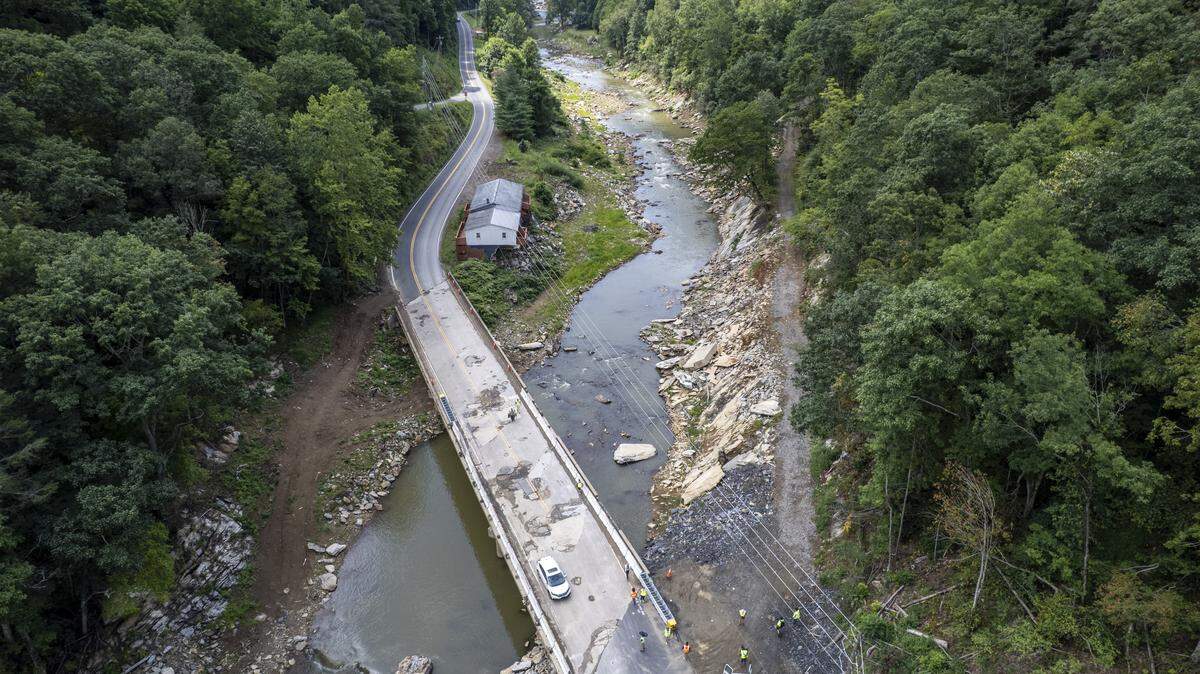
“North Carolina unfortunately is no stranger to natural disasters, and building better infrastructure saves lives,” Gov. Josh Stein said in the release.
The lawsuit prompted a bipartisan letter led by two North Carolina Republicans, U.S. Rep. Chuck Edwards and U.S. Sen. Thom Tillis, which said the program has “room for improvement” and should be evaluated to “increase efficiency” and make it easier for grant recipients to access resources, but warned that “forgoing these critical investments will only make it harder and more expensive for communities to recover from the next storm,” The N&O reported.
The Trump administration told The Associated Press Thursday that it had not “terminated BRIC” but did not elaborate on the program’s status.
“The Biden Administration abandoned true mitigation and used BRIC as a green new deal slush fund,” the spokesperson told AP. “It’s unfortunate that an activist judge either didn’t understand that or didn’t care.”
Trump created the FEMA Review Council to recommend changes at the agency, but the group’s report has not yet been released.
This story was originally published December 12, 2025 at 2:26 PM.