Does NC government have $1B in lapsed salaries? Auditor and governor disagree
AI-generated summary reviewed by our newsroom.
- Auditor Boliek's DAVE report claims over $1B in lapsed salary from vacancies.
- Governor Stein's staff disputes methodology, cites miscounted unfunded and federal posts.
- DAVE recommends options for cuts; agencies warn pay and underfunding drive vacancies.
The accuracy of last week’s striking report on vacant state jobs is now the subject of a dispute between Republican State Auditor Dave Boliek and Democratic Gov. Josh Stein’s office.
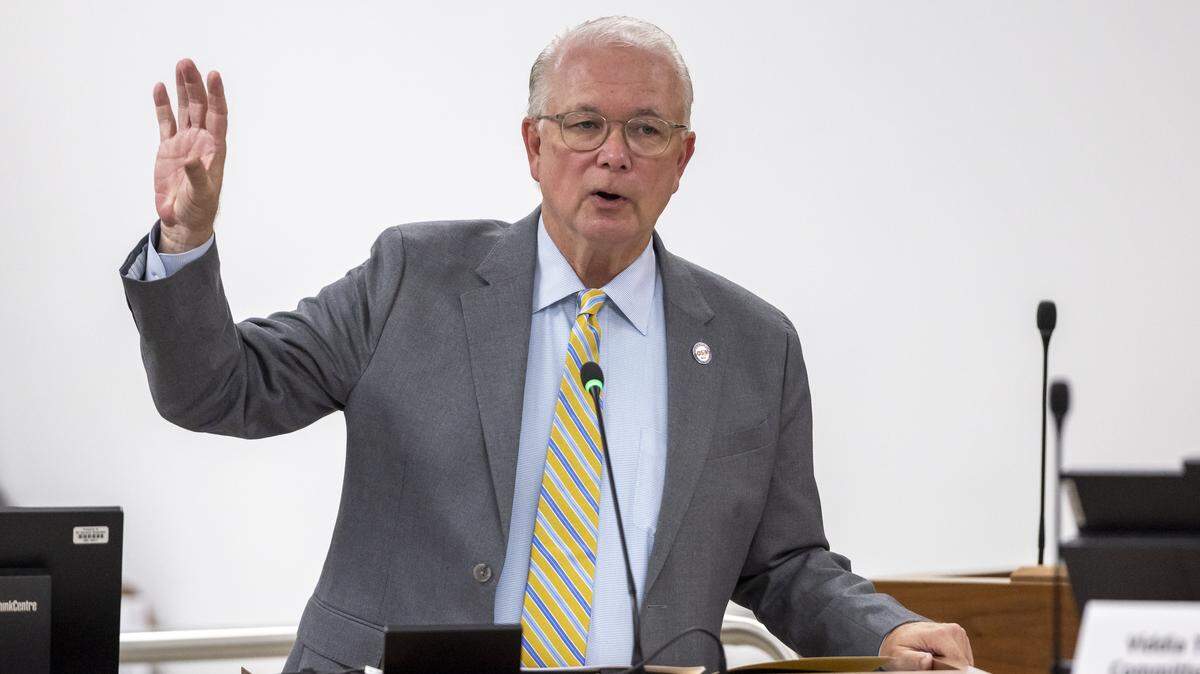
At a legislative hearing Tuesday, Boliek touted the findings of his new, self-titled government efficiency division, which produced the report.
In a letter sent to Boliek the same day, Stein’s chief of staff, Seth Dearmin, accused Boliek’s office of making “significant inaccuracies” in finding the state had generated over $1 billion in lapsed salary dollars from vacant state agency positions.
Dearmin said the report overcounted the total impact of long-term vacancies by hundreds of millions of dollars by improperly including unfunded and federally funded positions in the count.
“We believe the substantial degree of work that state agencies have already undertaken to tackle vacancies demonstrates the seriousness with which our administration approaches the issue analyzed by this draft report,” he wrote. “Unfortunately, the significant inaccuracies in this analysis render it inappropriate as a basis for comprehensive, long-term reforms to the appropriations and budgetary processes that undergird our state government’s ability to function.”
A spokesperson for Boliek defended the report’s findings in a statement to The News & Observer.
“There is nothing misleading or inaccurate about the topline figures presented,” the spokesperson, Randy Brechbiel, said. “... Lapsed salary is generated from positions funded by state appropriations, specific agency-generated receipts, and federal funding and grants. As defined by Office of State Budget and Management, lapsed salary is the dollar amount not expended for salary during the period in which a position is vacant.”
The lapsed salary report, which published last Tuesday, came from Boliek’s new Division of Accountability, Value, and Efficiency (DAVE), which was created by the legislature to recommend job cuts or even the wholesale elimination of state agencies. Its critics have compared it to DOGE, the U.S. agency formerly helmed by billionaire Elon Musk that was responsible for severe cuts to the federal bureaucracy.
During his presentation on Tuesday, Boliek noted that he does not have the authority to add or cut positions himself.
“Our job is to take a data-driven approach and look and get the actual facts,” he said. “Now to be sure, not everybody’s going to like the facts — but the facts are what they are.”
What jobs the report counted
In his letter, Dearmin contended that Boliek’s office incorrectly counted roughly 850 “unfunded placeholder positions” as having generated $246 million in lapsed salary. These are jobs that agencies purposefully keep unfilled for a variety of reasons, including positions that would only be filled in the event of an emergency. For example, the Department of Commerce has a variety of unfunded positions to be used in case of an unemployment crisis — all of which would be funded by the federal government.
Dearmin also said that Boliek’s office had improperly counted 279 positions funded by either the federal government or the agency’s own revenue as having generated $47 million in lapsed salary dollars.
At Tuesday’s hearing, Boliek acknowledged that his report included data from unfunded and federally funded positions.
“I understand there are people that may not like the results, and they may not like the numbers — but I have extreme confidence in our team’s analysis,” he told committee members.
Boliek’s office did not explicitly recommend eliminating any jobs, but did provide lawmakers with several options for cutting costs.
For example, they projected that if the legislature decided to eliminate the nearly 3,000 state jobs that have been vacant for two or more years, the state would save roughly $137 million.
Boliek stressed, however, that cutting jobs was not the sole solution, noting that low compensation was the most common reason for long-term vacancies in state jobs.
“There are vital state employees that provide vital services for the citizens of North Carolina,” he said. “They could use an increase in pay to be more competitive so we can attract the best and brightest.”
Sen. Terence Everitt, a Democrat, called DAVE’S report “incredibly misleading” for including placeholder and federally funded positions in the total lapsed salary amount. However, he said the information was useful in showing how the legislature has “grossly underfunded our state employees.”
Ardis Watkins, executive director of the State Employees Association of North Carolina, agreed with Everitt in a statement to The N&O.
“If we are serious about providing decent services to the public, we have to be serious about funding the agencies providing those services,” she said.
DAVE plans to release a more comprehensive report on vacancies later this month after giving state agencies a chance to contextualize their vacant positions.
This story was originally published January 6, 2026 at 3:49 PM.
CORRECTION: This story has been updated to note that Gov. Josh Stein’s chief of staff sent the letter to the state auditor. A previous version misidentified who sent the letter.