New federal law will allow more police to take down drones. Is an NC law next?
AI-generated summary reviewed by our newsroom.
- Federal Safer Skies Act lets trained state and local police mitigate and seize drones.
- Law enforcement must complete federal training and report actions to agencies.
- Gov. Stein seeks state law clarifying police authority to protect events, infrastructure.
Local and state law enforcement officers may soon be able to take down drones that are security risks for large gatherings at sporting events, critical infrastructure and prisons because of a new federal law.
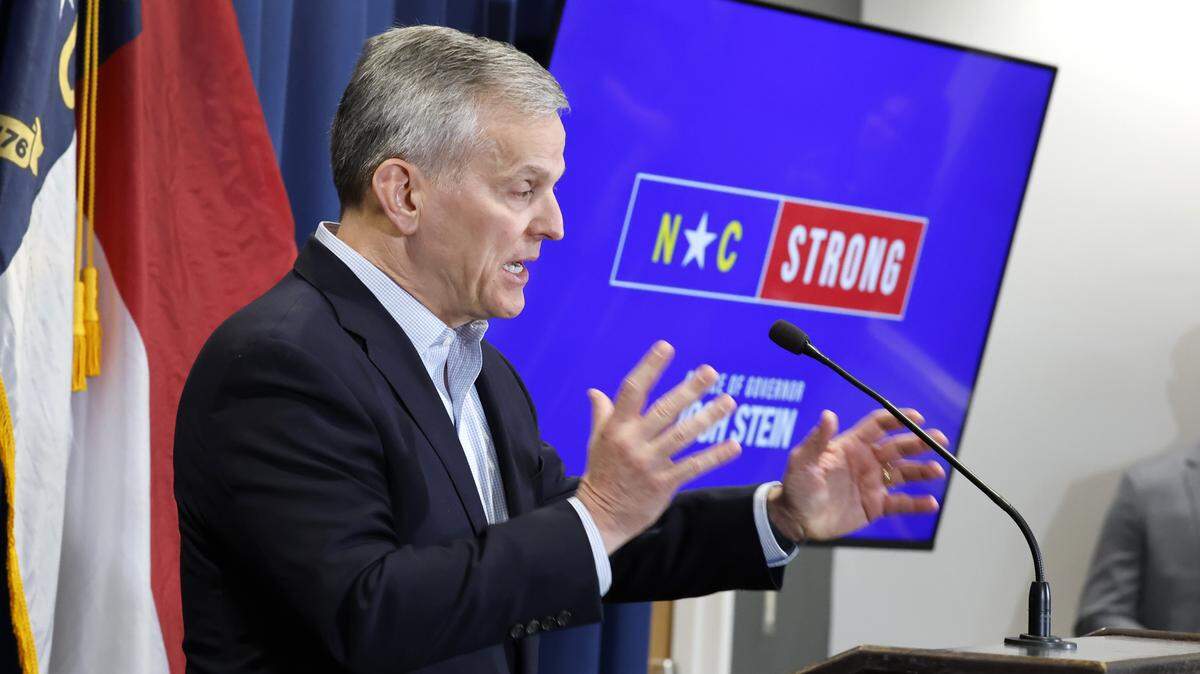
North Carolina Gov. Josh Stein is also calling for a new state law that makes clear what actions police can take to ensure public safety.
The Safer Skies Act, which was supported by the National Governors Association, was incorporated into the National Defense Authorization Act, which President Donald Trump signed into law in December. It allows local and state police, once they complete federally authorized training, to mitigate threats from drones by a variety of means.
Law enforcement will need to report any action to the federal government, including an explanation of the security and public safety risk that led to it. Action described in the legislation includes detecting, identifying, monitoring and tracking a drone as well as intercepting it, disrupting control and seizing it. Further actions include disabling, damaging or destroying the drone through “reasonable force.” Until the new law, only some federal agencies were allowed to do so.
The training and certification process is being written now, with a deadline in about five months, as well as the rules that police will need to follow.
Stein, who co-chairs the bipartisan Council of Governors, said that governors quickly assessed that “the malicious use of drones have become a real problem around the country” and that while drones can be useful in the aftermath of disasters like Helene to survey damage and search for survivors, “the risks are just as real as the rewards. We’ve seen drones used to deliver contraband to prisons, making the already difficult job of correctional officers even harder.”
Security risks of drones at sporting events
North Carolina will host several major sporting events this year, including a men’s soccer match in Charlotte ahead of the 2026 FIFA World Cup, and Stein is concerned about the “potential that weaponized drones can be used by bad actors to attack large public gatherings.”
With four ACC universities in the state, plus the Carolina Panthers, football season draws tens of thousands of people each game day.
Leagues pushed for stronger drone enforcement, The Athletic reported in December. NFL Commissioner Roger Goodell thanked Trump and members of Congress from both parties after the bill was passed, saying in a statement they “took decisive action to keep fans safe. With a rising number of drones flying in restricted airspace, it is critical that state and local law enforcement have the tools to prevent harm. This important step will help protect fans at stadiums across the country.”
Stein called the Safer Skies Act a “rare bipartisan win” that came together quickly.
Gov. Stein calling for state law about drone risk mitigation
“Rules and training are being developed by four different federal agencies. We at the Council of Governors are advocating that state and local law enforcement be included in the rulemaking process, because for the Safer Skies initiative to be successful and effective, the rules must reflect the day-to-day working conditions of state and local law enforcement,” he said.
Stein said a new state law is needed to make sure law enforcement has the authority to “protect critical infrastructure.” Conversations with the General Assembly are starting now, he said, and he hopes a bill could pass this summer.
Public Safety secretary wants ‘clear rules of engagement’ for police
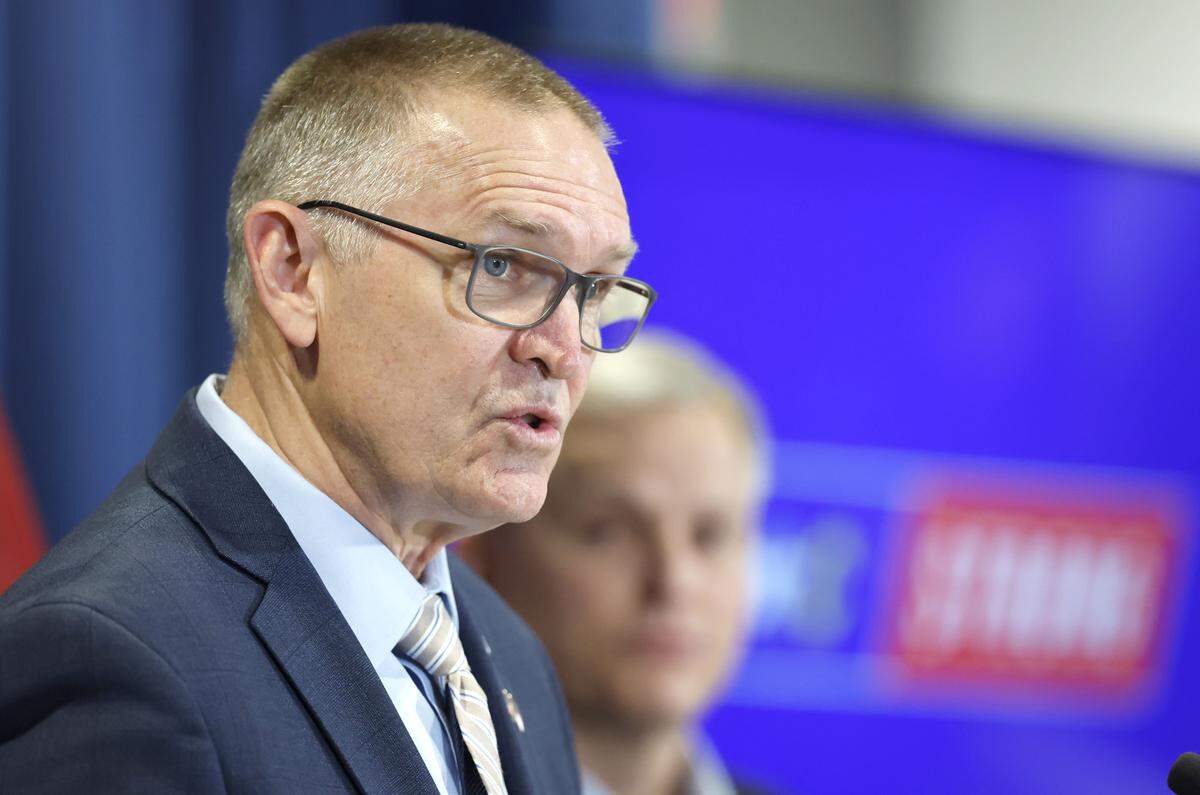
New Department of Public Safety Secretary Jeffrey Smythe told reporters on Thursday that “drones are not the enemy,” and are used as a valuable tool every day.
But the state needs to have “clear rules of engagement” for local and state law enforcement to be able to protect large gatherings, infrastructure and prisons from drones, also referred to as unmanned aircraft and unmanned aircraft systems.
“The federal law gives states and local agencies authority. What it does not do is automatically give us clarity, coordination and the right tools on the ground. That’s where state leadership comes in,” Smythe said.
The state is still waiting on the federal training to come together.
Smythe said what the Stein administration is asking for is about “preventing harm,” not expanding surveillance.
“Clear state law protects the public,” he said.
The General Assembly does not plan to have any voting sessions until the short session begins in April. Lawmakers are holding meetings of study committees and oversight committees.