Arrested at an NC job site, asylum seeker’s month in custody still weighs on her
AI-generated summary reviewed by our newsroom.
- Seized at a Cary construction site; held over a month at Stewart Detention Center.
- Judge ordered release citing juvenile‑arrival settlement; she had valid work permit.
- Detention raised worries about medical care, treatment and effects on asylum cases.
During the week, Fatima Issela Velasquez-Antonio gets up early, eats breakfast, and then it’s off to work.
The location varies day by day, as Velasquez-Antonio works for an HVAC company with projects across the Triangle.
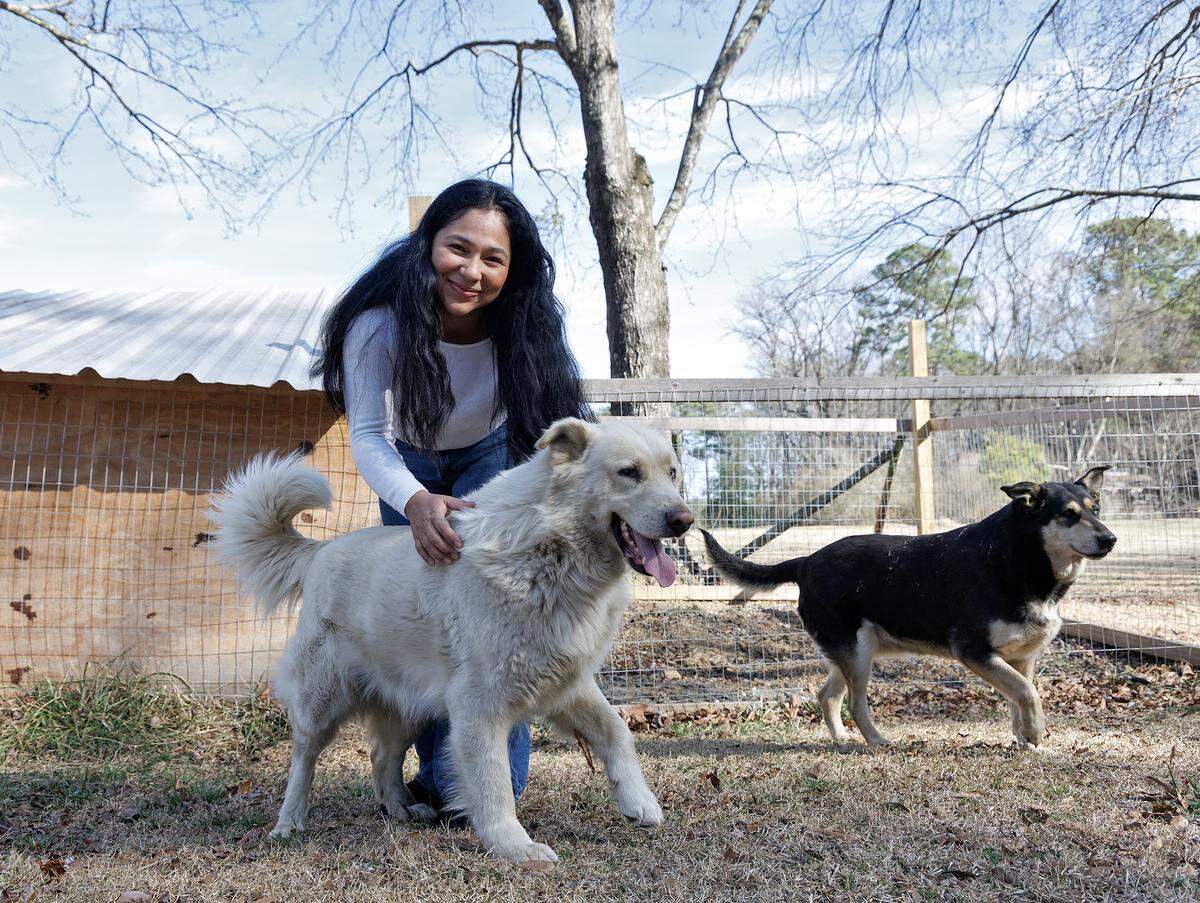
On Sundays — often her only day off — Velasquez-Antonio says she tries to relax, clean the house, and spend time with her boyfriend, his sister-in-law and her 7-month-old baby. She also likes walking their three energetic dogs: Suki, Sangi and Cody.
Their home in Selma, which they just recently bought, is in a quiet neighborhood. Birds chirp in the background. The wind rustles in the surrounding trees. Sometimes, the silence is broken: Her rooster crows. Her dogs bark. A car revs as her boyfriend, who runs an auto repair business, works in their backyard.
It’s peaceful.
It’s also the life she says she thought she might lose. On Nov. 18, U.S. Border Patrol agents seized Velasquez-Antonio, 23, at a Cary construction site.
En route to a detention center, “All I kept thinking about was that I was going back to my country — somewhere I didn’t want to go. So, I started crying. I cried the whole way,” Velasquez-Antonio said in Spanish in an interview with The News & Observer.
“I spent three days crying.”
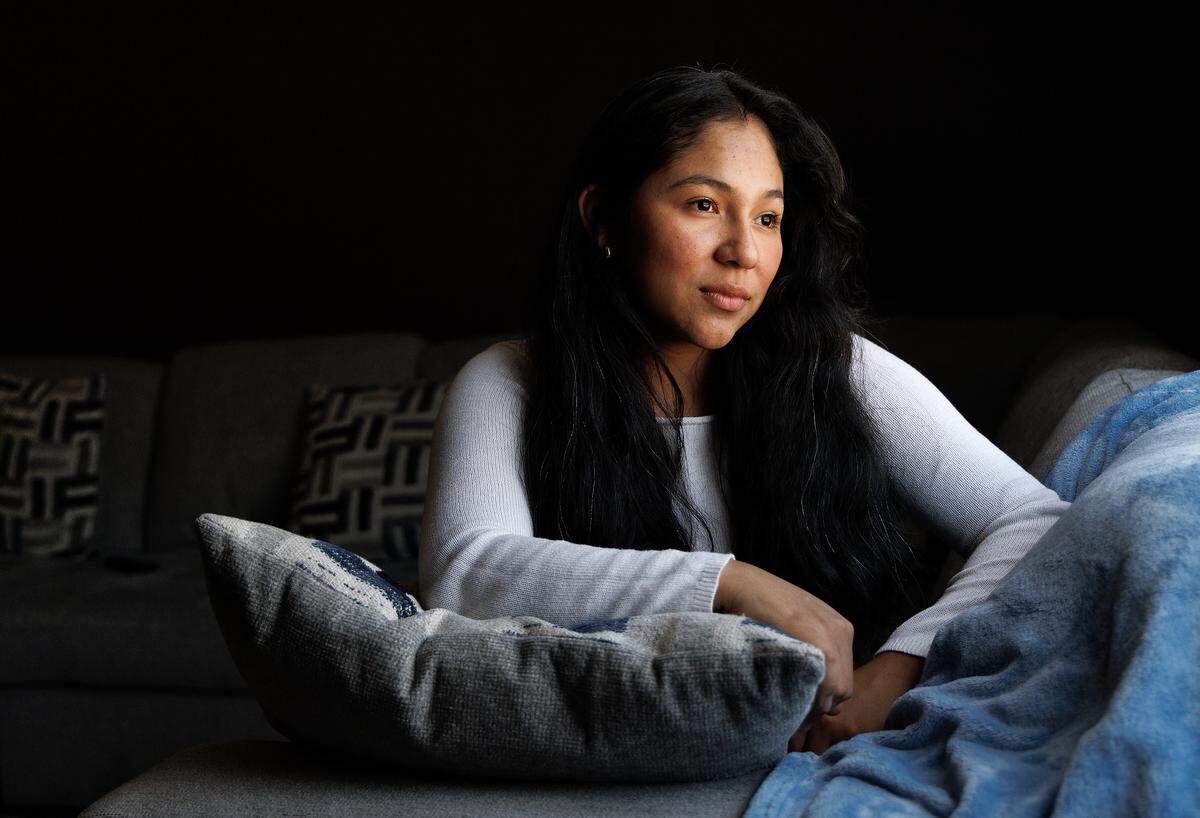
Her arrest was part of a broader enforcement operation dubbed Operation Charlotte’s Web that led to at least 370 arrests in North Carolina last fall — one place among many where federal authorities cracked down after President Donald Trump took office and demanded mass deportations.
Authorities have not released a full list of those arrested in North Carolina, but CBS News reported that fewer than a third had criminal histories. Velasquez-Antonio has no criminal record, aside from two traffic violations, according to a review by The N&O.
A return to daily life
After being held for just over a month at a detention center in Lumpkin, Georgia, Velasquez-Antonio was released in late December after a federal immigration judge ruled that she should not have been arrested given her status as a minor who entered the United States unaccompanied nine years ago, her attorney, Ashley Lively of Charlotte, previously told The N&O.
In a 2019 case, the federal government agreed to a settlement allowing juveniles who sought asylum after arriving unaccompanied to remain in the United States while their cases were adjudicated, Lively said.
Velasquez-Antonio came to the U.S. to live with relatives in the Triangle after her father was killed by a gang member in Honduras in 2016, her family said. Her mother had died earlier from cancer. Relatives raised her, and she graduated from Corinth Holders High School in Johnston County. Velasquez-Antonio also had a valid work permit, Lively previously told The N&O.
The asylum process can take years to conclude, with a significant backlog of pending decisions. The Trump administration has also made several changes to the process. In late November, the federal government halted all asylum decisions following the shooting of two National Guard soldiers in Washington, D.C. In February, it also sought to extend the time asylum-seekers must wait before being able to apply for a work permit.
Now back home, Velasquez-Antonio says she has settled into her routine. Her employer gave her her position back, and she is once again surrounded by her family.
“At first I felt strange, maybe because of being locked up for a month with everything always the same.” she said. “But now I think the routine has returned, and I’m back to being like before.”
Still, her detention weighs on her at times.
“I get scared sometimes. I think now I walk more cautiously, always looking around everywhere because I think I have this trauma,” she said.
The other day, Velasquez-Antonio was at a restaurant with her boyfriend when two men wearing camouflage passed by. They reminded her of immigration agents.
“I became paralyzed,” she said.
Route to detention in Georgia
After she was detained at the construction site on a Tuesday, what ensued were a few hectic days of travel.
Velasquez-Antonio said she and three men were taken to a building in Cary about 10 minutes away, where agents collected their personal belongings — rings, necklaces, hair ties, phones, even their shoelaces. Those belongings — all except her driver's license — were given back when she was released a month later, she said. Agents also took their fingerprints and photographs.
More than a dozen people — mostly men — were going through the same process, she said. Some told her they had been picked up while working. Others said they had stepped outside briefly, such as to throw out trash, before being detained.
Afterward, she said, they were loaded into vans. She thought they were being taken to Charlotte. She said agents provided few details, and much of the experience is a blur.
They were instead taken to the New Hanover County jail in Castle Hayne, arriving around 8 p.m.
There, immigration agents told her she could voluntarily leave the country and offered paperwork to sign to do so, she said. She declined. Agents then told her she would have a court hearing in December for her pending asylum case. She also attended a bond hearing in late November, where bail was denied.
“The first days were very difficult for me because it was something I never imagined. I had never been in a jail, and I felt bad because I knew my family was also sad and everyone thought I was going to be deported,” she said.
“They were treating us like criminals, when the only thing we had done was come to this country to look for a better life,” she said.
Advocates and attorneys have raised concerns about the treatment of asylum seekers with pending cases.
“ICE is hoping that by detaining them or re-detaining them, that they’ll give up their cases and agree to be deported,” Marty Rosenbluth, a former North Carolina immigration lawyer now based near Stewart Detention Facility in Lumpkin, previously told The N&O. “Getting out on a bond at this point is almost impossible,” he said.
Around 10 a.m. Wednesday, the day after her arrest, Velasquez-Antonio was moved out of the New Hanover jail toward Charlotte, where they arrived later that day.
At the Charlotte immigration office, she said, more than 30 people were crowded inside. She stayed only briefly before she and two other women, aged about 28 and 32, who became her friends, were whisked away en route to Lumpkin. They arrived there on Thursday morning.
Around 4 or 5 a.m. Thursday at Stewart Detention Center — one of the nation’s largest privately run immigration detention facilities, operated by CoreCivic — she was taken to a cell holding more than 60 women, where she would remain for just over a month.
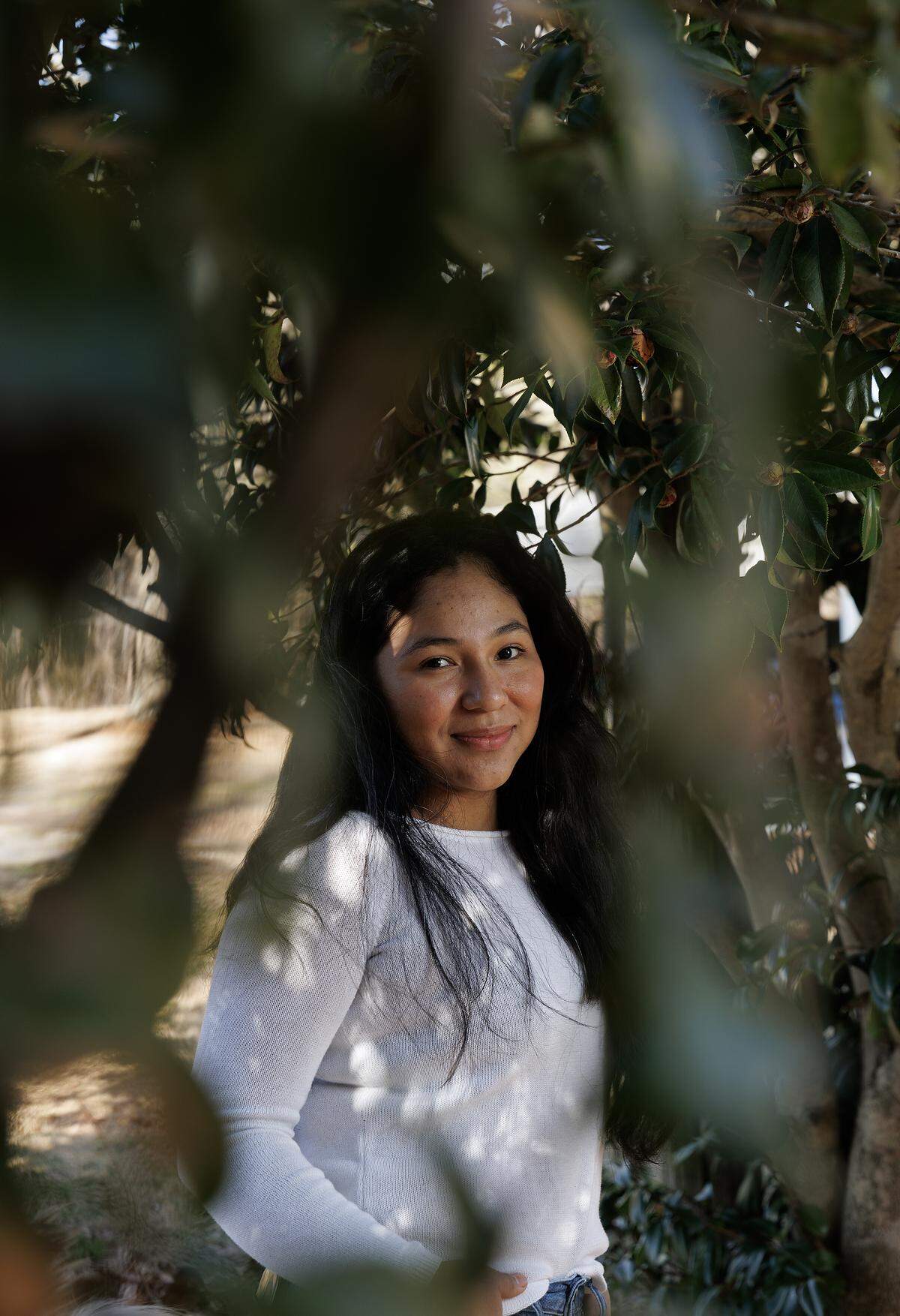
In a crowded cell for a month
The beds were pushed toward the back of the cell. The toilets and showers were also in the back. There were no doors — only nylon curtains blocking the view of other cells. Near the front, she said, there were about six tables where detainees ate.
“There is no privacy there; you live 24/7 with the people who are there,” she said.
You lose “your sense of modesty,” she said.
The cell she was in was next to two others. In total, she said, there were about seven rooms full of women. Her cell had one agent monitoring during the day and two at night, she said.
She relied on the friends she made en route to the detention center for support.
“We would encourage each other because there were days when one of us would get sad and start crying. There was always a day when one of us would get sad,” she said.
Her friends remained detained the last time she spoke with them.
Everyone tried to get along, though there were sometimes conflicts. There were pregnant women and older women who were sick. The medical situation was “not very good,” she said.
They were woken around 7 a.m. daily, she said, as three women from the cell had been assigned cleaning jobs to earn money. One morning, she said, an agent woke them up, and a woman fell from her bunk bed while she was still partially asleep. She cut her hand after hitting it on the metal railing, Velasquez-Antonio said.
The woman who fell was not taken to the hospital but had to have about 10 stitches at the detention center without anesthesia, said Velasquez-Antonio.
Another woman had what appeared to be an epileptic seizure and was not taken to the hospital, and others who had diabetes were left “lying in bed because it wasn’t possible to give proper treatment to everyone,” she said.
The N&O on Tuesday afternoon emailed U.S. Immigration and Customs Enforcement for comment on the medical conditions but did not hear back.
In a statement, Ryan Gustin, senior director of public affairs at CoreCivic, said the company is “committed to providing safe, humane and respectful care” and adheres to federal detention standards. He said ICE has a detention standards compliance officer on-site at Stewart.
Gustin said CoreCivic was aware of one case involving a woman who fell from a bunk. He said she was “promptly evaluated by medical staff,” received local anesthesia before stitches were placed by a licensed physician and was prescribed antibiotics.
He said the company has no record of a detainee with epilepsy being denied outside medical care or of detainees with diabetes being denied necessary treatment.
Stewart, located in an economically distressed rural area, has faced multiple federal complaints lodged by detainees over the years alleging substandard medical care, human rights violations and operational failures at the facility.
A 2023 report by the Department of Homeland Security’s Office of Inspector General found that the facility was not complying with some medical care standards and that its “sick call” system — the process detainees use to request medical, dental or mental health care — was not functioning properly.
Gustin said ICE’s Health Services Corps, which oversees compliance with medical detention standards, conducted a site audit of health services on June 2, 2025, and found no deficiencies.
Nearly as many immigrants died in custody in 2025 in immigration detention centers across the nation as over the four years of the Biden administration, according to government records, Politico reported. Reports show that that’s included deaths in or en route to Stewart.
Leaving detention
Velasquez-Antonio was able to speak with her family for the first time since her detention around 11 a.m. on Thursday, the day she arrived in Georgia.
She immediately began to cry.
“It was very difficult, those two days without talking to them, because just as I was worried, I think they were also worried because they didn’t know where I was exactly,” she said.
Her boyfriend told her that they had found a lawyer and were going to do everything they could to get her out. From there, she spoke with him daily, along with other family members.
On Dec. 19, she went before a federal immigration judge. Velasquez-Antonio said that at the end of that hearing, she didn’t really understand what had happened.
Unable to get on the phone sooner, she didn’t get clarity until later in the day, around 5 p.m., when her boyfriend told her the news: she was being released. A family friend, Gene Smith of Wilson, who is in a relationship with Velasquez-Antonio’s aunt, was coming to pick her up, he told her.
“I couldn’t believe it,” she said.
While that decision came down on a Friday, she wasn’t released until Monday. She flew back to the Triangle on a Tuesday, a few days before Christmas.
There, she reunited with other family members at a gas station in Wendell before going home. She said they took a roundabout route because they were concerned that immigration agents, knowing she had been released, might be looking for her.
Despite the lingering fear, she’s moving forward.
She hopes to remodel her home, perhaps have children in the future, continue supporting her family and obtain permanent legal residency.
She also said she wants to be able to travel to countries such as Switzerland and Japan.
“It was a very bad experience, honestly,” she said.
“But thank God, I am back to my life.”
Staff writer Dan Kane contributed to this report.