Feds provide conditional support for high-speed passenger rail north of Raleigh
AI-generated summary reviewed by our newsroom.
- FRA released $58 million for preliminary engineering awarded nearly four years ago.
- Federal support depends on engineering results and the project’s viability.
- NCDOT’s $47.5M corridor purchase from CSX is still in the works.
For a year, state and local officials have worried that the Trump administration might withdraw federal support for a new passenger rail line between Raleigh and Richmond, Virginia.
Drew Feeley’s visit to Raleigh on Thursday helped allay those fears.
Feeley is the deputy administrator of the Federal Railroad Administration, the agency that will decide whether federal grants pledged for the so-called S-line project will come through. He was in Raleigh to see the start of construction of a bridge that will carry New Hope Church Road over the railroad tracks and to announce that the agency had released $58 million for preliminary engineering awarded nearly four years ago.
Continued support for the S-line project depends in part on the results of that engineering work, Feeley said.
“We’d like to see that go forward,” he said. “But also we want to see that done well and also make sure the money is well spent and it’s a good deal and this is a good viable project. And so far, from all sides, it looks like it’s heading that way.”
North Carolina and Virginia have been planning for high-speed passenger trains between their capital cities since 1992 and settled on the S-line as the best route years ago. Near the end of Trump’s first administration, the N.C. Department of Transportation won a $47.5 million federal grant to buy the railroad corridor between Raleigh and Ridgeway, near the Virginia state line, from freight railroad CSX.
That purchase is still in the works, Feeley said Thursday.
The largest federal support for the S-line came during the Biden administration in the form of a $1.1 billion grant to build the first leg between downtown Raleigh and Wake Forest. The grant, announced in late 2023 with money from the big infrastructure bill approved by Congress two years earlier, will allow the state to build new tracks, bridges and stations in Wake County and extend Amtrak’s Piedmont service to Wake Forest.
But after Trump took office a second time, the U.S. Department of Transportation put the grant on hold as part of a broader effort to re-evaluate federal spending. During U.S. Transportation Secretary Sean Duffy’s first visit to North Carolina last February, Gov. Josh Stein and NCDOT officials sought assurances the S-line grant would come through.
Feeley provided the Trump administration’s first public response to that request.
“We have not closed the door on giving that out in the future at all,” he said.
Bridge will have safety and traffic benefits
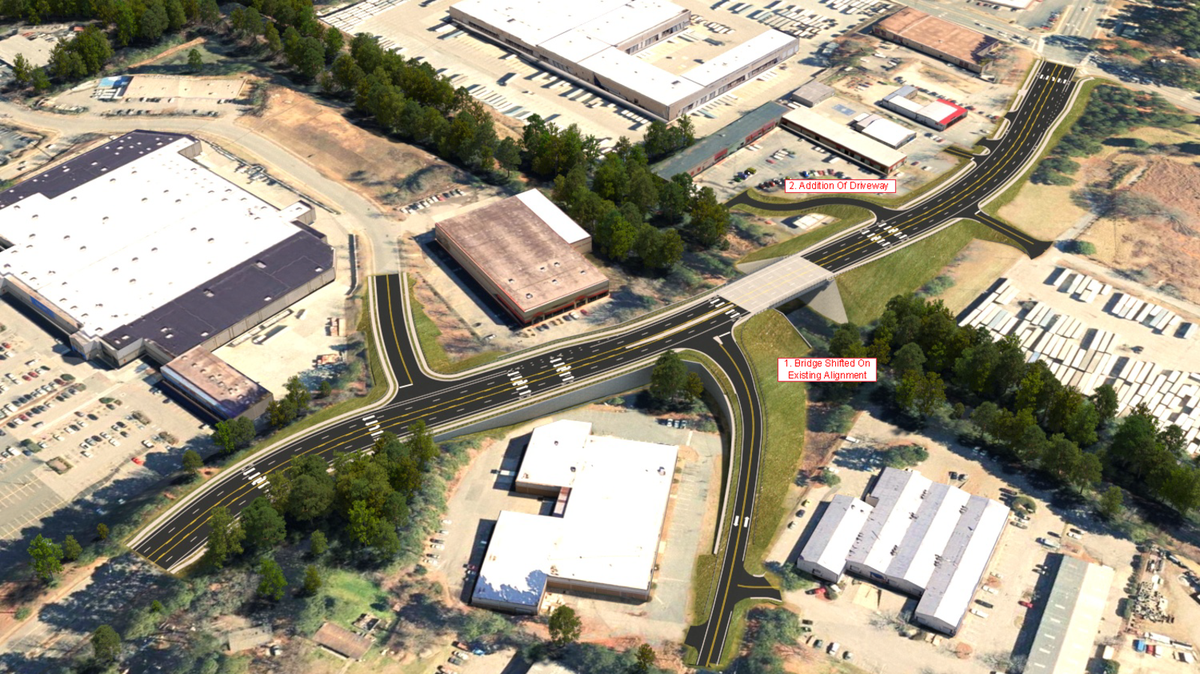
The $22.7 million bridge at New Hope Church Road is part of a broader effort to make the railroad line more compatible with a city built for cars.
About 11,000 cars and trucks cross the tracks on New Hope Church each day, according to NCDOT. The handful of short, slow-moving freight trains that use the line pose limited traffic and safety problems.
But someday, several Amtrak trains a day will cross New Hope Church, as will faster-moving freight trains, said Jason Orthner, director of NCDOT’s Rail Division.
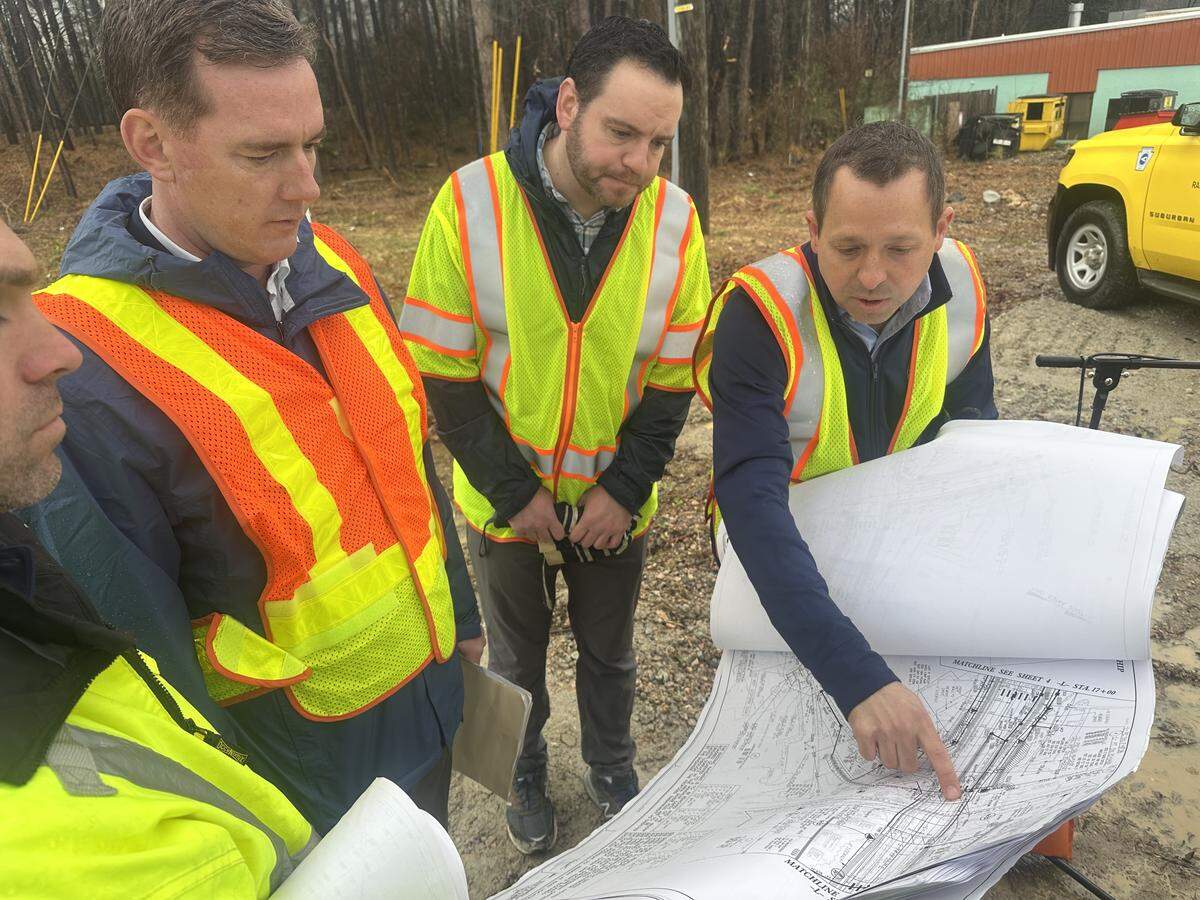
“So the goal of this project is to separate this roadway from the railroad to make sure that we don’t introduce new hazards,” Orthner told Feeley as they approached the crossing on foot Thursday.
The bridge, including a new elevated intersection with St. Albans Drive, will take about three years to complete. It will be built just north of the existing road, which will remain open during construction.
New Hope Church is one of four railroad crossings NCDOT plans to replace with bridges or underpasses between downtown Raleigh and Wake Forest. Work on the first, at Durant Road, got underway in the summer of 2024, while construction at Millbrook Road in Raleigh and Rogers Road in Wake Forest will begin in the next year or two, Orthner said.
The state will pay for the four grade-separation projects, as part of its contribution to the S-line project. Eliminating those crossings will provide safety and traffic benefits well before the passenger rail line is built, said Daniel Johnson, the state secretary of Transportation.
It’s not clear when Amtrak trains might begin using the line between Raleigh and Richmond. When they do, it’s expected to shorten the current train trip between the two cities by an hour and make riding the train to Washington, D.C., competitive timewise with driving, Johnson said.
“And I can say as someone who arrived on a trip back from D.C. last night on I-95 and sat in traffic on 95 with kids, I’m very eager to have improved rail service between Raleigh and D.C.,” he said.