
Cooper lays out plan to lower grocery costs, help farmers from Washington
AI-generated summary reviewed by our newsroom.
- Cooper launches statewide tour to promote lower costs and policy plans.
- Farmers and families cite tariffs, grocery mergers and rising grocery costs.
- Cooper contrasts his stance with Whatley's on tariffs and corporate influence.
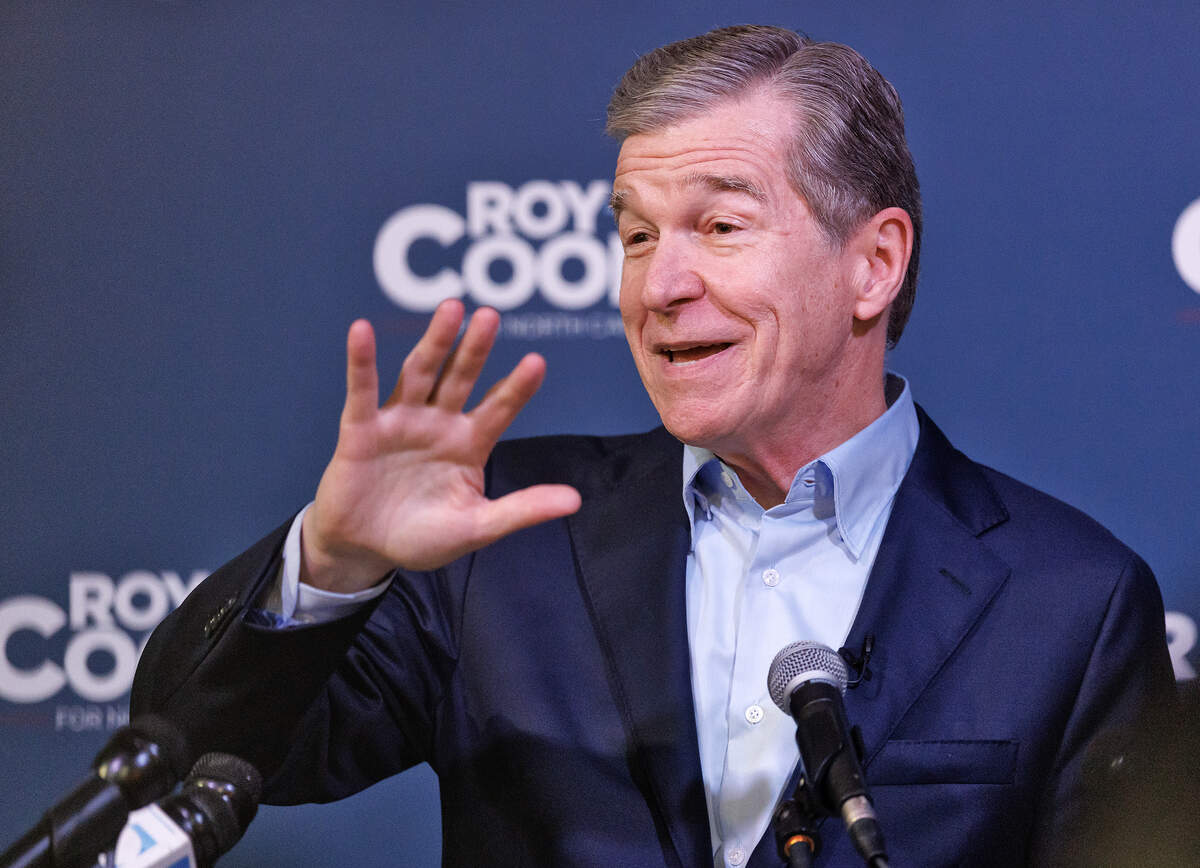
Former Gov. Roy Cooper held his first event Wednesday morning after winning the Democratic nomination for U.S. Senate and spoke on how he plans to spend his time in Congress lowering costs for average North Carolinians.
“I knew that I needed to run for this Senate seat because Washington, D.C., is broken, and North Carolinians are struggling because of that,” Cooper said.
The Associated Press declared Cooper the Democratic primary winner Tuesday night just 11 minutes after the first results were released. Unofficial results show he won 92% of the vote against five other candidates.
He will move on to face off against former Republican National Committee Chairman Michael Whatley, who also was declared the winner 11 minutes after results came out. Unofficial results show he won 65% of the vote against five opponents.
Neither Cooper nor Whatley let a day pass before they held their first events as candidates in the general election that will take place Nov. 3.
At Cooper’s event, a crowd of people gathered at Clouds Brewing in Raleigh to hear him speak about economic pressures affecting North Carolinians.
But first they heard from people actually affected by economic policies.
A farmer’s economy
Pender Sharp, a farmer from Wilson County, told Cooper’s supporters that tariffs were having a large impact on his farm. President Donald Trump has dramatically increased tariffs in his second term.
He said the cost of growing crops is now outpacing the income his crops bring in.
Sharp is a fifth-generation farmer on a property his family began working in 1905. His son just became the sixth generation to work on the farm.
“I’ve seen a lot of good times and a lot of bad times, just like all farmers have,” Sharp said. “We’ve had good prices, bad prices, droughts, floods and good weather years. But never in my history as a farmer have I seen so many wrong decisions coming out of Washington.”
Sharp said tariffs and trade wars harmed American agriculture.
“Here in North Carolina, everything’s getting more expensive, and it’s making it tougher and tougher to grow what we grow,” Sharp said, “and continue to do that and try to make a profit and feed this world. The federal government needs to do more for farmers and stop holding us hostage with chaotic, erratic tariff and economy policy,” Sharp said.
An educator’s economy
Stephanie Walker, of Raleigh, is one of the consumers harmed by rising prices.
She is a mother of two and an educator, and came to speak about the impact the prices are having on her family.
“Right now, in Washington, they’re telling us that the American dream is still achievable, while simultaneously pricing us out of the middle class,” Walker said.
Walker’s husband has celiac disease, and her son has a dairy intolerance.
She said a trip to the grocery store once allowed her to pick up essentials and her son’s favorite snacks. Now, she said it’s daunting, especially with specialty items her family needs.
“This has led me to sit down and go through grocery store apps, clipping coupons and trying to make sure that I get the best price for the things my family has to have,” Walker said.
Her 11-month-old daughter just developed a love for strawberries.
“I know that kids need fresh foods to have a nutritious diet,” Walker said. “This leaves me and my husband at making decisions of what we buy. I’m making meticulous lists and looking at trade-offs, where I make the food for myself and my husband go further. We eat more canned goods so that our children can have fresh foods.”
She said she shops at multiple grocery stores to make ends meet.
“What I can’t wrap my head around is, how is my receipt getting smaller, but the price tag is continuing to get bigger?” Walker said. “It doesn’t have to be this way, and it used to not be this way.”
Both Sharp and Walker spoke about their faith in Cooper, over his opponent, former Republican National Committee chairman Michael Whatley, to help their families.
“We need to make a change, instead of D.C. insiders, like Michael Whatley, who are going to help themselves and big corporations get rich,” Walker said. “Us in North Carolina, deserve a leader that is going to fight for us in the U.S. Senate, and I know that that leader is Gov. Roy Cooper.”
Cooper’s plan
Cooper told the crowd he would be traveling the state beginning Wednesday to talk to North Carolinians about how to “Make Stuff Cost Less,” the name of his tour.
“You’re going to hear a plan about how we’re going to help drive down the cost of health care, of utilities, of housing and of child care,” Cooper said.
And on Wednesday he was there to present his plan on groceries.
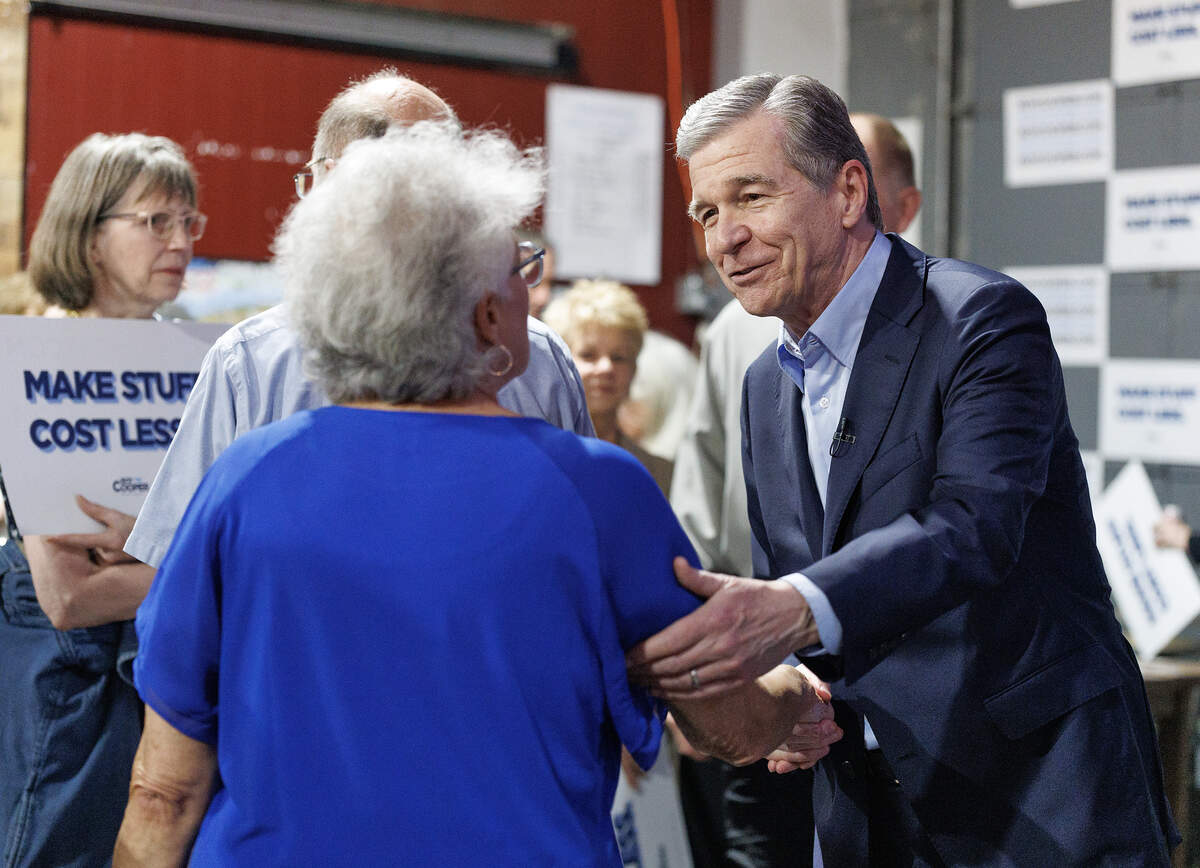
Cooper promised to work in Washington to roll back tariffs.
“The United States Supreme Court was clear that the constitutional authority on trade and tariffs rest with Congress,” Cooper said. “I will vote to roll back the tariffs. Michael Whatley won’t.”
Whatley hasn’t been specific on tariff policies but has supported Trump’s economic agenda.
“How out of touch is Michael Whatley?” Cooper asked the crowd, before answering his own question. “You’ve heard about prices going up. Well, Michael Whatley says that prices are going down.”
Cooper said he would also fight against the unfair merger of grocery chains that allows the companies to raise prices on the consumer. He also promised to stop companies from using personal data, like knowing a child has allergies, to determine the cost you’ll pay for groceries, which he said happens most often online.
“I’m ready to go to Washington to be an independent voice for North Carolina, focused on the issues that really matter to people, supporting good paying jobs, making health care more affordable, and guess what, making stuff cost less,” Cooper said. “I’ve got a track record of being able to put party aside to lower cost and get results for everyday people.”
This story was originally published March 4, 2026 at 3:08 PM.
