You may qualify for property tax relief in the Triangle. Here’s how
AI-generated summary reviewed by our newsroom.
- Three programs cover some seniors, disabled homeowners and disabled veterans.
- Programs differ: income cap and other stipulations apply.
- County offices provide various methods to ask questions and apply.
As some lawmakers consider asking voters whether to cap property taxes, North Carolina has three property tax relief programs that could save Triangle residents money on their tax bills now.
State House leaders propose a Constitutional amendment that could appear before voters this fall giving the General Assembly instructions to pass “laws limiting the amount by which the levy of taxes on property may increase,” The News & Observer previously reported.
Property taxes in North Carolina
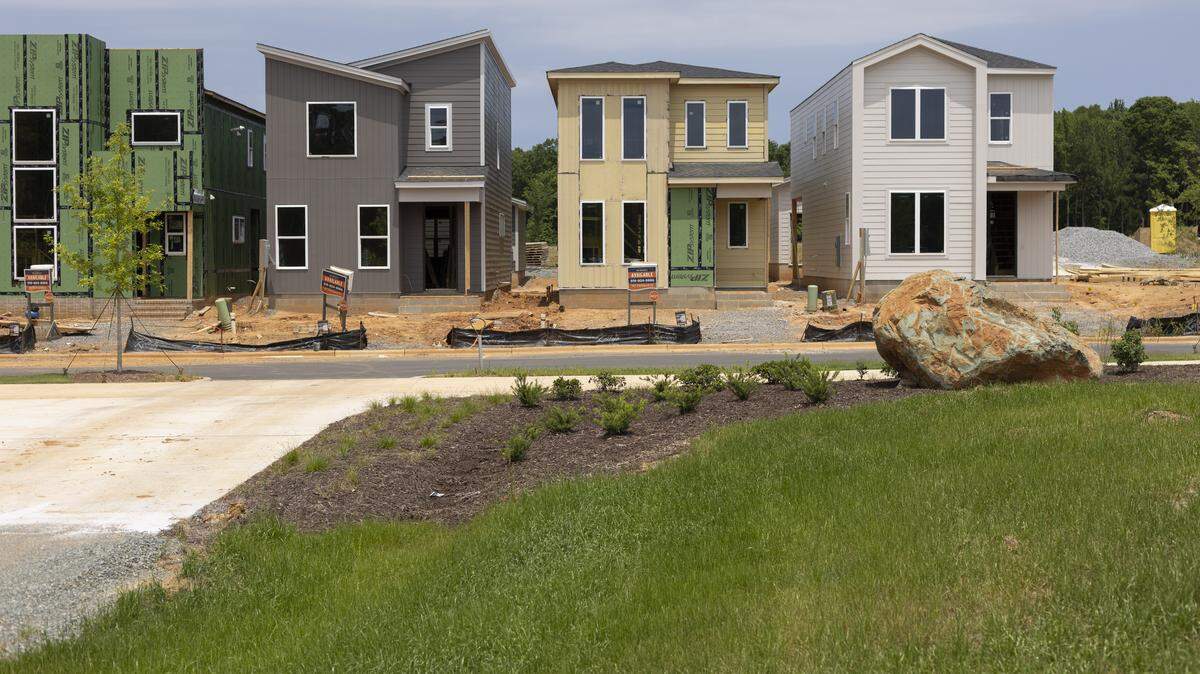
Property taxes are the primary source of income for local governments, helping pay for local roads, schools, social services, police, fire and parks, among other government functions.
In 2025, property taxes made up 54% of Raleigh’s budget and 50% in Durham’s budget, according to budget documents.
Local municipal and county governing boards set the property tax rate determining how much homeowners and property owners pay. Recent property revaluations increased home values putting additional financial strain on some residents.
In 2025, property values increased 71% in Durham County, and Wake County will start revaluating property on a two-year cycle to help homeowners’ avoid property-tax “sticker shock,” The N&O previously reported.
North Carolina’s property tax relief programs
There are three property tax relief programs in the state for low-income seniors and disabled homeowners, and for disabled veterans or their unmarried surviving spouses, according to state law:
Disabled Veteran Exclusion: Applicants must be a veteran discharged under honorable conditions or their unmarried surviving spouse. There is no age or income limitation for this program, and is a one-time application. This program excludes the first $45,000 of the appraised value of the home of the veteran or their spouse.
Elderly or Disabled Homestead Exclusion: Applicants must be 65 years or older or “totally and permanently disabled” as of Jan. 1. Gross income for 2025 for both the applicant and your spouse can’t exceed $38,800. Unmarried, joint property owners have to apply separately, but this is a one-time application. This program excludes from taxation the first $25,000 or up to 50% (whichever is greater) of the home value.
Circuit Breaker Tax Deferment: This program will put a lien on your home. All property owners must agree and have owned and lived in the home the last five years. Applicants must be 65 years or older or “totally and permanently disabled” as of Jan. 1. Taxes from the last three years of being in the program must be repaid if the owner dies. Homeowners must apply for this program every year.
The deadline to apply is Monday, June 1, and people can select one program even if they qualify for multiple programs.
How to apply in Triangle counties
- Wake County: People can submit applications online at wake.gov/tax/programs, by calling 919-856-5400 (Option 4), emailing taxhelp@wake.gov, mailing it to P.O Box 2331, Raleigh, NC, 27603 or in person at Wake County Tax Administration, 301 S. McDowell St., Suite 3800, Raleigh, 27601. More information can be found online.
- Durham County: People can request applications by calling 919-560-0300, emailing taxlandrecords@dconc.gov or in person at the Durham County Tax Administration, 210 E. Main St., 3rd Floor, Durham, NC, 27701. More information can be found online.
- Orange County: People can submit applications by calling 919-245-2100 (Option 2), emailing taxrelief@orangecountync.gov or in person at the Orange County Tax Administration, 228 S. Churton St., Suite 200, Hillsborough, NC, 27278. More information can be found online.
- Johnston County: People can submit applications by calling 919-989-5130, and more information can be found online.
- Chatham County: People can submit or request applications by calling 919-542-8350, emailing tax.listing@chathamcountync.gov, mailing it to Chatham County Tax Assessor, Attention: Property Tax Relief, PO Box 908, Pittsboro, NC, 27312, or in person at 12 East St., Pittsboro, NC, 27312. More information can be found online.
Reporter Dawn Baumgartner Vaughan contributed to this article.