
Democrats in Congress fail to force Iran withdrawal. How did NC’s members vote?
AI-generated summary reviewed by our newsroom.
- House failed 213-214 to remove U.S. forces from hostilities against Iran this week.
- Senate voted 47-52 to stop President Trump from ordering further strikes on Iran.
- North Carolina delegation voted along party lines on the Iran War Powers votes.
House and Senate Democrats failed to pass measures this week that would have required President Donald Trump to cease military action in Iran.
On Thursday, the House of Representatives voted 213-214 against removing the United States from hostilities against Iran. One member, Rep. Warren Davidson, a Republican from Ohio, voted present.
A day earlier, the Senate voted 47-52 against stopping Trump from ordering further strikes on the country.
A recent poll by Quinnipiac University found the majority of voters — 58% — disapprove of Trump’s handling of Iran. Thirty-six percent approved.
Republicans in Congress sided with Trump during the two votes, and members of North Carolina’s congressional delegation voted along party lines.
“Today, I proudly voted again in favor of a War Powers Resolution to stop Trump’s military action against Iran,” said Rep. Valerie Foushee, a Democrat from Hillsborough, in a social media post. “Until this bill is passed by Congress, I will continue to fight for its passage in order to protect service members and innocent lives abroad.”
Thirteen Americans soldiers died as a result of the war that’s also injured hundreds and killed thousands of civilians.
The Trump administration has offered several differing reasons for why it launched the attacks on Iran to begin with. Those have included Iran posing an imminent threat, the need to disarm Iran’s nuclear-weapon capabilities and Iran’s ballistic missles.
On Thursday, House members arguing against the bill said Trump’s focus is on a regime change, Iran’s nuclear program and removal of its proxies.
Opponents of the war say Trump led the United States into an open-ended and undefined military engagement without a coherent strategy.
And some Republicans signaled that that might sway their votes once the war reaches the 60-day mark.
The war in Iran began Feb. 28 as Trump and Israeli leaders worked together to launch air strikes against the country.
Trump did not seek congressional approval before engaging in war. Under the War Powers Resolution of 1973, a president can launch an attack on another country for 60 days before needing congressional approval.
There are differing opinions on the exact date of Trump’s deadline, because he waited two days to notify Congress he took action in Iran, but most believe it is May 1, Time Magazine reports.
If Congress does not extend the war, Trump can seek a one-time 30-day extension to safely withdraw troops.
Sen. Thom Tillis, a Republican from Huntersville, has shown support for Trump’s actions in Iran. In June 2025, he told CNN that Iran needs a regime change, and he thinks Trump should be given leeway to “effect that.”
But this week, Tillis told NBC News that he’s still waiting for a coherent explanation for the war.
”Sixty days is important with respect to the War Powers Resolution, and I’m not quite clear what the strategic objectives are,” Tillis told NBC News, before adding that getting his support beyond 60 days would be “difficult.”
Tillis can be an outspoken critic of the Trump administration, though he’s careful not to blame the president directly. But he did say Trump went too far in threatening to kill 90,000 people in Iran if Iran leaders failed to reopen the Strait of Hormuz by 8 p.m. on April 7. The Strait of Hormuz serves as a major trade route for oil and natural gas.
Iran closed the strait after the war began.
Quinnipiac found that 64% of voters agree that that threat was unacceptable.
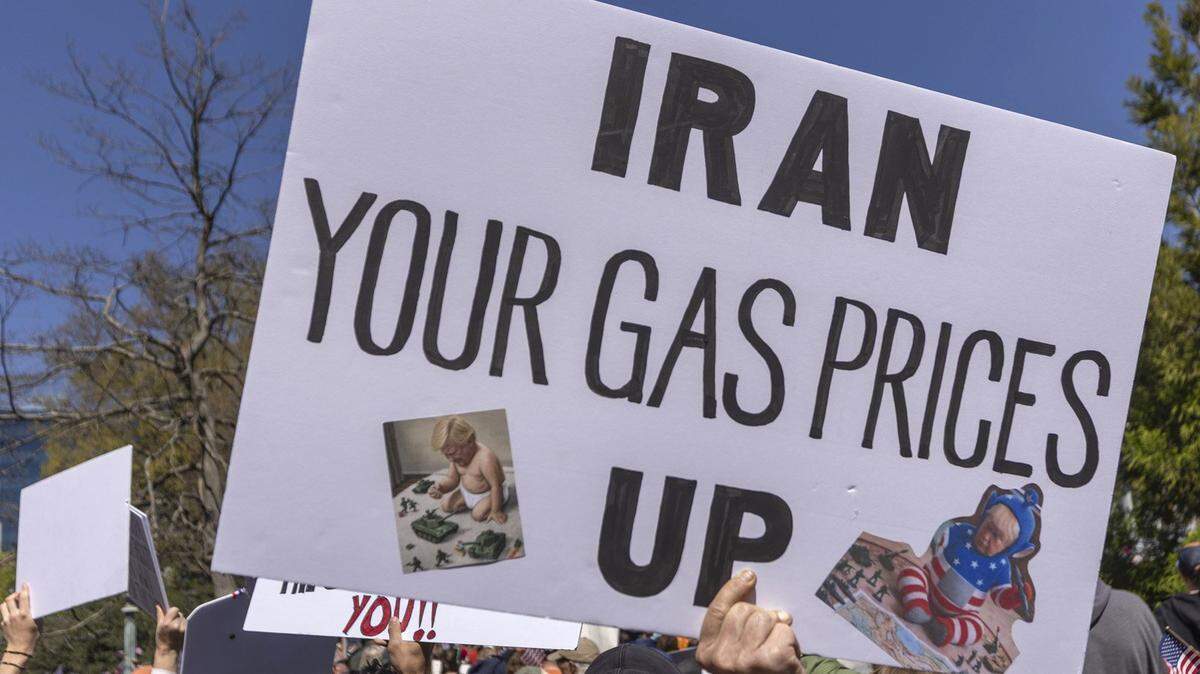
Since then, gas prices have soared around the world. In the United States, the average gas price rose from $2.98 to $4.11 a gallon.
Ninety-seven percent of those same voters blame Trump for the rising gas prices.
Just before Trump’s deadline, he entered a two-week ceasefire with Iran.
On Thursday, just after the House vote, Trump also announced a 10-day ceasefire between Israel and Lebanon. Attacks on Lebanon have been a sticking point between Iran and the United States in continuing the ceasefire.
How did they vote:
Sen. Ted Budd: No
Sen. Thom Tillis: No
Rep. Alma Adams: Yes
Rep. Don Davis: Yes
Rep. Chuck Edwards: No
Rep. Valerie Foushee: Yes
Rep. Virginia Foxx: No
Rep. Pat Harrigan: No
Rep. Mark Harris: No
Rep. Richard Hudson: No
Rep. Brad Knott: No
Rep. Addison McDowell: No
Rep. Tim Moore: No
Rep. Greg Murphy: No
Rep. Deborah Ross: Yes
Rep. David Rouzer: No
This story was originally published April 16, 2026 at 3:40 PM.
