NC lawmakers announce deal to provide Medicaid funding on their first day back
AI-generated summary reviewed by our newsroom.
- North Carolina lawmakers reached a deal to provide Medicaid funding.
- Both the House and Senate appeared poised to take action on Medicaid.
- Lawmakers were set to pass funding measures at the start of this year’s session.
On the first day of this year’s session, North Carolina House and Senate lawmakers appear poised to take action to provide funding for Medicaid.
This follows a months-long standoff over the funding dating back to summer between the Republican-led House and Senate and the Democratic governor’s administration.
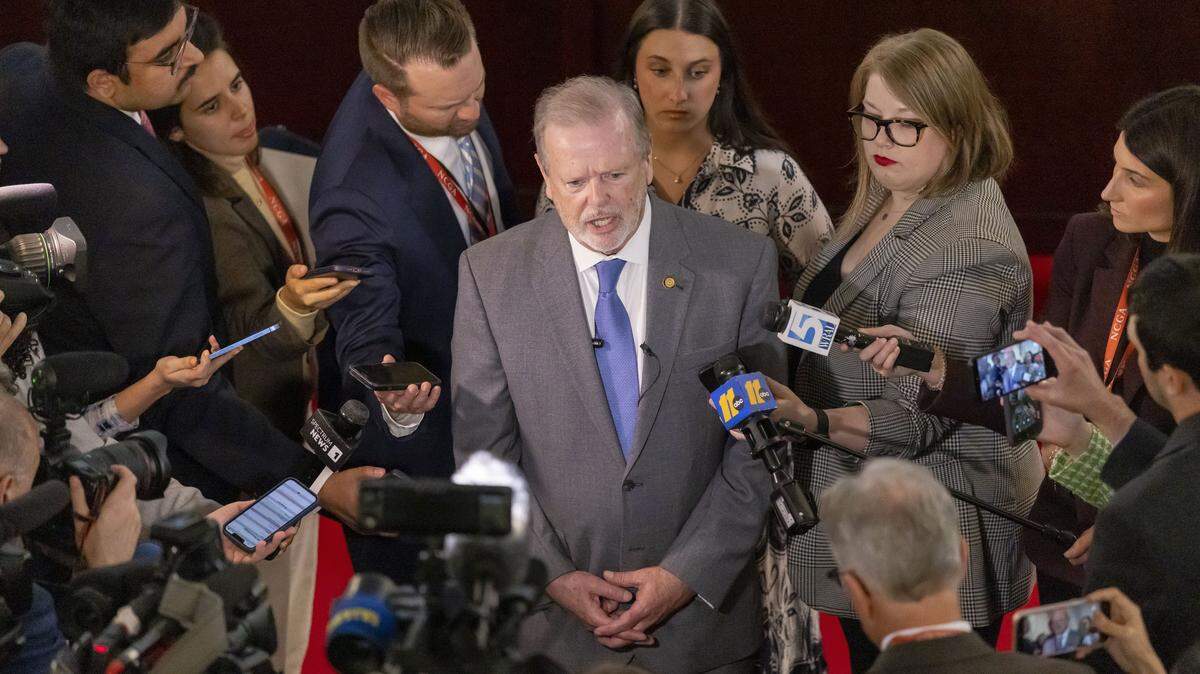
Behind the scenes before the year’s short session began, House and Senate Republicans had been negotiating. And House Speaker Destin Hall and Senate leader Phil Berger confirmed Tuesday that legislative leaders have reached a deal.
A bill, which has not yet been released, would provide $319 million more in funding to the program to finish out the fiscal year that ends in June, Hall and Berger told reporters after their chambers met. That is the full funding the state’s health and human services department requested last year to cover a shortfall.
House votes are expected on the bill Wednesday, Hall said.
The bill does not include additional funding for a children’s hospital system being developed by UNC Health and Duke Health, said Hall and Berger. That had been a Senate priority last year and part of the trouble in reaching an agreement. Berger said negotiations on that would continue in budget talks.
It also includes provisions to cut “waste, fraud and abuse,” said Hall. That includes modifications to the Medicaid renewal process, as well as a provision for the state auditor to do an audit of the Medicaid program, he said.
There’s a “a whole host of other things (in the bill) but largely revolving around getting our hands around the cost, because the way that the costs have increased under Medicaid, really over the course of time, but especially the last year or two years, it’s just not sustainable,” Hall said. Berger said the bill “hopefully will begin the process of trying to put some sort of constraints on how quickly Medicaid is growing.”
He noted that the bill would not add funding for people covered under Medicaid expansion, which is paid 90% by the federal government and the remaining 10% via hospital taxes, which are later indirectly reimbursed by the federal government.
What about the bigger budget deadlock?
As for a budget deal, “some progress has been made“ between the House and Senate, Hall said. He said that Medicaid, for example, had “been tied up a lot” in budget debates.
During last year’s legislative session, which ran from January through late October, the House and Senate failed to reach an agreement not only on Medicaid funding but also on the broader state budget, which had been due in June.
Disputes centered largely on how much revenue should trigger future tax cuts, as well as differing funding priorities between the chambers, such as for a new children’s hospital and employee raises.
The origins of the Medicaid shortfall
The Medicaid funding shortfall issue became acute in August, when Department of Health and Human Services Secretary Devdutta Sangvai told legislative leaders in a letter that the $600 million in Medicaid funding previously provided by lawmakers would fall $319 million short of projected needs for Medicaid services and payments to providers through June 2026. There are over 3 million people on Medicaid in North Carolina.
As a result, he wrote, DHHS would implement across-the-board cuts to provider reimbursement rates beginning Oct. 1, ranging from 3% to 10%. The agency also moved to end Medicaid coverage for GLP-1 medications such as Wegovy, used for obesity and weight loss.
Although DHHS implemented the cuts, additional funding from lawmakers did not materialize.
Republican leaders at the time said they agreed that more funding was necessary but disputed the $319 million estimate, citing lower projections from the General Assembly’s Fiscal Research Division. Leadership also said that the timing and scope of the cuts were politically motivated.
While both chambers advanced legislation that would have provided more funding last year, the internal disagreements between them over broader policy issues led to none of the bills crossing the finish line.
Gov. Josh Stein repeatedly urged lawmakers to approve additional funding, including calling for a special session. He also said the GOP-led General Assembly was politicizing the issue.
In December, Stein announced DHHS would reverse the cuts following a wave of lawsuits from patients and health care providers.
Since then, lawmakers have questioned DHHS officials at hearings over the funding request and increased health care costs, as well as how fraud is uncovered and money recouped.
Stein optimistic about deal
On Tuesday morning, Stein told The News & Observer during a news conference that he heard “that there seems to be progress on reaching an agreement on fully funding Medicaid, and I hope it happens immediately. It needs to happen immediately.”
“So let’s do that, and then let’s work together to do what we can as a state to try to keep health care costs down,” he said.
Stein said North Carolina is a “high-cost health care state” beyond Medicaid, and leaders “have to tackle this issue of health care inflation, doing what they call bending the cost curve so it doesn’t rise so fast and starts to rise slower. And obviously we would love it if it just stayed stable year to year.
“So we’ve got a lot of work to do in health care,” Stein said, ”and I’m eager to partner with the General Assembly to tackle that issue.”
This story was originally published April 21, 2026 at 2:38 PM.