
NC audit flags oversight gaps in State Bar legal aid program
AI-generated summary reviewed by our newsroom.
- A state audit found NC IOLTA didn’t verify whether $30.3M in grants were used properly.
- NC audit found the State Bar’s IOLTA program relied on self-reported outcomes for grants.
- NC IOLTA doesn’t have any information about the future of their frozen funding.
As millions more dollars flowed into a North Carolina State Bar program that pays for legal services for low-income residents, officials lacked measures to make sure the money was being used properly, a new report by the state auditor has found.
Auditor Dave Boliek, a Republican, reported on Tuesday that the review found no evidence of misspending by the program known as the Interest on Lawyers’ Trust Accounts, or IOLTA. But the program’s reliance on self-reported outcomes by grantees increased the risk of misuse, the auditor found.
“Because IOLTA did not independently verify reported expenditures or outcomes, the program lacked reasonable assurance that grantees spent approximately $30.3 million in grant funds,” properly, the audit report states. The grants were awarded between 2023 and 2025.
Similar weaknesses were identified during an audit in 2013, the audit report states. While the North Carolina State Bar promised to make improvements at the time, the issue remained.
What is NC IOLTA?
IOLTA is a program of the North Carolina State Bar, which regulates attorneys in the state. The program is one of many across the nation that collect interest earned on attorneys’ bank accounts holding clients’ money. It uses the earned interest to pay for staff and offer grants to organizations that provide civil legal services to low-income individuals.
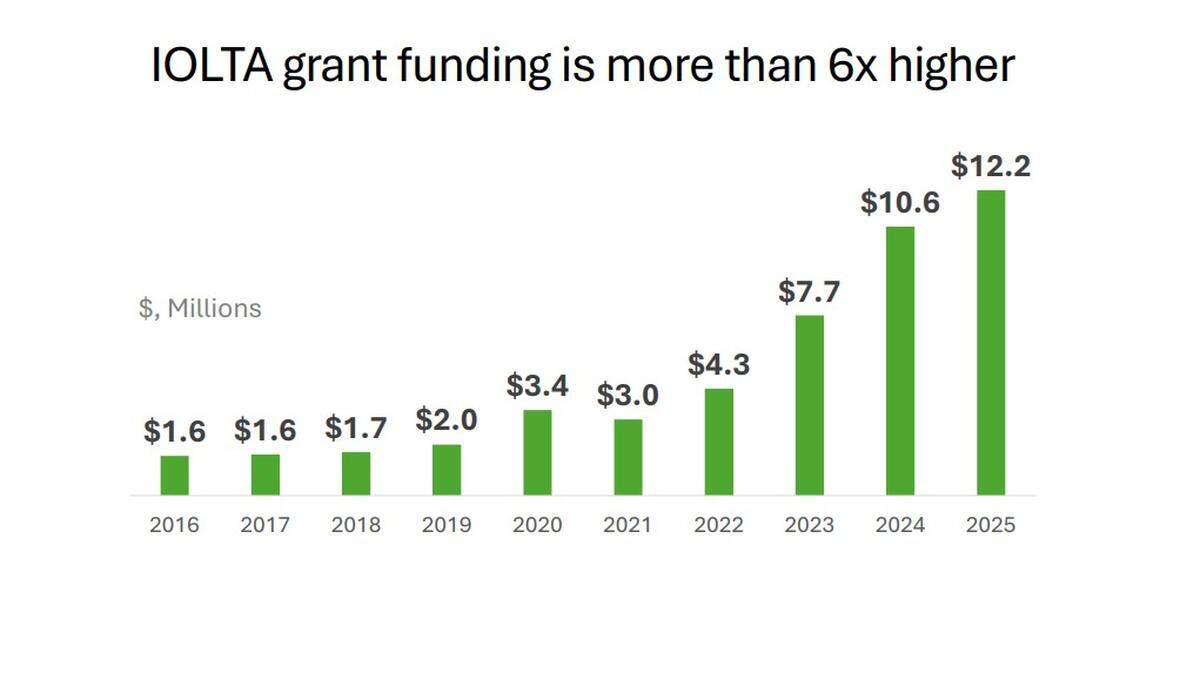
In 2025, IOLTA gave about $12 million in grants to a network of about 40 organizations that provide legal services across the state. Those grants helped individuals navigate the legal system to address housing, immigration, domestic violence and other issues.
The grants were halted last year after the General Assembly suspended IOLTA’s grant-making process from July 1, 2025, to June 30, 2026.
The pause allowed some Republican legislators to investigate how IOLTA’s board and grantees are selected, Rep. Henry Warren, a Salisbury Republican, said at an October House Select Committee on Oversight and Reform hearing.
At the meeting, other Republican state leaders expressed concern about whether grants given to national organizations were being spent on North Carolinians. They also expressed concern about whether grantees were using IOLTA money to support left-leaning lobbying and campaigns.
Boliek reported that the IOLTA grant process complied with regulations requiring that grant money go to people in the state and that it isn’t used for partisan lobbying or campaigns.
The funding freeze hit IOLTA recipients hard. Legal Aid of North Carolina lost about 15% of its funding, resulting in the elimination of 45 positions and the closure of nine offices. One office in Goldsboro has since reopened after Wayne County offered space for $1 a year.
Mary Irvine, NC IOLTA’s executive director, told The News & Observer that she hasn’t been given any information on next steps for restoring the funding, but she hopes that changes following the audit would encourage the General Assembly to unfreeze the funds.
What the audit found
From 2018 to 2024, the program’s earnings increased from $3 million to $16.7 million due to higher real estate sales and increasing interest rates, the audit report states.
The audit found that although IOLTA required grantees to include measurable goals in their applications, four of the 16 grant applications reviewed failed to do so.
“Outcome-based goals are essential for effective grant oversight because they translate funded activities into observable results,” the audit said.
The audit also found that staff didn’t verify outcomes and other information provided by grantees.
“Staff did not test expenditures against supporting documentation, corroborate reported activities or results, or conduct compliance-focused site visits,” the audit states.
In response to the findings, Peter Bolac, executive director of the North Carolina State Bar, said in a letter to the state auditor that the IOLTA program now asks grantees to provide more information about measurable client outcomes.
The IOLTA program currently requires independent audits for all grantees that receive more than $100,000s. But officials plan to increase monitoring by requiring those grantees to provide separate audit reports that test internal controls and compliance with IOLTA grant restrictions, the letter states.
For grantees whose funding falls below $100,000, the program plans to implement compliance testing during regular site visits to verify the accuracy of grantee reports, Bolac said.
“We believe these initiatives, taken as a whole, are responsive and adequate to meet the concerns identified in the audit report,” his letter states.
This story was originally published April 23, 2026 at 5:30 AM.