How the public can — and can’t — be part of how NC decides to spend your money
AI-generated summary reviewed by our newsroom.
- Leaders are targeting the week of June 15 for a conference report budget vote.
- Conference reports can't be amended and are voted on with aye or nay only.
- Republicans chair top budget panels, giving them major control over the bill.
North Carolina lawmakers have gotten back on track to pass a new state budget this year, something they failed to do in 2025.
Top Republicans have a deal on the amount of raises and future tax cuts, but all the rest of the budget is still in the works. With no deadline by law, the current goal is the week of June 15.
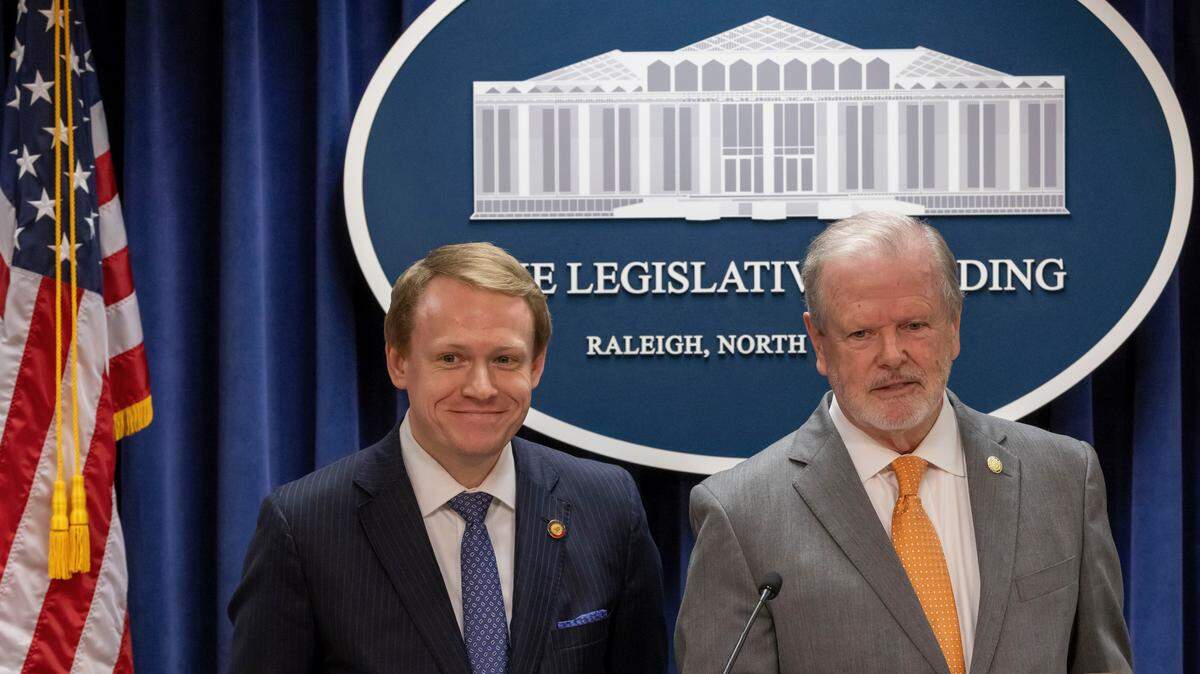
They’ll be deciding how to spend more than $30 billion of money earned by North Carolinians and taxed by government. House Speaker Destin Hall and Senate leader Phil Berger will be the ones making the final call on what’s in the budget, in meetings not open to the public.
Here’s how the public can — and can’t — have a say in how our tax money is spent.
Final budget bill won’t allow amendments
The budget bill this year will be a “conference report,” which is the final version of a bill that is negotiated behind closed doors. It can’t be amended. In other words, once the document is out, that’s the only version lawmakers can vote on. And votes are just “aye” or “nay.”
Usually a conference report happens after each chamber passes its own version of the bill. And in 2025, each chamber did pass its own version of the budget. But that was almost a year ago.
Conference reports have become the choice of late by Berger and Hall, as well as Hall’s longtime predecessor Tim Moore. That means the final say comes from Berger and Hall. The bill does go through a few committees, including Appropriations, but no changes can be made to it. Then it goes to the floor, where no changes are allowed, either.
That’s not how Senate Minority Leader Sydney Batch would do it, she said. Batch, an Apex Democrat, said Democrats are completely shut out of the process.
“The transparency is the equivalent of a black hole,” Batch said Wednesday when The News & Observer asked her about transparency in the budget.
“Nobody else that has been at the table knows what’s in it. I actually don’t even know that their own respective caucus members, who aren’t in leadership, know what’s in the deal. Berger said himself yesterday that it’s a framework of an idea, of a construct of something that we may or may not have at some point,” she said.
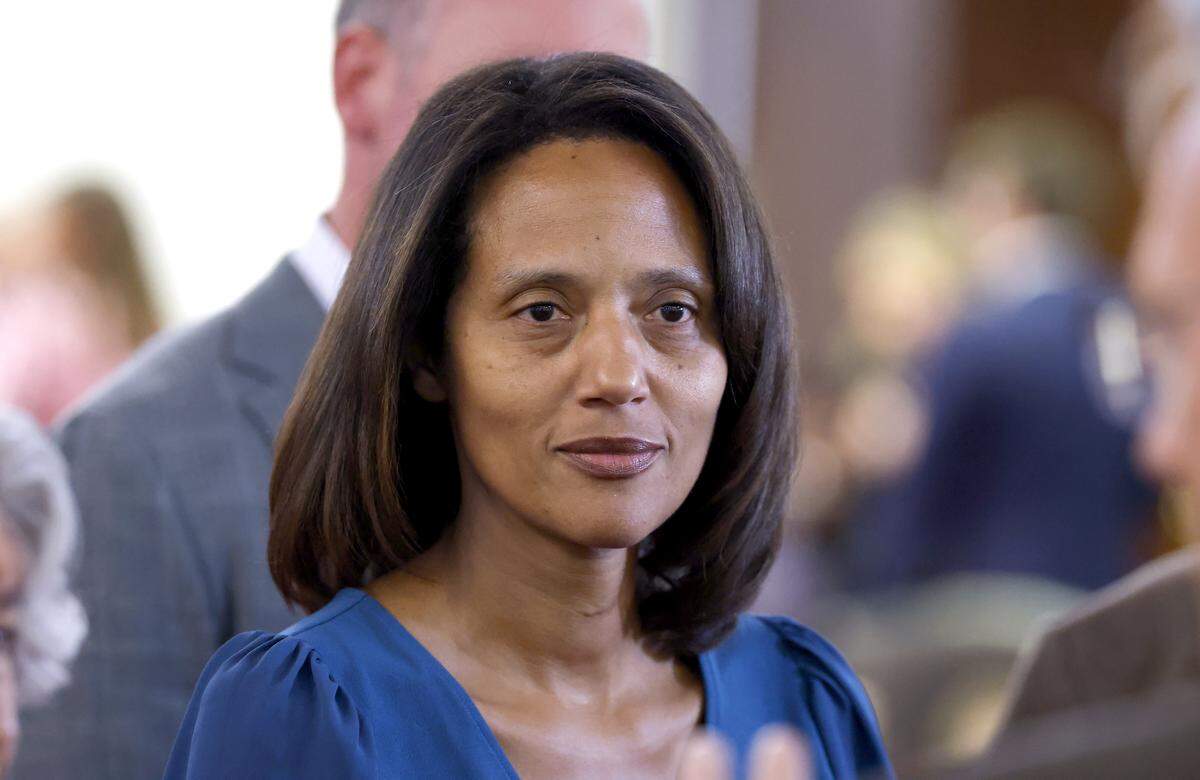
Batch noted that the budget is already a year late, so “we have time now to allow for the public to at least see a draft of the budget.”
“Even if I hear from the public about concerns, which I have already heard from constituents ... they don’t have any ability to influence how their tax dollars get spent,” she said. Batch would also prefer to give the public more time to comment on bills rather than fast-tracking them and taking final votes a few days after the bill is revealed.
Democrats are in a superminority in the Senate, which is 30-20 in favor of the GOP.
Because Republicans control the General Assembly, they choose who chairs committees, and top budget committee chairs are all Republicans. So those lawmakers will make the final decision about what goes in the bill, and what’s left out.
“At this point, the full chairs are meeting to iron out targets for each of the subcommittees,” Berger said. “At some point, there will be things that there’s either not agreement on, or things that are still left to be done that the speaker and I will have to get together to try to help facilitate getting those things resolved.”
Berger also confirmed that while there will be a joint process between the chambers on the bill, the bill will be subject to debate, but not amendments.
How Gov. Stein, other Democrats are, and aren’t, involved
At that point Republicans and Democrats have the choice to either vote for or against the bill. You’d be hard-pressed to find a lawmaker who likes every provision in every bill they vote for, so some lawmakers may criticize the bill they ultimately go on to approve because they like enough of it.
A budget tends to contain many popular changes, like raises, that make the overall bill hard for some lawmakers to oppose. That’s one reason leaders tend to add policy provisions to the bill that might not be able to pass on their own.
Once the bill passes, it is sent to Democratic Gov. Josh Stein, who has 10 days to take action. He can sign it into law, veto it or let it become law without his signature after the 10 days expire. If Stein vetoes the bill, then both the Senate and House would have to vote with a three-fifths majority to overturn the veto.
Republicans have that 60% in the Senate, if all Republicans vote together. But in the House, if every Republican vote is to override, they still need at least one other vote from Democrats or the two former Democrats who recently changed to unaffiliated. But that’s only if Stein vetoes it.
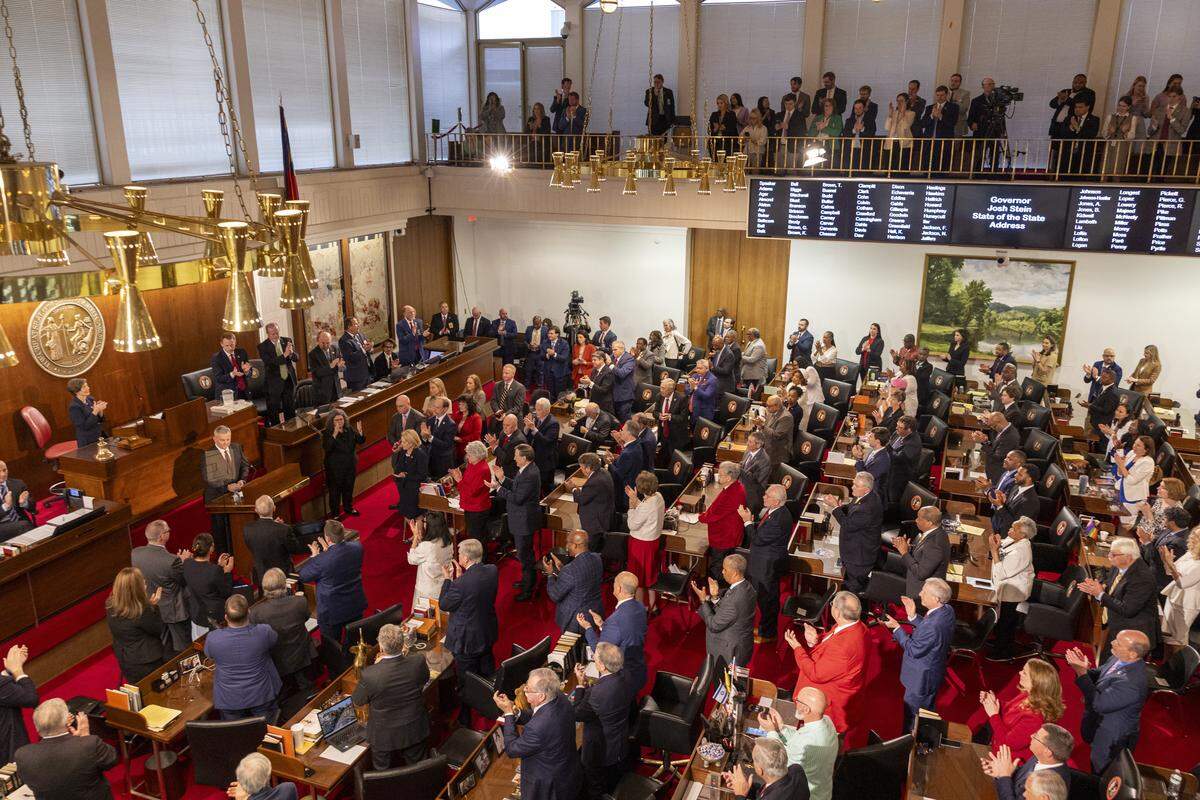
In 2019, there was no new budget either. That’s because former Democratic Gov. Roy Cooper vetoed it, and while the House voted to override the veto the Senate did not. Instead, other small spending bills were passed.
And like the last time this happened, a few small spending bills have passed, including funding Medicaid.
Two top House budget writers, Reps. Donny Lambeth and Dean Arp, told The N&O after the House session on Wednesday that Stein has been involved in recent budget discussions. They said they have met with the secretaries of Stein’s Cabinet agencies.
Stein presented his budget proposal earlier this spring.
Contact your lawmakers now
Lambeth, a Winston-Salem Republican, and Arp, a Monroe Republican, said they are hearing now from their constituents about the budget.
Lambeth said the conference report process is usually used during short-session budgets, in even-numbered years, when lawmakers are supposed to be making adjustments to the overall two-year spending plan passed in odd-numbered years. But there wasn’t one last year.
Arp said that Berger and Hall “determine the mechanism of the bill.”
Arp said the public can “certainly” weigh in now by contacting their lawmakers. There is also time for public comments when the conference report goes through Appropriations, Finance and Pensions committees the same week of final votes.
But there are still weeks to go, and there’s no bill yet.
Can anything derail the plan to vote the week of June 15?
“Of course,” Arp said, though they don’t expect it to, now that the major agreements are a done deal. Lambeth said policy disagreements could be one source of delay.
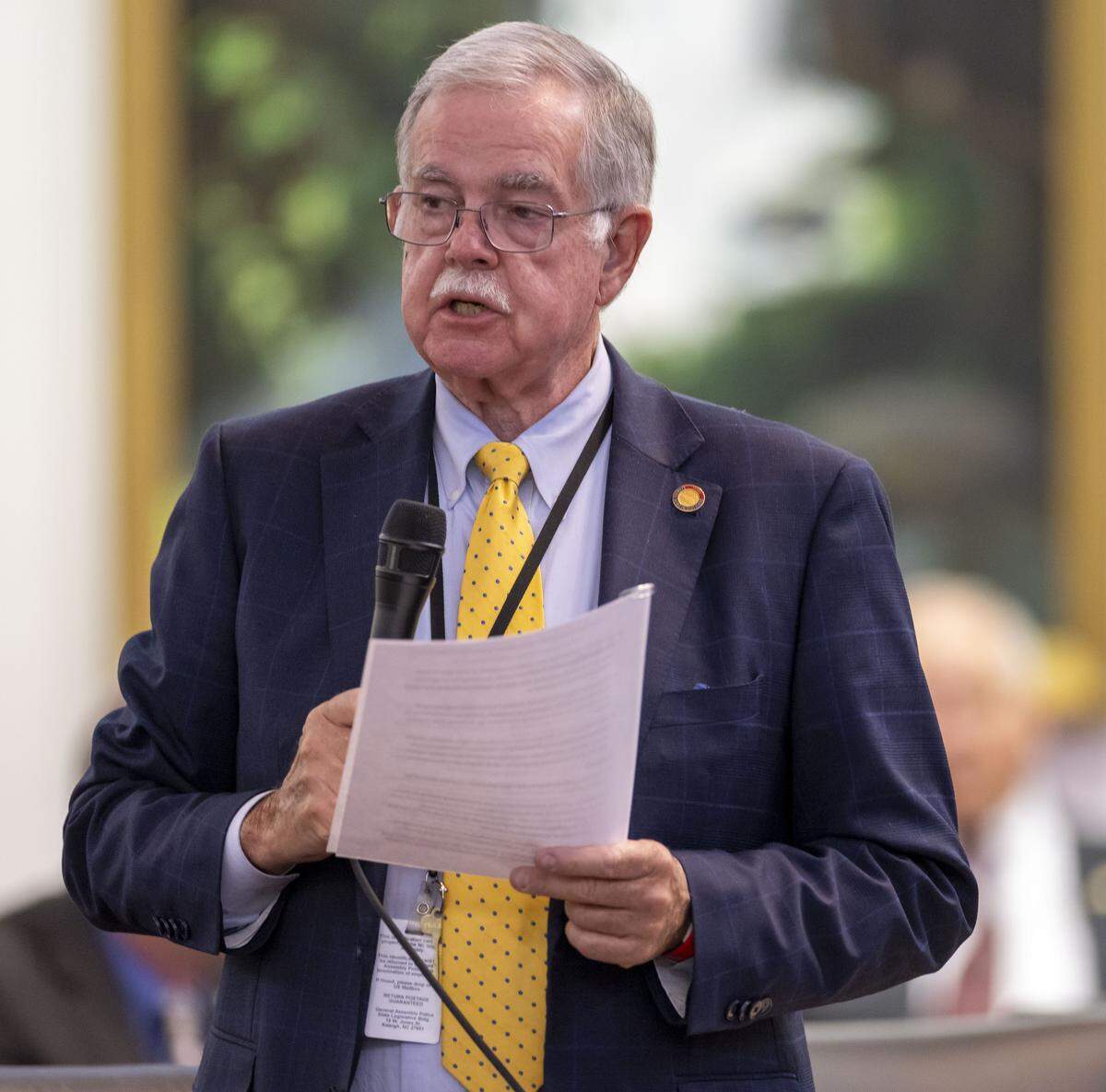
Lambeth said the day-to-day work now is for the top budget chairs to work out disagreements between the chambers and the political parties.
Lawmakers can talk to the budget chairs now about earmarks they are hoping will be funded in the final budget. And some of their requests are driven by the public asking for them.
The General Assembly website includes a full list of Appropriations/Budget chairs and committee members, which includes both parties and districts across the state, for the Senate and the House.
If you don’t know who represents you in the House and Senate, you can find out your district by looking up your voter registration on the State Board of Elections site.
This story was originally published May 14, 2026 at 4:14 PM.