NC Democrats divided over resolution that accuses Israel of genocide
AI-generated summary reviewed by our newsroom.
- A draft resolution labels Israel’s actions in Gaza as “genocide,” sowing division.
- The resolution calls for U.S. prosecution of genocide suspects under a 2007 law.
- The NC Democratic Party Jewish Caucus said the resolution caused tremendous division.
A draft resolution that calls Israel’s actions in Gaza “genocide” has sown division in the North Carolina Democratic Party, especially among some of its Jewish members, proving that disagreements over Israel continue to be a point of contention for the party.
The resolution, obtained by The News & Observer from the party’s Jewish Caucus, also calls for the prosecution in the United States of individuals and entities involved in genocide, regardless of citizenship status, in alignment with a 2007 federal law.
The Democratic Party votes on resolutions to establish the party’s stances on political issues and confirm the party’s platform. The North Carolina Democratic Party Jewish Caucus said the party’s top committee would meet on May 30 for a vote on the resolution.
Amy DeLoach, the caucus’s first vice president, said that she has already seen it cause “tremendous division.”
“It’s mind-boggling to us that we’re having to sit here and debate whether or not there’s a genocide when it clearly doesn’t meet the definition, which includes intent,” DeLoach said.
A commission formed by the U.N. Human Rights Council declared that Israel committed genocide in September 2025.
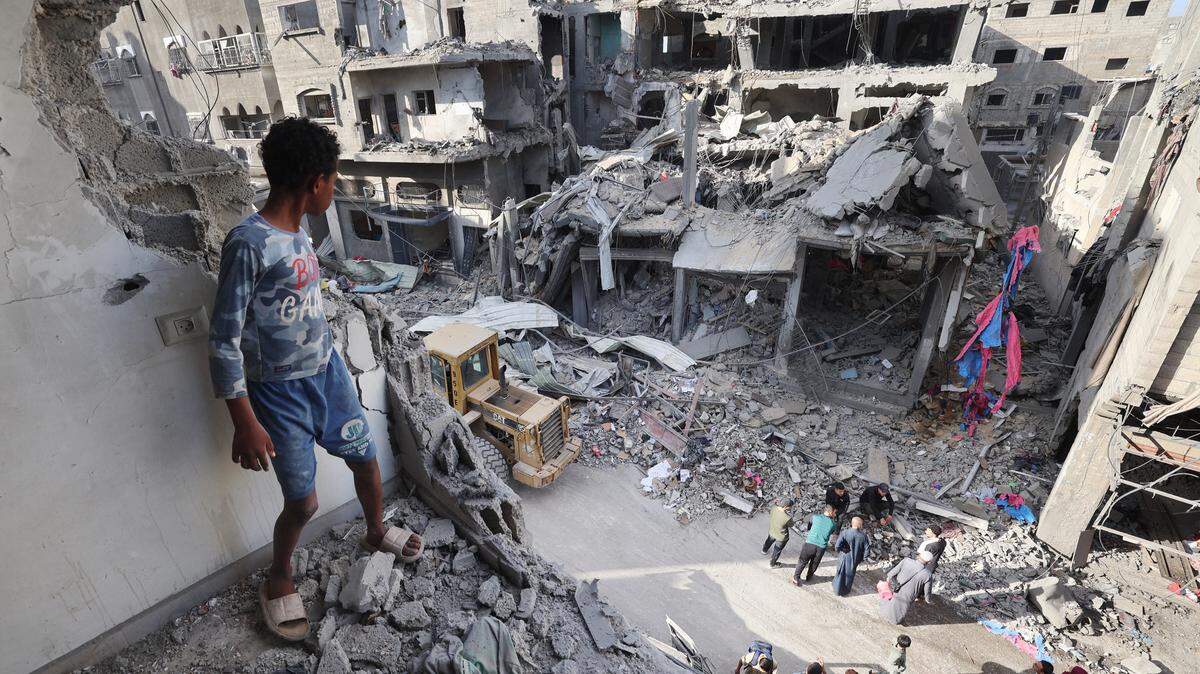
Hamas’ attack on Israel on Oct. 7, 2023 resulted in the death of 1,200 Israeli civilians and 240 hostages. As of late 2025, an estimated 1,600 Israelis have died, according to the United Nations Office for the Coordination of Humanitarian Affairs. As of this May, nearly 73,000 Palestinians have been killed in the war, including thousands of women and children, according to the U.N. Human Rights Office.
Tariq Shehadeh, who submitted the resolution, said it is the party’s job to speak against all forms of oppression. Shehadeh’s Palestinian background and focus on human rights encouraged him to author the resolution with the help of Mecklenburg County-based activist Nazim Uddin, he said.
“Enabling and supporting genocide does not do the party any favors,” said Shehadeh, who has leadership positions in both the party’s Progressive and Arab Caucuses. “The Democratic Party should not be a party that seeks to be silent or support the oppression of people in North Carolina or around the world.”
Anderson Clayton, North Carolina’s Democratic Party chair, did not respond for a request to comment.
DeLoach sits on the international subcommittee, the party’s second highest-ranked committee in the state.
“Our main job is to elect Democrats and we feel that it is extremely important to stay unified,” DeLoach said. “There has been an outrageous amount of time and hours spent on managing this resolution and this time could have been spent on just electing Democrats.”
The proposed resolution also insists that present and former military officials from countries who have been accused of committing genocide be vetted before entering any U.S. territory.
The Jewish Caucus’ main concern, DeLoach said, is that the resolution could allow any person who served in Israel’s military, the Israel Defense Forces, to be prosecuted. This is especially concerning, she said, because IDF service is mandatory for men and women, with some exemptions.
DeLoach said that the Democratic Party should focus on “bread and butter” issues because she believes that voters in North Carolina are more concerned with being able to support themselves and their families than with Israel.
Paul McAllister, chair of the party’s Interfaith Caucus, said that the Jewish Caucus’ efforts to publicize the resolution by sharing it with The N&O is an effort to gain leverage to kill the resolution. He said it is supposed to remain confidential.
“They want to defend something that is indefensible,” said McAllister, who is among the state party’s top leaders. “What is indefensible is the conduct of war against an armless people, a great many of whom are women and children. What can be defended is the need for Jews to feel protected ... and the existence of the state of Israel.”
One committee has already approved the resolution. Whether it will pass in the executive committee this week is up in the air, Shehadeh said.
Voting rules within the party determine how easily a resolution gets passed. Resolutions could pass on a simple majority or rules could change in various ways that would make it more difficult, like requiring a three-fourths majority.
Divisions within Democratic Party
Chris Cooper, a political scientist at Western Carolina University, said that the divisions among Democrats about Israel is “not a new wound” and has only intensified in the last few years.
“This is not the kind of issue where one side of this fracture has the vast majority of opinion, at least in the Democratic Party,” Cooper said.
Last year, the state party’s executive committee passed a resolution — over the objections of the Jewish caucus — calling for an end to U.S. support for the Israeli military in its war against Hamas.
Divisions over Israel are notably generational, Cooper said, with most younger Democrats supporting the Palestinian cause. The state’s Democratic Party has had a wave of young leaders in recent years. Clayton, the chair of the party, is 28 but was elected at 25 in 2023.
McAllister said that the generational divide is clear, but he’s noticed older Democrats creeping towards pro-Palestinian support. Shehadeh said that if the resolution doesn’t pass, the party could run the risk of alienating young Democratic voters.
DeLoach said that she worries that passing this resolution fuels harmful rhetoric that spurs antisemitism. When Israel is demonized by some Democrats — sometimes fairly, she added — it may cause Jewish people to leave the party, and take their donations with them, she said. DeLoach has witnessed several of her Jewish friends leave the Democratic Party over disputes about Israel.
Jewish people “have been there for other minorities that have faced challenges. You can depend on Jews to be there in a crisis, and we feel abandoned right now,” DeLoach said.
Stef Mendell, a Jewish retiree from Raleigh, left the Democratic Party last year and registered as unaffiliated. The lifelong Democrat and former city council member said that she wishes she didn’t feel obligated to leave. But previous party discussions condemning Israel pushed her away.
Now, Mendell only donates to Democratic candidates who support Israel and no longer donates to the Democratic Party itself.
Jewish voters unhappy with the Democratic Party in North Carolina could jeopardize the party’s success in the midterms in November. But Cooper said it’s unlikely that Jewish voters leaving the party would vote Republican.
McAllister worries that many Democrats, Jewish or not, may gravitate towards the Republican Party if Democrats don’t make their stance on Israel clear.
“If you have a divided message, then what are the voters hearing? They’re hearing so many different messages, they don’t know what to believe,” he said. “People will pursue order over chaos every time.”
Disputes over U.S. relations with Israel have caused disputes among Democrats in North Carolina in recent months. During primary elections this March, Rep. Valerie Foushee, a Democrat from Hillsborough, faced a tough battle against an anti-establishment opponent, Durham County Commissioner Nida Allam. Foushee, who won the election by less than 1,200 votes, faced criticism from progressives for accepting campaign funding from AIPAC, a pro-Israel public affairs committee, during her previous congressional campaign.
There’s been no shortage of controversy for the party on a national scale either. In August, Ken Martin, the Democratic National Committee chair, withdrew a successful resolution that he proposed that called for a two-state resolution, the release of Israeli hostages and an immediate ceasefire.
After much debate about dueling approaches to Israel, including an arms embargo and recognizing Palestinian statehood, Martin called on a task force to further debate the issue.
This story was originally published May 26, 2026 at 8:30 AM.
CORRECTION: A previous version of this article misstated the U.N.-affiliated group that declared Israel had committed genocide in 2025.