Tax cap would force NC to hike other taxes or limit raises, Gov. Josh Stein says
AI-generated summary reviewed by our newsroom.
- Stein called the proposed income tax cap a con and a cynical shell game.
- Stein warned a 3.5% cap could force sales tax increases during a recession.
- Stein and legislative leaders propose roughly 15% raises for correctional officers.
Gov. Josh Stein is calling a constitutional amendment capping North Carolina’s income tax rate a “con” and a “cynical shell game” that would put the burden for raising revenue on the backs of “regular” North Carolinians.
Voters will get to decide in November if they want the state income tax rate capped at 3.5%, down from the current cap of 7%. The General Assembly passed a bill that adds the amendment to ballots this year. Most Democrats opposed the move, saying it will hem in future lawmakers who need to raise revenue.
State revenue from income and sales taxes are what’s used to fund salaries for state employees and teachers.
Stein said the cap would make “regular people pay the consequences of it,” because if there is a recession and revenues are needed, that could result in an increase in the sales tax. The state sales tax rate is 4.75%, with consumers also being charged local sales taxes on top of that.
He said “there’s no question” that sales tax would need to be raised if there is a recession under the parameter of a 3.5% income tax cap. The state personal income tax rate is currently 3.99%, and set to drop to 3.49% in Republicans’ budget deal announced earlier this month.
“What I want is a long-term sustained investment in the public servants who do the people’s business. What the constitutional amendment does is consign us to a bleak future,” Stein told reporters during a press conference on Wednesday at the Albemarle Building in downtown Raleigh. That future would include less money for raises for state employees, he said.
Stein also criticized Republicans’ plan to continue dropping the corporate income tax rate, which is currently 2%.
With less tax revenue, Stein said “we will have to continue to be at the bottom of pay for state employees and have services start to degrade, or degrade even worse over time, or we’re going to have to get revenue from somewhere else, which would be through the sales tax. Which again is taking money out of the pockets of regular people.”
Republicans are generally opposed to raising any taxes. Stein wants the current tax rates to remain where they are now.
‘Significant’ raises needed for Department of Adult Correction retention
The governor and the General Assembly are mostly on the same page, however, about the need to significantly increase law enforcement pay in North Carolina, particularly for correctional officers.
Both proposals call for about 15% average raises, though there is no budget document yet. Stein also wants longevity-based step increases.
Department of Adult Correction Secretary Leslie Cooley Dismukes said they are using a pilot program to speed up hiring in a few of the 55 correctional facilities across the state. But they need to keep those new employees.
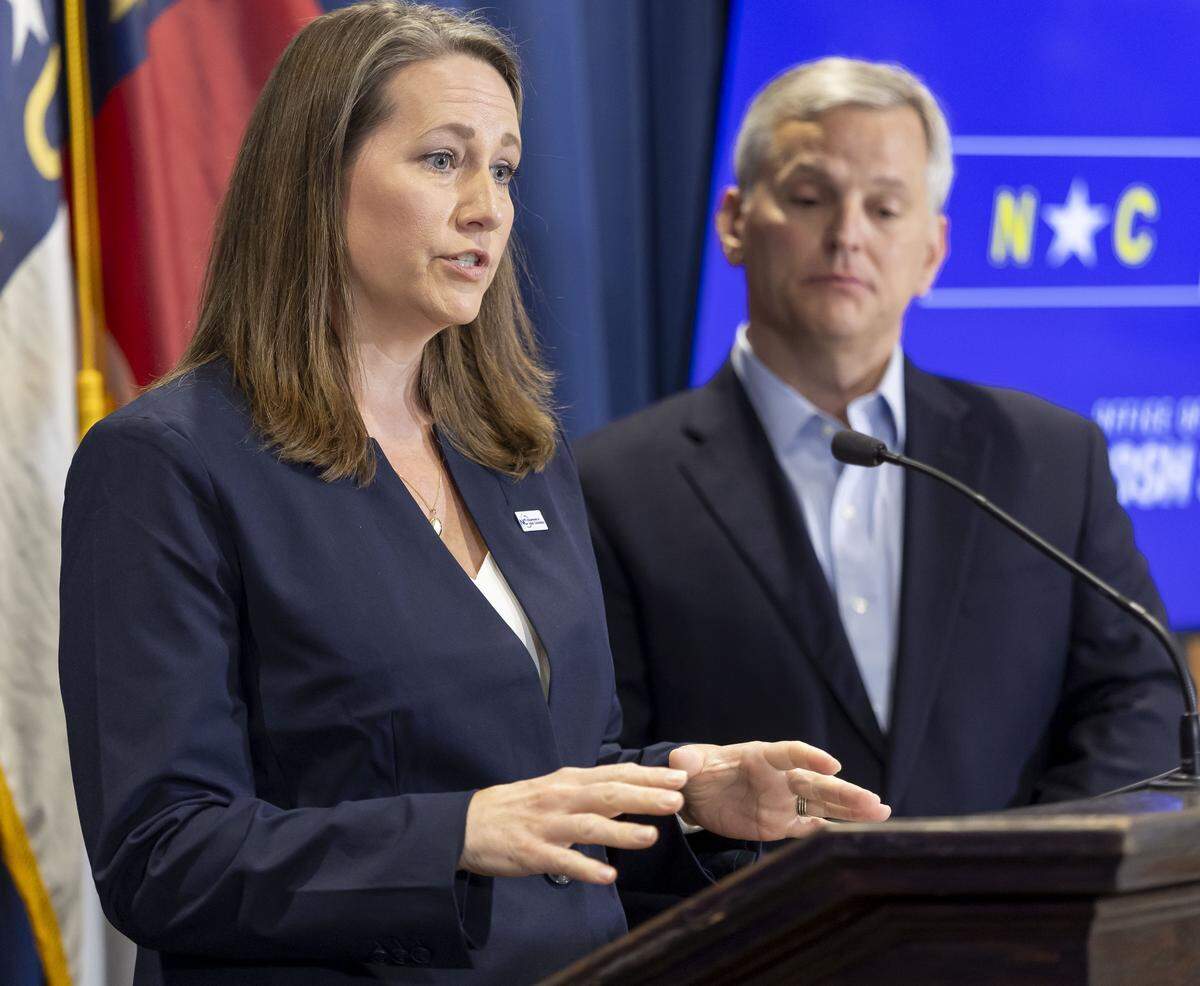
“With a 24% turnover rate among correctional officers, retention continues to be our greatest challenge. People are not staying on the job if they can’t make ends meet and support their families at salaries that range from $18 to $25 an hour,” she said.
Capt. Derrick Simmons, a shift supervisor at Neuse Correctional Institution in Goldsboro, has worked in corrections for 28 years, he said, and staffing numbers have dropped.
“Each day, when I come to work, my primary goal is to make sure that everyone working at the institution and everyone that’s incarcerated there stays safe,” Simmons said. “Having critical shortages of staff makes that much more difficult. Ten years ago, it was routine to have about 28 officers and five sergeants on shift. At lineup today, we may see seven or eight officers and three sergeants on shift.”
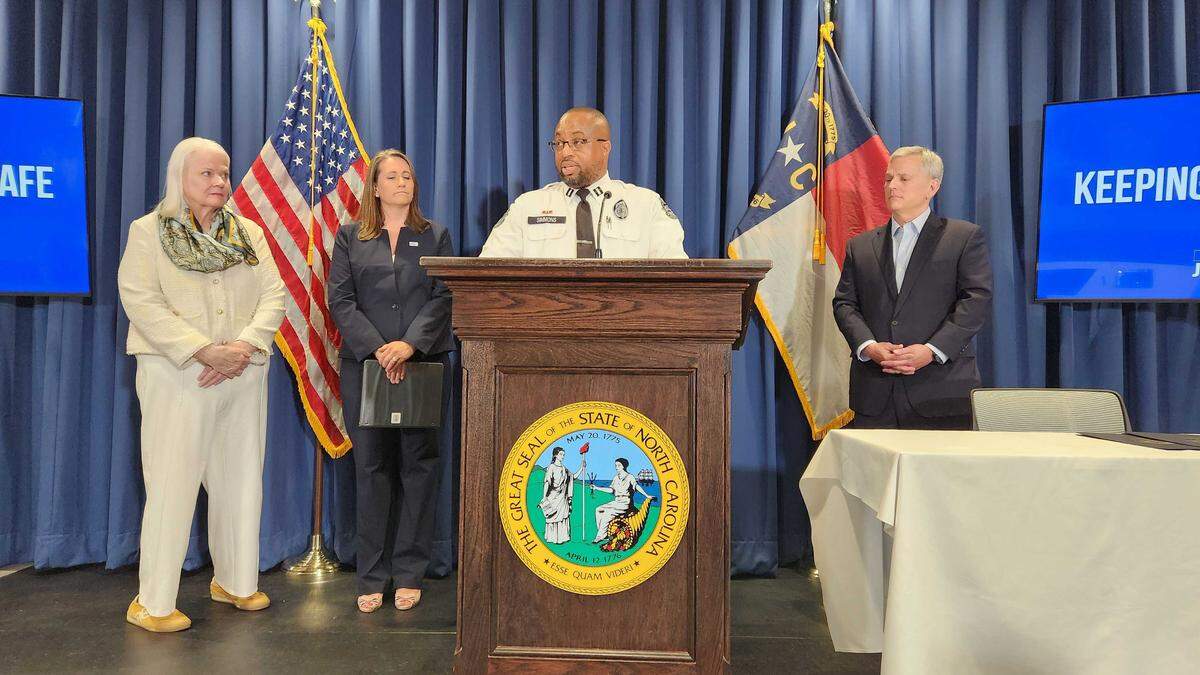
Having fewer staff means more assaults and fewer educational and rehabilitation programs, he said.
Dismukes said “significant raises for all of our line staff are critical to our ability to recruit and retain our tenured staff, and to protect North Carolina’s public safety.”
House Speaker Destin Hall and Senate leader Phil Berger said these are the law enforcement raises in the deal they reached:
- 20.3% raises on average for State Bureau of Investigation and Alcohol Law Enforcement sworn officers.
- 17.7% on average for State Highway Patrol officers.
- 15.4% on average for correctional officers.
- 10.1% on average for probation and patrol officers.
- An average 13% raise for State Capitol Police and other law enforcement in state government agencies.
‘Get the deal done’ Stein says
“We have about half the correctional officers needed to safely operate state prisons, and we are losing talent every month,” Stein said.
“Every day without a budget is another day that correctional officers will keep scraping by, trying to keep people safe with half the manpower needed,” Stein said.
He urged legislators “to get the deal done.”
Lawmakers are not in Raleigh, as they took a week off. The session began April 21. They will return next week, and budget writers have said they are on track to pass a budget bill the week of June 15.
This story was originally published May 27, 2026 at 2:20 PM.